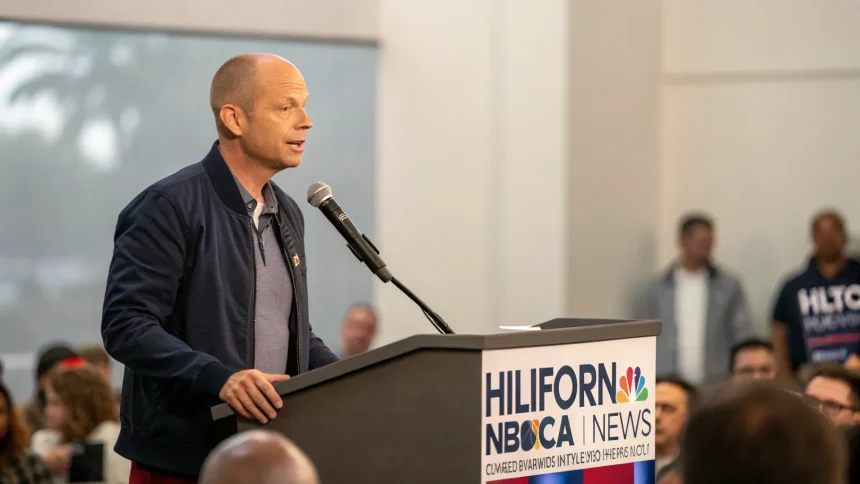
In a wide-ranging interview with NBC News’ Gadi Schwartz, Republican gubernatorial candidate Steve Hilton laid out how he plans to compete in deep-blue California and weighed in on the Los Angeles mayoral race. The conversation, coming as primary season heats up, offered a rare look at how a Republican hopes to break through in a state dominated by Democrats.
Hilton discussed the primary dynamics, the issues he believes can move swing voters, and how Los Angeles politics could shape the statewide mood. He pitched a path that leans on message discipline, local problem-solving, and turnout from voters who often skip primaries.
A Long Odds Contest With Deep Roots
California has not elected a Republican governor since Arnold Schwarzenegger left office in 2011. Democrats hold a commanding edge in voter registration and control the Legislature. That reality shapes every statewide campaign plan on the right.
Top-two primaries add another twist. Candidates from all parties compete on one ballot, and the two highest vote-getters advance. That means a Republican must appeal to independents and moderates early, not just the base.
Recent statewide cycles have turned on a familiar list of concerns. Voters cite housing costs, homelessness, crime, drought, education quality, and taxes. Campaigns that connect those issues to daily life tend to gain traction.
Hilton’s Pitch: Local Problems, Practical Fixes
Hilton framed his approach around everyday frustrations: the price of rent and groceries, commutes clogged by crumbling roads, and public safety worries in city centers. He spoke about tying policy to outcomes that people can feel within months, not years.
That lens suggests a focus on visible benchmarks. Clearing encampments with services and accountability. Targeted tax relief for working families. Incentives to speed housing permits. Support for small businesses that face rising fees and theft.
He also emphasized meeting voters where they are. Community forums, local radio, neighborhood groups, and school events can reach people unlikely to tune into statewide debates.
Primary Math and the Top-Two Test
Winning a spot on the November ballot requires breadth. In a top-two system, a Republican who caps out at base voters risks missing the cut. Hilton’s strategy nods to that math.
He signaled interest in independents who split their tickets and disaffected Democrats open to a change on pocketbook issues. That means a moderate tone and detailed plans, not just slogans.
Fundraising and name recognition still matter. But in low-turnout primaries, a disciplined ground game can punch above its weight. Data-driven outreach and steady field work often beat late, splashy ads.
Los Angeles Politics, Statewide Ripples
The Los Angeles mayoral contest looms large in the political climate. City hall debates on homelessness, public safety, and housing spill into statewide races. Hilton treated the city as a bellwether for voter patience and policy credibility.
He argued that solutions must blend enforcement with services and more housing supply. Voters, he suggested, will judge leaders by reductions in street homelessness and faster permit timelines, not just new plans.
What happens in Los Angeles rarely stays there. Media coverage, union endorsements, and donor networks can sway attention, dollars, and turnout patterns across the state.
Signals to Watch as Primaries Near
- Whether a Republican consolidates center-right voters before mail ballots land.
- Shifts in independents’ views on housing, crime, and cost of living.
- Turnout in suburban and exurban counties that often underperform in primaries.
- How Los Angeles homelessness and safety trends shape statewide sentiment.
- Cash-on-hand and field staffing in the campaign’s final month.
What It Could Mean for California
If Hilton’s approach gains steam, it could signal room for a center-right message tied to measurable results. If it stalls, Democrats may tighten their hold yet again. Either way, the contest will test whether issue-focused campaigning can cut through California’s partisan gravity.
The next phase belongs to voters who skip most political drama but care deeply about rent, schools, and safety. Watch early mail-in returns, independent voter crosstabs, and any movement in Los Angeles on homelessness and crime. Those signals will tell whether Hilton’s map is a route or a detour.