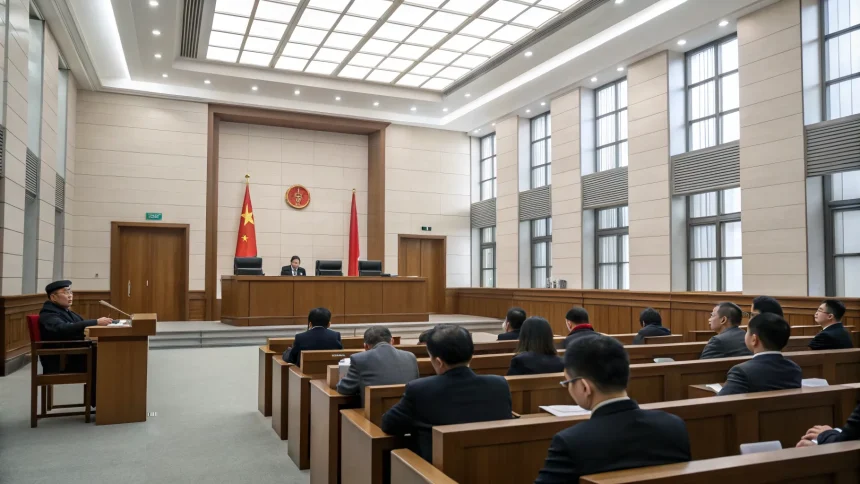
A court in Hangzhou has ruled that a local tech worker was unlawfully dismissed after his employer replaced his role with artificial intelligence, marking a rare judicial rebuke of AI-driven job cuts in China’s booming tech sector. The decision, delivered by an appeals court in the eastern city, puts companies on notice that efficiency gains alone do not justify firing staff without proper legal grounds or procedures.
The case centers on a worker who lost his position when the company said software could do the job. The employee challenged the decision and won on appeal. The ruling adds legal weight in a fast-moving debate over AI’s role in the workplace and how China’s labor protections apply when machines take over human tasks.
“A tech worker in eastern China’s Hangzhou city was dismissed after his job was replaced by AI. An appeals court in the city has ruled the dismissal unlawful.”
Why the Ruling Matters
China’s Labor Contract Law places limits on unilateral terminations. Employers must show statutory grounds, follow due process, and, in many cases, provide economic compensation. Courts often require clear evidence of incompetence, serious misconduct, or proper restructuring procedures before upholding a dismissal. Replacing a person with a tool—whether software or a new machine—has not, by itself, been treated as a lawful cause to fire an employee without additional steps.
Legal practitioners say the Hangzhou decision fits that pattern. While firms can reorganize, they must either negotiate role changes, offer training or reassignment, or pursue a compliant layoff process. This case signals that “AI made it cheaper” is not enough.
AI Adoption Meets Labor Law
Chinese companies have moved quickly to test generative AI and automation in coding, customer support, translation, and content moderation. Executives point to faster turnaround and lower costs. Labor lawyers, however, warn that cost savings do not cancel out statutory obligations.
Analysts note two common pitfalls when roles are automated. First, employers skip reassignment or training that could keep a worker on payroll in a modified position. Second, companies label a dismissal “performance-related” when it is actually a technology-driven redundancy, inviting legal challenges. The Hangzhou case highlights both risks.
What Employers Should Do
The decision offers a practical checklist for firms adopting AI tools while avoiding unlawful terminations:
- Assess whether the role is truly redundant or can be evolved with training.
- Offer reassignment or upskilling before termination.
- Follow statutory layoff procedures, including notice and compensation, if redundancy is unavoidable.
- Document objective business reasons and fair selection criteria for any reduction in force.
Human resources experts add that early communication is key. Many disputes arise when staff learn of changes only after decisions are final. Clear timelines and written options help reduce conflict.
Workers’ Rights and Future Disputes
For employees, the ruling suggests courts will examine the employer’s process as closely as the business logic. If an AI tool can perform tasks, the question becomes whether the company took reasonable steps to place the worker elsewhere or upgrade skills. Where firms cannot show this, judges may side with the employee.
Labor advocates see a template forming: document requests for training, keep records of performance feedback, and save notices received during restructuring. These materials often decide cases when technology is cited as the reason for dismissal.
Industry Impact and What Comes Next
The judgment arrives as AI tools spread across white-collar work. Companies eager to automate will need to budget for transition costs, including training and severance. Some may design “human-in-the-loop” roles to balance speed and quality while meeting legal duties.
Policy watchers expect more guidance from local labor bureaus and courts as disputes increase. Standard-setting may emerge around fair notice periods, retraining benchmarks, and evidence requirements showing that a role cannot be adapted. Firms that move first on compliance could reduce litigation risk.
The Hangzhou ruling does not block automation. It clarifies that technology shifts must be paired with lawful processes. For businesses, the takeaway is simple: build the legal path into the tech plan. For workers, the path forward is to keep detailed records and ask for written options when jobs change.
The case will likely spur new internal policies across China’s tech hubs. As AI tools improve, both sides will look for a stable playbook. The court has set an early marker: efficiency is not a legal reason on its own.