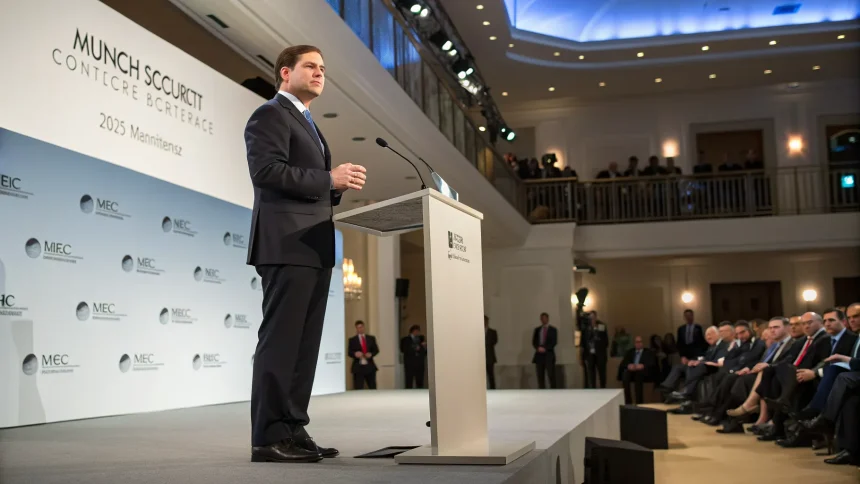
U.S. Secretary of State Marco Rubio signaled a shift in style at the Munich Security Conference, offering a measured message that contrasted with Vice President JD Vance’s sharper stance last year. The change, delivered at the annual gathering in Germany, suggested a recalibration in how Washington communicates with allies on high-stakes security questions.
“U.S. Secretary of State Marco Rubio’s comments at the Munich Security Conference struck a softer tone than Vice President JD Vance’s at last year’s event.”
The difference in approach raised fresh questions about U.S. priorities, alliance management, and the signals sent to rivals. It also put tone—often the quiet driver of diplomacy—back at the center of policy debates in Europe and the United States.
A Forum Built for Signals
The Munich Security Conference is a fixture on the diplomatic calendar. Since the 1960s, it has brought together heads of state, defense chiefs, diplomats, and analysts for frank talks on war, peace, and the gray areas in between. In recent years, discussions have been shaped by Russia’s war in Ukraine, strains on defense supply chains, and pressure on NATO members to spend more on security.
At Munich, tone is not decoration. It is a message. Every phrase is weighed by allies and rivals for meaning about deterrence, bargaining room, and political will. A firm warning can steel partners. A cool, steady line can reassure them. A sudden shift can prompt a round of quiet phone calls.
A Calmer Message From Washington
Rubio’s approach suggested a preference for steady-handed engagement over confrontation from the podium. The aim, read narrowly, is simple: reduce friction, keep allies aligned, and avoid unforced errors. In practice, this can make cooperation easier on issues where unity is hard and time is short.
A softer tone does not automatically mean softer policy. It can mean the same goals, presented with an emphasis on coordination, predictability, and careful sequencing. It also leaves more space for behind-the-scenes bargaining, where much of security policy is made.
Contrast With Last Year
The comparison with Vice President Vance’s remarks last year highlights how style frames substance. A harder-edged line can project resolve and draw red lines in clear ink. Yet it can also narrow options or fuel anxiety among partners facing their own political constraints.
By shifting the temperature, Rubio opened room for alliance messaging that is firm but less combustible. For European diplomats who prize unity statements and shared timelines, that change matters, even if the core positions remain intact.
Why Tone Matters Now
Security debates are entangled with domestic politics on both sides of the Atlantic. Legislatures face votes on aid, sanctions, and defense spending. Leaders juggle public fatigue with the need to deter aggression. In that environment, a calm public posture can buy time, build coalitions, and lower the risk of misread signals.
It can also shape markets and defense planning. Procurement cycles and training missions depend on clear expectations. A steadier message can reduce costly hedging by allies that are already stretching budgets.
What Allies and Rivals Hear
Allies listen for three things: commitment, clarity, and cohesion. A measured tone can reassure partners that Washington seeks joint action, not solo theatrics. Rivals, meanwhile, test for gaps. Calm rhetoric paired with steady assistance and credible deterrence still communicates resolve.
- Does the tone reflect durable policy or a temporary reset?
- Will allied defense spending and deliveries meet stated timelines?
- How will Washington align diplomacy with military and economic tools?
What’s Next
Attention now shifts to upcoming NATO meetings, budget fights, and battlefield realities that will stress-test the message from Munich. Expect close scrutiny of allied coordination on defense production, air defense, and energy security, where practical progress matters more than podium flair.
The headline in Munich was not a new doctrine but a new delivery. If that delivery helps align capitals, it will be more than stagecraft. It will be strategy by another name—quiet, careful, and judged by what follows, not just what was said.
For now, the takeaway is clear: style shaped the story. Whether it also shapes outcomes will depend on the hard work that comes after the speeches end.