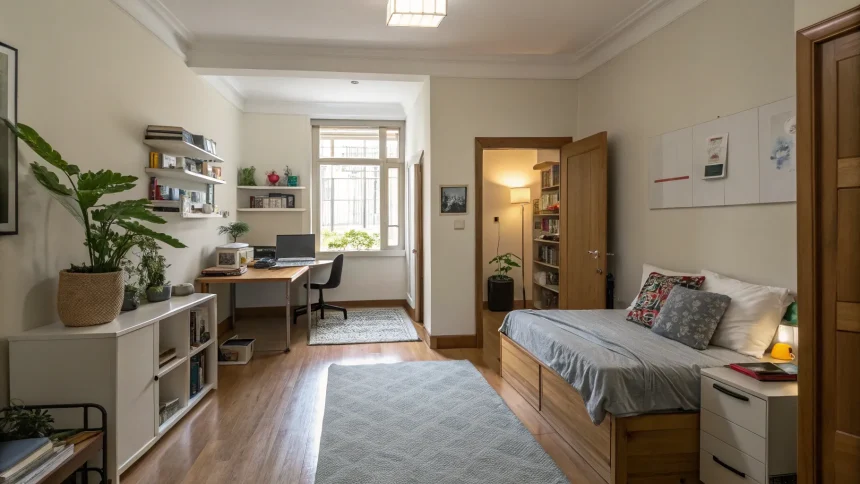
Nearly a third of homes advertised on a property sharing website had no living room, highlighting a squeeze on shared housing and a shift in how renters live. The finding points to landlords reconfiguring space to add bedrooms, while renters weigh cost against comfort. The change is widespread, and it affects daily life, from social time to mental health.
What The Listings Show
“Nearly a third of homes advertised on a property sharing website had no living room.”
The figure suggests a trend: common rooms are being removed or repurposed. In many shared houses, the living room becomes another bedroom to boost rental income. That leaves kitchens doing double duty as cooking and social spaces, if there is room to sit at all.
For renters, this often means lower per‑person costs but tighter quarters and fewer places to relax. For landlords, it can mean higher yields without major renovations. The balance has shifted toward beds over benches.
Why Living Rooms Are Disappearing
Rising rents and limited supply push groups to split homes more ways. Turning a lounge into a bedroom can knock down monthly costs for each tenant. At the same time, remote work increased demand for private rooms, making a desk behind a door more valuable than a sofa in a shared space.
Letting agents report strong demand for rooms in well-located neighborhoods, even when listings say no living room. For price-sensitive renters, location and privacy win. The trade-off is less space to gather, unwind, or host friends.
Impact On Renters And Communities
The loss of a shared room changes how people live together. Housemates spend more time in their bedrooms. Casual chats fade. Conflicts can rise when the only common area is a galley kitchen.
Public health researchers have long linked social isolation to stress and poorer mental health. While a missing lounge is not a diagnosis, it removes a low-stress space to connect. In crowded homes, a door is peace; a living room is relief.
Neighborhoods feel it too. Shared homes without lounges may push social life to bars, cafes, or parks, shifting noise and costs elsewhere. Local services see more demand for third spaces just as homes offer fewer of them.
What Rules Say
Regulations for shared homes vary by city. Many places require minimum room sizes and safe routes in case of fire. Some licensing schemes look at communal space when several unrelated people share a home. Enforcement, though, is uneven, and rules often lag market shifts.
Tenant groups argue that removing living rooms reduces quality of life. Landlords counter that more bedrooms make expensive areas accessible to more people. Policymakers are left to balance safety, affordability, and livability.
Money Talks, Sofas Walk
In tight markets, every square foot is priced. A lounge that earns nothing becomes a bedroom that pays each month. That math is hard to resist when mortgages and taxes climb.
Still, there are costs that do not fit in a spreadsheet. Homes without common rooms can churn faster as tenants burn out. Shorter stays mean more voids and admin, which can eat into gains.
What To Watch Next
Experts expect the trend to persist where rents run hot and supply lags. If more cities tighten licensing or set minimum communal space standards for larger shared homes, the pattern could slow. New co-living models that include shared lounges and work areas may also curb the loss, if prices land within reach.
- Renters can check floor plans and photos for true communal space.
- Landlords can weigh higher yield against turnover and tenant well-being.
- Local officials can review how licensing treats shared spaces.
The headline number is stark and simple: nearly one in three shared listings offered no living room. It signals a housing market stretched to the edges. The next chapter depends on supply, rules, and whether renters keep choosing private rooms over shared sofas. For now, the living room is often the first thing to go.