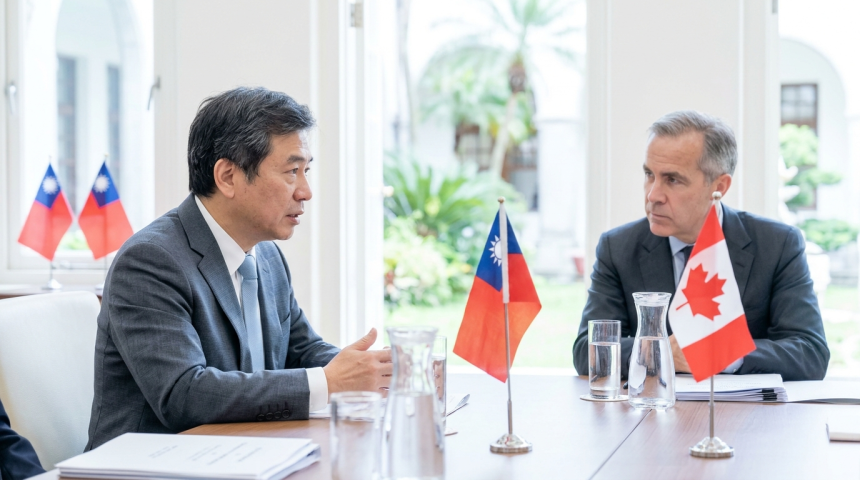
Taiwan’s Deputy Foreign Minister Chen Ming-chi has voiced concern over Canadian Prime Minister Mark Carney’s efforts to deepen trade ties with China. The warning places Taiwan’s security interests against Canada’s search for new economic opportunities.
Chen’s concern reflects a wider question facing Ottawa. Canada wants to expand trade, but closer relations with Beijing may affect its ties with Taiwan and other partners in the Indo-Pacific region.
Economic Goals Meet Security Concerns
Carney’s approach suggests Canada is seeking a more practical commercial relationship with China. China remains a major market for Canadian agriculture, natural resources and other exports.
Better access could help Canadian companies find buyers and reduce dependence on the United States. However, trade with China has often come with political disputes and sudden market restrictions.
Taiwan views closer engagement with Beijing through a security lens. China claims Taiwan as its territory and has increased military pressure around the self-governed island. Taiwan rejects Beijing’s claim and maintains its own democratic government.
Chen’s intervention signals that Taipei wants economic policy to account for that pressure. It also suggests Taiwan is watching whether trade goals could weaken Canada’s public support for peace across the Taiwan Strait.
Canada Faces a Difficult Balance
Canada and China have endured years of strained relations. Tensions rose after Canada arrested Huawei executive Meng Wanzhou in 2018 under a United States extradition request. China then detained Canadians Michael Kovrig and Michael Spavor.
The three returned home in 2021, but trust between Ottawa and Beijing remained limited. Disputes over alleged foreign interference, human rights and trade have continued to shape the relationship.
Supporters of renewed engagement may argue that direct talks can protect Canadian jobs and create channels for resolving disputes. They may also say economic contact does not require agreement on security or human rights.
Critics may warn that closer trade links could expose Canada to political pressure. They could also question whether Beijing would use market access as leverage during future diplomatic conflicts.
- Canada seeks wider export markets and more stable commercial ties.
- Taiwan wants partners to resist pressure from Beijing.
- Ottawa must separate economic engagement from political concessions.
Taiwan’s Place in Canadian Policy
Canada does not maintain formal diplomatic relations with Taiwan. Under its one-China policy, Ottawa recognizes the government of the People’s Republic of China while keeping unofficial economic and cultural ties with Taipei.
Those ties have practical value. Taiwan is a key participant in global technology supply chains, especially semiconductor production. Stability around the island therefore affects trade, shipping and manufacturing far outside East Asia.
Canada has also supported peace and stability in the Taiwan Strait. Any shift in its China policy will be judged against that position, both by Taiwan and by Canada’s security partners.
What Ottawa Must Clarify
The central issue is not whether Canada should speak with China. It is whether Ottawa can expand trade while setting firm limits on security, foreign interference and economic coercion.
Carney’s government will face pressure to explain which industries it wants to promote and what safeguards will govern deeper engagement. Clear policy could reassure Taiwan without closing the door to commercial talks with Beijing.
Chen’s concern is an early warning that Canada’s trade choices will carry diplomatic costs. Future agreements, official visits and statements on Taiwan will show whether Ottawa can protect its economic interests without weakening its regional commitments.