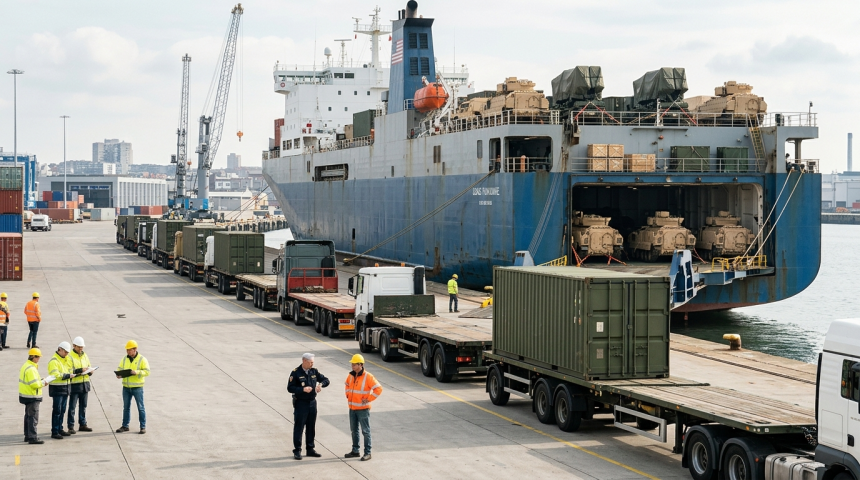
European governments are facing years-long waits for American defense equipment as production delays and US military demand strain supply. The bottlenecks expose the risks created by Europe’s heavy reliance on US weapons and technology.
The delays come as European states seek to strengthen their armed forces and replace equipment sent to allies. Yet American manufacturers must also meet orders from the Pentagon, which can receive priority when US readiness is at stake.
Backlogs Test Europe’s Defense Strategy
Europe has long treated the United States as its leading defense supplier and security partner. American aircraft, missiles, air-defense systems, and communications technology are used across NATO.
Buying established US systems offers clear advantages. Allies can share training, maintenance, ammunition, and operational procedures. Joint equipment can also help national forces work together during NATO missions.
However, that dependence carries risks. Customers have limited control over American production schedules, export approvals, and Pentagon priorities. A delay at one manufacturer can affect military plans across several countries.
“Years-long backlogs are underway due to production delays and the US own military needs.”
The backlog suggests that signing a contract does not guarantee rapid delivery. Complex weapons often require long manufacturing cycles, specialized workers, and parts from many suppliers. Production cannot always rise quickly when demand increases.
US Requirements Compete With Foreign Orders
American defense companies serve two broad groups: the US government and approved international buyers. When both require the same systems, factory capacity can become a strategic issue.
The Pentagon must maintain its own inventories and prepare for future conflicts. European customers, meanwhile, are trying to improve readiness during a period of heightened security concern. Those needs can collide when production lines are already full.
Three pressures are shaping delivery schedules:
- Existing orders have created long production queues.
- Manufacturing delays are slowing completion and delivery.
- US military requirements compete with foreign demand.
Washington also benefits from European purchases. They support American manufacturing and make allied forces more compatible with US units. For that reason, prolonged delays may create concerns on both sides of the Atlantic.
European Industry Faces a Capacity Challenge
The situation may strengthen calls for more European production. Supporters of that approach argue that local factories would give governments greater control over supply, repair, and replacement schedules.
Building capacity in Europe would still take time. New production lines require investment, skilled labor, secure supply chains, and long-term contracts. National governments must also agree on common requirements if they want large and efficient orders.
American systems may remain attractive because they are proven, widely used, and linked to NATO operations. European alternatives can improve supply security, but buying many different national systems could raise costs and make joint missions harder.
Delays Carry Operational Consequences
Long waits can leave armed forces using older equipment longer than planned. Governments may also face higher maintenance costs or gaps between retiring one system and receiving its replacement.
The wider lesson is that procurement choices affect national security for decades. Price and performance matter, but delivery speed, industrial capacity, and access to spare parts are also central concerns.
Europe’s reliance on American defense technology is unlikely to disappear quickly. Still, the present backlogs may push governments to spread orders across more suppliers and invest in domestic production. Future decisions will show whether Europe treats the delays as a temporary disruption or a warning to reduce strategic dependence.