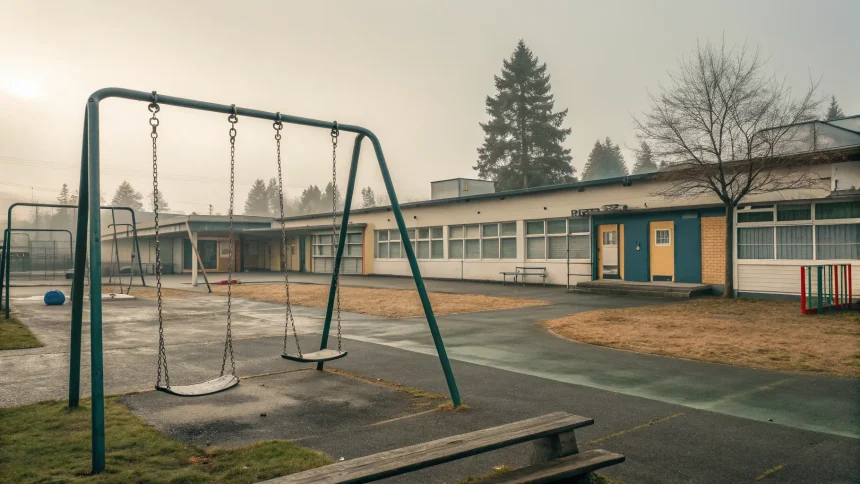
Kaylub Giamanco made a frantic 911 call moments before fatally shooting a teenage gunman at an Oregon elementary school attended by his two daughters.
The incident places a parent’s split-second response at the center of a deadly school shooting investigation. Authorities must now examine the emergency call, the threat posed by the teenager, and the events leading to the fatal shot.
Key details remain unavailable, including the school’s name, the date of the shooting, and whether anyone else was injured. Officials have also not disclosed the teenager’s identity or explained how the youth obtained a firearm.
The 911 Call Could Shape the Case
Giamanco’s call offers investigators a time-stamped record from shortly before the shooting. It may reveal what he saw, what he believed was happening, and whether emergency dispatchers gave him instructions.
The description of the call as “frantic” points to an urgent and frightening situation. However, no recording or direct quotation from Giamanco has been released in the available account.
Investigators will likely compare the call with physical evidence, witness statements, surveillance video, and police communications. That work can help establish a clear timeline and test whether Giamanco’s account matches other evidence.
Among the central questions are:
- What immediate danger did the teenager pose?
- Where were Giamanco’s daughters during the encounter?
- How much time passed between the 911 call and the shooting?
- Had police arrived or issued commands before the fatal shot?
Self-Defense Laws Require Detailed Review
Oregon law generally allows deadly force in limited circumstances, including defense against an imminent threat of serious injury or death. Whether those standards apply depends on facts not yet made public.
A person’s belief that deadly force was necessary must usually be judged against the conditions present at that moment. The setting may matter greatly because the reported danger occurred at an elementary school with children nearby.
The teenager’s reported role as a shooter does not end the legal inquiry. Prosecutors must still determine what the youth was doing when Giamanco fired and whether the threat remained immediate.
At the same time, Giamanco’s status as a father with two daughters at the school adds a deeply personal dimension. Fear for one’s children can explain urgent action, but investigators must rely on evidence rather than emotion alone.
A School Community Faces Lasting Questions
The case also raises difficult questions about safety, firearms, and civilian intervention during school emergencies. Armed intervention can stop an attacker, but it can also create confusion for responding officers who must quickly identify the threat.
Schools commonly train staff and students to lock doors, seek cover, and follow police directions. Parents near an active attack may face a far less orderly reality, especially when their own children are inside.
The teenage shooter’s age creates another painful line of inquiry. Authorities will need to examine the firearm’s source, warning signs before the incident, and whether adults or institutions missed chances to intervene.
For now, the 911 call is likely to be one of the most important pieces of evidence. Its release, along with official findings, could clarify whether Giamanco acted to stop an immediate attack and how the deadly encounter unfolded.
The investigation’s next steps should provide answers for the school community and both families. Until then, firm judgments would run ahead of the limited public facts, while the need for a transparent review remains clear.