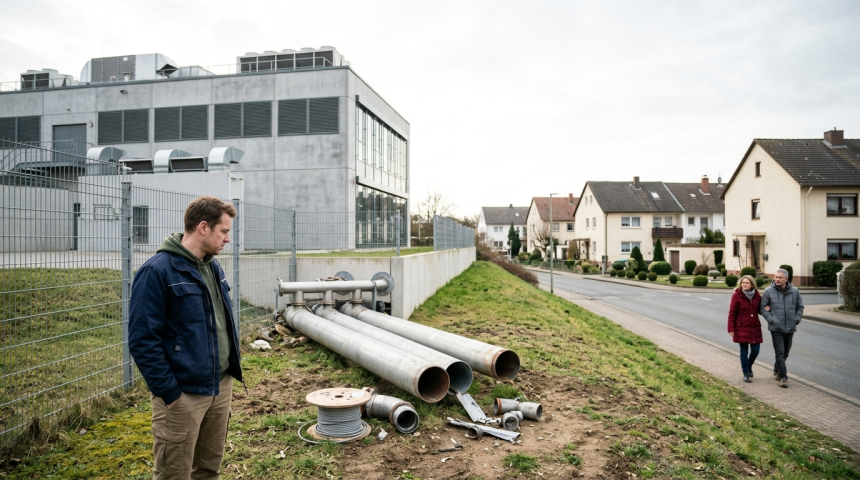
A German plan to channel waste heat from data centers into nearby homes has stalled, exposing a growing conflict between Europe’s AI goals and climate targets.
The setback comes as European policymakers seek more computing capacity for artificial intelligence. Data centers can support that expansion, but they also consume large amounts of electricity and release heat that often goes unused.
Germany’s proposal offered a way to recover some of that energy. Its failure shows how difficult such projects can be, even when they appear to support both housing and environmental policy.
Waste Heat Offers a Practical Opportunity
Data centers operate servers around the clock. Cooling systems remove the heat produced by that equipment, using additional energy in the process.
Heat recovery projects seek to capture that output and transfer it into local heating networks. The energy can then warm homes, offices, or public buildings.
The approach could reduce demand for heat produced from fossil fuels. It may also improve the local value of facilities that otherwise place pressure on electricity grids.
However, the German setback indicates that a useful source of heat does not guarantee a workable project. Data centers and homes must be close enough for distribution to make economic sense.
Heat networks also require pipes, transfer stations, long-term contracts, and agreement over costs. Temperature differences can create another obstacle because recovered heat may need extra equipment before entering household systems.
AI Growth Raises Energy Questions
Europe wants a stronger position in AI while keeping emissions reduction plans on track. Those goals can conflict because training and operating AI systems requires extensive computing infrastructure.
New data centers may increase electricity demand at a time when countries are also electrifying transport, heating, and industry. Their local impact can include demand for grid connections, land, water, and cooling capacity.
Waste heat reuse could ease part of that burden, but it does not cancel the electricity consumed by servers. The climate benefit depends on several conditions:
- The source of electricity used by the data center.
- The fuel or heating system replaced in nearby buildings.
- The distance between the facility and heat customers.
- The cost and efficiency of the distribution network.
This means policymakers must judge each project on its actual energy savings. A heat recovery plan may have limited value if it requires costly infrastructure or replaces an already low-carbon system.
Policy Goals Meet Local Constraints
The stalled plan highlights a wider challenge for public officials. National AI strategies can encourage rapid construction, while local energy systems may take years to plan and finance.
Data center operators also need reliable demand for recovered heat. Residential customers, utilities, and municipalities need confidence that the supply will remain stable over many years.
Responsibility for the supporting infrastructure can become a central dispute. Operators may resist paying for public heating networks, while local authorities may be unwilling to place the risk on taxpayers or households.
At the same time, strict requirements could push planned data centers toward regions with cheaper power or fewer conditions. Weak standards, however, could leave large amounts of usable heat vented into the air.
Europe Faces a Wider Test
The German experience may guide similar decisions across Europe. Governments must decide whether heat reuse should be mandatory, encouraged through incentives, or assessed project by project.
Effective policy will need to connect data center approvals with power planning, local heating needs, and emissions targets. It will also require clear rules on who finances pipes and other equipment.
The stalled project does not end the case for data center heat recovery. It does show that AI infrastructure and climate policy cannot be planned separately.
Europe’s next steps will reveal whether governments can turn waste heat into a dependable public resource. The key test will be whether future projects pair technical plans with credible financing, suitable locations, and long-term local demand.