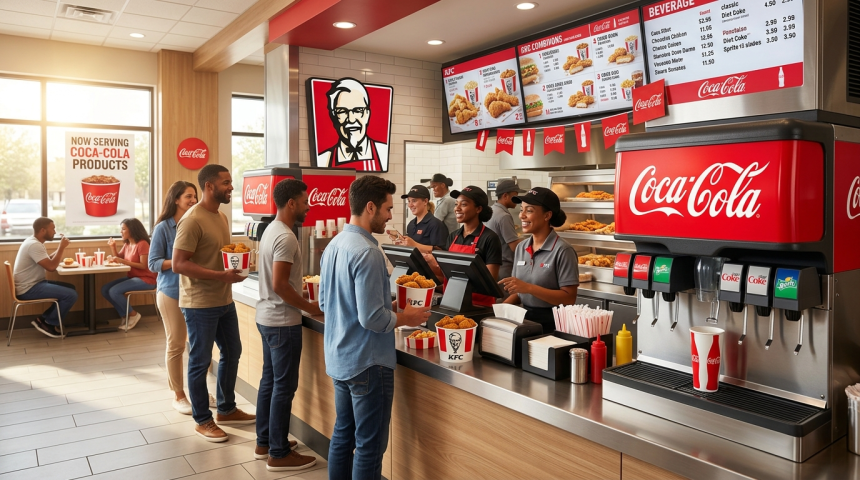
KFC is replacing PepsiCo with Coca-Cola as the beverage supplier for its U.S. restaurants, changing a long-standing pairing at one of America’s largest chicken chains.
The switch affects KFC locations across the United States. It also gives Coca-Cola a larger foothold in quick-service dining, where drink contracts can shape sales, equipment, menus, and advertising.
A Historic Corporate Tie Ends
KFC’s relationship with Pepsi has roots in corporate history. PepsiCo acquired the fried chicken chain in 1986. It later separated KFC, Pizza Hut, and Taco Bell into a restaurant company in 1997.
That business became Yum Brands in 2002. Although PepsiCo no longer owned KFC, the beverage partnership remained a visible link between the companies.
The move to Coca-Cola therefore carries more weight than a routine fountain update. For many customers, Pepsi was part of the expected KFC meal, sitting beside fried chicken, biscuits, and mashed potatoes.
“KFC is switching from PepsiCo to Coca-Cola as its beverage supplier for U.S. restaurants.”
No timeline, financial terms, or detailed product list was provided. It is also unclear whether every restaurant will change at once or whether the rollout will occur in stages.
What Customers May Notice
The clearest change will be the fountain menu. Coca-Cola’s core brands include Coke, Diet Coke, Coke Zero Sugar, Sprite, and Fanta. Exact offerings may differ by restaurant.
Customers may also see new cups, menu boards, delivery listings, and promotional materials. Restaurant crews could need updated equipment and training during the transition.
- Pepsi products are expected to leave participating U.S. KFC restaurants.
- Coca-Cola products will take their place under the new supply arrangement.
- Pricing and local availability have not been announced.
The change may delight Coke drinkers and disappoint loyal Pepsi customers. Soda preference is famously stubborn. A diner may forgive a missing sauce packet faster than the wrong cola.
Why Beverage Contracts Matter
Soft-drink deals provide more than syrup. Suppliers may support restaurants with fountain machines, maintenance, branded materials, data, and joint promotions.
For Coca-Cola, the agreement adds access to KFC’s U.S. customer base and meal traffic. For PepsiCo, the loss removes a major restaurant account with a historic connection to its former food-service holdings.
KFC may gain new options for promotions and menu bundles. Still, changing suppliers across a national chain can require careful coordination among corporate leaders, franchise operators, distributors, and equipment technicians.
Questions Remain About the Rollout
Several practical details remain open. KFC has not specified when customers will first see Coca-Cola products or when Pepsi products will disappear nationwide.
The chain also has not explained whether the decision applies to every U.S. franchise, every drink size, or specialty beverages. Those details will determine how quickly the customer experience changes.
The supplier shift ends a familiar restaurant partnership and gives Coca-Cola a notable win in food service. The next signs to watch are the rollout schedule, the final drink lineup, and any joint promotions tied to the change.
For diners, the result will be easy to spot and easier to taste. The chicken recipe may stay secret, but the cola choice will not.