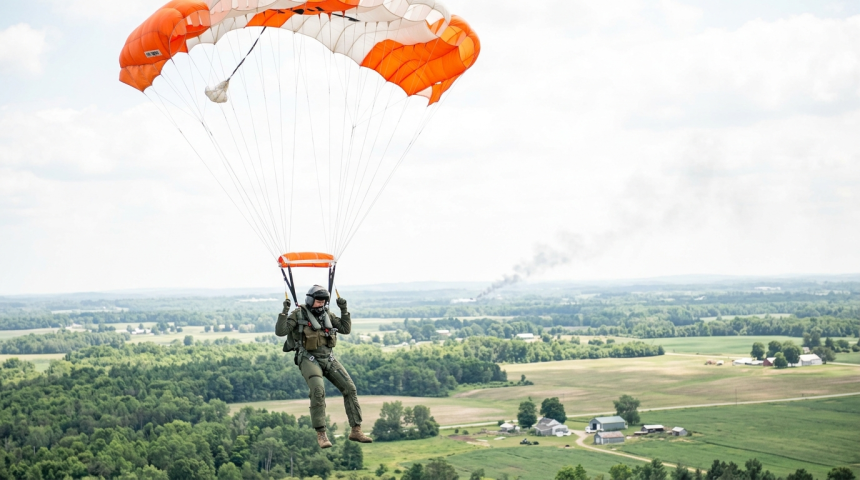
A Texas Air National Guard pilot safely ejected from a military jet in Grand Traverse County, with no injuries reported on the ground.
The incident prompted concern in the Michigan county because an ejection often signals a serious aircraft emergency. The cause, timing, aircraft condition, and pilot’s medical status were not immediately disclosed.
Officials also did not report damage to homes or other property. The absence of ground injuries offered an early measure of relief, though key questions remained unanswered.
Safe Ejection Limits Immediate Harm
An ejection seat is designed to remove a pilot from an aircraft when remaining aboard poses a greater risk. The process happens quickly and can still expose a pilot to powerful physical forces.
“The pilot safely ejected from the Texas Air National Guard jet in Grand Traverse County, and no injuries were reported on the ground.”
That initial account confirms two central facts: the pilot escaped the jet, and nobody on the ground was reported hurt. It does not establish whether the pilot later received medical evaluation or treatment.
The report also leaves the jet’s final location unclear. That detail will matter for investigators, emergency crews, nearby residents, and any review of possible environmental damage.
Investigation Will Focus on Cause
Military aviation incidents usually trigger a review of the aircraft, flight records, maintenance history, weather, and pilot actions. Investigators may also examine debris and available communications.
Several basic questions remain open:
- What type of jet was involved?
- What emergency caused the pilot to eject?
- Where did the aircraft come down?
- Was the flight part of training or another mission?
- Did the crash cause a fire, fuel spill, or property damage?
No cause was identified in the initial information. Drawing conclusions before an official review would risk confusing an equipment failure, weather issue, or other emergency with confirmed findings.
Local Safety Remains the Priority
Grand Traverse County residents may face road closures or restricted access near any debris field. Military aircraft wreckage can include fuel, sharp metal, and other hazards.
People who encounter suspected debris should avoid touching or moving it and follow directions from local authorities. Preserving the site can also help investigators determine what happened.
The Texas Air National Guard connection adds another question: why the aircraft was operating in or near northern Michigan. Guard units often fly for training and other assigned missions, but no mission details were provided.
For now, the strongest news is also the best news: the pilot got out, and no one below was reported injured. The next updates should clarify the pilot’s condition, the crash site, and the reason the emergency became severe enough to require ejection.
Any official investigation may take time. Its findings could shape maintenance checks, flight procedures, or training if investigators identify a preventable problem. Until then, public safety and verified information remain the immediate priorities.