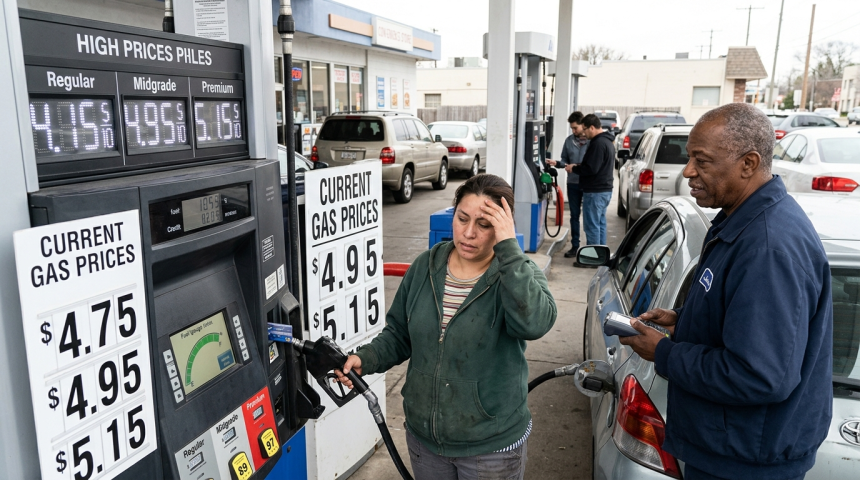
Rising gas prices are forcing lower-income consumers to rely more on credit as fuel takes its largest share of household income since March 2022.
The increase creates an urgent cash-flow problem for families who must drive to work, school, medical visits, or child care. Unlike optional purchases, gasoline often cannot be delayed. Credit cards can cover the immediate cost, but interest charges may turn a temporary price spike into months of debt.
Fuel Takes a Larger Bite
Gas prices affect most drivers, yet the burden is not evenly shared. A gallon costs the same regardless of income, so fuel consumes a greater percentage of a smaller paycheck.
The latest measure places that burden at its highest point in more than four years. March 2022 was marked by sharp energy market disruption and a rapid increase in fuel costs. Returning to that income-share level suggests household budgets are again under serious pressure.
Lower-income workers may also have fewer ways to reduce their driving. Many jobs require employees to be on-site. Public transportation may be limited or unavailable, especially outside major cities. Older and less fuel-efficient vehicles can add another layer of expense.
Fuel costs have climbed to their highest share of household income since March 2022.
The income comparison matters as much as the pump price. Even if gasoline remains below an earlier dollar peak, weak income growth or higher costs elsewhere can make each fill-up harder to absorb.
Credit Becomes a Short-Term Bridge
Greater credit use can signal that families lack enough cash to meet routine expenses. For some households, a card provides breathing room until the next paycheck. For others, it begins a costly cycle.
The financial strain tends to follow a familiar pattern:
- Gas consumes more of the weekly budget.
- Food, utilities, or other purchases shift onto credit.
- Balances remain unpaid after the billing period.
- Interest charges reduce money available in later months.
This does not mean every fuel purchase made with a credit card reflects hardship. Many consumers use cards for convenience, rewards, or expense tracking. The warning sign is a rising balance that cannot be paid in full.
That distinction is important. Credit can smooth uneven income, but it does not increase earnings. It simply moves the payment date, often at a steep price.
Pressure Could Spread Through the Economy
Higher fuel spending can weaken demand for restaurants, clothing, entertainment, and other flexible purchases. Retailers serving lower-income shoppers may feel the effect first because their customers have less room to adjust.
Gas prices can also lift business costs. Delivery companies, contractors, and other fuel-dependent employers may pass some expenses to customers. That can add pressure to household budgets already strained by transportation costs.
Falling fuel prices would offer the fastest relief. Until then, wage growth, credit-card delinquency rates, and spending at discount retailers will help show whether the stress is temporary or spreading.
The clearest takeaway is that gasoline has become more than a transportation expense for many households. It is now a test of financial resilience. If prices stay elevated, increased credit use may protect near-term mobility while creating a longer and more expensive repayment problem.