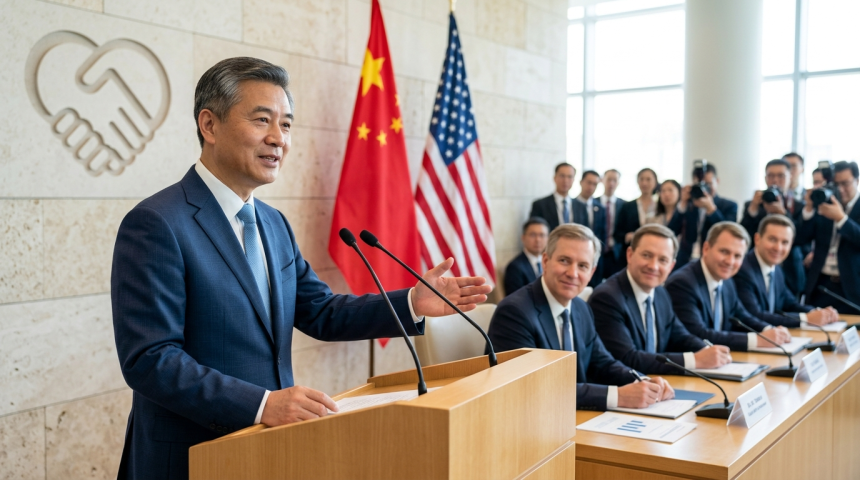
China and the United States hope to reach an agreement soon on lowering import taxes, according to a Chinese government spokesperson. The statement signals possible progress in efforts to reduce trade costs between the two major economies.
The spokesperson did not identify a deadline or describe which products could receive lower rates. No proposed tariff levels were disclosed. Those missing details leave the timing and economic impact uncertain.
Statement Points to Continued Negotiations
The Chinese government’s message suggests that officials remain engaged in talks rather than preparing for an immediate breakdown. Its use of the word “hope,” however, stops short of confirming that an agreement is complete.
China and the U.S. “hope to reach an agreement on lowering import taxes soon,” the spokesperson said.
Import taxes, commonly called tariffs, are charges placed on goods entering a country. Governments may use them to protect domestic producers, respond to trade practices, or gain leverage in negotiations.
Businesses often pay tariffs when products cross a border. Those added costs can then reach manufacturers, retailers, and consumers through higher prices.
Lower Tariffs Could Ease Business Costs
A tariff agreement could reduce expenses for companies that trade between China and the United States. The effect would depend on the products covered and the size of any reductions.
Potential results could include:
- Lower costs for covered imported goods
- Greater certainty for companies placing future orders
- Reduced pressure on supply chains tied to both countries
- Possible price relief for some businesses and consumers
Benefits would not be automatic or evenly shared. Companies may use lower costs to cut prices, rebuild profit margins, or invest in other operations.
Domestic producers could also oppose some reductions if cheaper imports increase competition. Governments therefore must weigh consumer costs against employment and industrial policy concerns.
Key Questions Remain Unanswered
The statement did not explain whether talks cover a broad group of goods or a limited set of imports. It also offered no information about enforcement, exemptions, or possible conditions.
Any final agreement would need clear tariff schedules and an effective date. Companies would also seek guidance on customs procedures and whether reductions would remain in place for a fixed period.
Negotiators may face difficult choices if either side links tariff relief to wider economic disputes. A narrow agreement could deliver faster savings, while a broader settlement could take longer to complete.
Markets Will Look for Concrete Terms
The next meaningful development would be a joint announcement or published policy from both governments. Separate statements can show political intent, but businesses generally need official rules before changing purchasing plans.
Investors and importers will watch for details about the scope and timing of any reductions. They will also assess whether an agreement creates lasting stability or only a temporary pause in trade tensions.
For now, the Chinese statement offers a cautious sign of movement. A deal could lower costs and improve planning, but its value will depend on the written terms, covered goods, and follow-through from both governments.