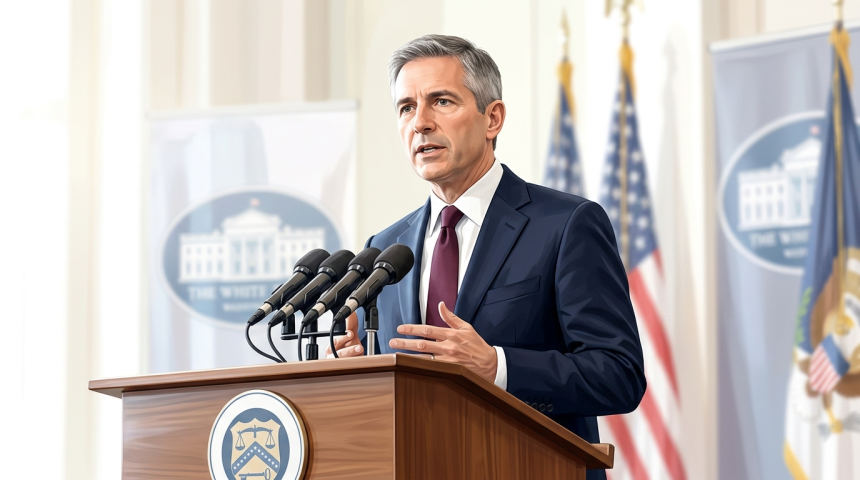
U.S. Treasury Secretary Scott Bessent said a large bank would face sanctions next week, signaling an imminent financial enforcement action without naming the institution or explaining the alleged conduct.
The brief announcement puts banks, investors, and foreign governments on alert. Treasury sanctions can restrict access to U.S. markets, freeze assets under American jurisdiction, and block transactions involving U.S. people or companies.
“A large bank would be sanctioned next week,” Bessent said.
Key facts remain undisclosed. Bessent did not identify the bank, its home country, the legal authority behind the action, or the exact date of the expected announcement.
Financial Pressure With Global Reach
The Treasury Department often uses sanctions to advance U.S. foreign policy and national security goals. Targets can include governments, companies, banks, executives, and financial networks accused of supporting prohibited activity.
A designation involving a major bank can carry an unusually wide impact. Large lenders often process payments for thousands of businesses and maintain ties with financial institutions across several countries.
The consequences may extend further if Treasury applies restrictions that threaten access to the U.S. financial system. The dollar’s central role in international trade gives Washington considerable influence over global transactions.
Banks outside the United States may also reduce their exposure to a sanctioned institution. That cautious response, sometimes called “de-risking,” can produce effects wider than the formal rules require.
Markets Await Essential Details
The lack of a named target leaves many possible outcomes. A narrowly written action could affect selected transactions or executives. A broader designation could block most dealings with the institution.
Investors and compliance teams will be watching for several details:
- The bank’s identity and country of operation
- The conduct cited by Treasury
- The scope and effective date of restrictions
- Any exemptions or temporary licenses
- Potential penalties for prohibited transactions
Those details will determine whether the action is mainly symbolic or causes broad disruption. Financial sanctions are rarely a one-line affair once payment systems, contracts, and customer accounts enter the picture.
Questions of Timing and Due Process
Advance notice from a Treasury secretary is unusual enough to draw scrutiny. Publicly signaling an action can pressure the target before formal restrictions begin. It can also give other institutions time to review their exposure.
However, the warning creates uncertainty without offering banks clear compliance instructions. Firms generally rely on formal Treasury notices, which identify sanctioned parties and state what transactions are barred.
The targeted institution may seek administrative reconsideration or challenge the designation in court, depending on the authority used. Such disputes often focus on evidence, procedure, and whether Treasury adequately explained its decision.
Bessent’s statement therefore serves as a warning, not a completed enforcement action. The coming announcement should reveal whether the United States is targeting one institution, a wider financial network, or conduct linked to a broader foreign policy dispute.
Until Treasury publishes the designation and its legal terms, the bank’s identity and the scale of the fallout remain unknown. The next document, not the teaser, will tell markets how seriously to brace.