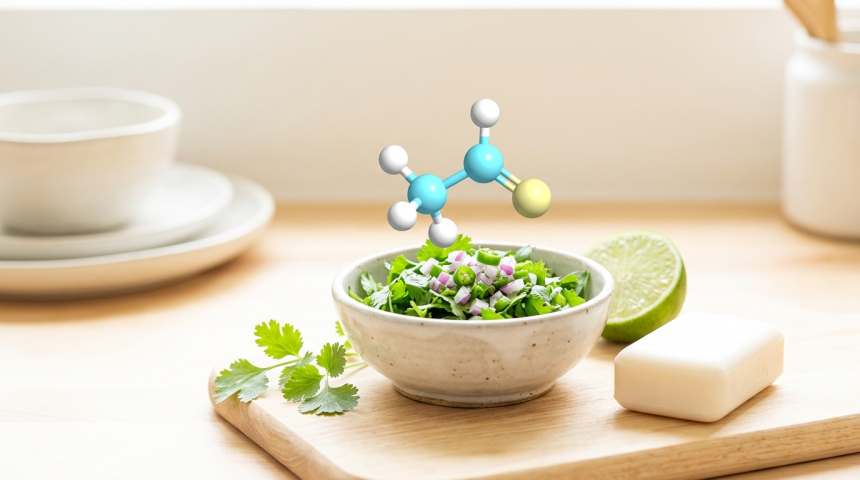
Cilantro can brighten a taco or ruin it in one bite, and science helps explain why the herb divides diners so sharply.
For people who dislike it, cilantro may taste soapy, metallic, or harsh. That reaction is linked partly to smell-receptor genes and partly to experience. The good news for reluctant eaters is that repeated, gentle exposure may soften the response.
Aroma Shapes the Flavor
Taste buds detect basic qualities such as sweet, salty, sour, bitter, and savory. Much of what people call flavor comes from aroma.
Chewing cilantro releases aromatic chemicals called aldehydes. Some create the fresh, citrus-like scent loved by fans. Others resemble compounds associated with soap, lotions, and certain insects.
Smell receptors in the nose detect those chemicals and send signals to the brain. People do not process every aroma in the same way. One diner gets lime and herbs. Another gets a mouthful of hand wash.
Genes Influence the Reaction
Research has linked cilantro dislike to differences near smell-receptor genes, including OR6A2. This receptor is sensitive to several aldehydes found in the herb.
People with certain genetic variants may notice the soap-like compounds more strongly. Yet genes do not write the entire menu. Studies suggest inherited differences explain only part of the preference.
Culture, family meals, memory, and frequency of exposure also matter. Cilantro is common in many Mexican, South Asian, Chinese, Middle Eastern, and Southeast Asian dishes. Regular exposure can teach the brain to connect its aroma with enjoyable food.
That helps explain why dislike rates can differ among groups with different food traditions. It also prevents an overly simple conclusion: A genetic tendency is not the same as a fixed verdict.
Can People Learn to Like It?
Repeated exposure can change food preferences, although success is not guaranteed. The brain may become less alarmed by a familiar aroma and begin linking it with pleasant meals.
A slow approach is more practical than dropping a handful of raw leaves onto dinner. Useful steps include:
- Start with a small amount mixed into a familiar dish.
- Pair it with lime, tomato, avocado, chili, or yogurt.
- Try cilantro in salsa, chutney, curry, or soup.
- Crush or blend the leaves to alter their aroma and texture.
- Repeat the trial occasionally without forcing the experience.
Preparation can make a difference. Blending cilantro into sauces spreads its flavor among other ingredients. Acid, fat, salt, and heat may also reduce how strongly its sharper notes stand out.
Preference Is More Than Biology
Cilantro offers a neat lesson in how flavor works. Eating is not simply a chemical reading from the tongue. It combines smell, genetics, memory, expectation, and social experience.
Labels may shape reactions too. Expecting “soap” can direct attention to soap-like notes. Encountering the herb in a favorite dish may build a kinder association.
People who still hate cilantro do not need to treat dinner like a laboratory endurance test. Parsley, basil, mint, or scallion can provide freshness without the disputed aroma.
The central finding is simple: Cilantro’s soapy taste is real for some people, and smell-receptor genetics can help explain it. Still, biology leaves room for learning. Small portions, smart pairings, and patience may turn an enemy into an acceptable guest, if not a best friend.