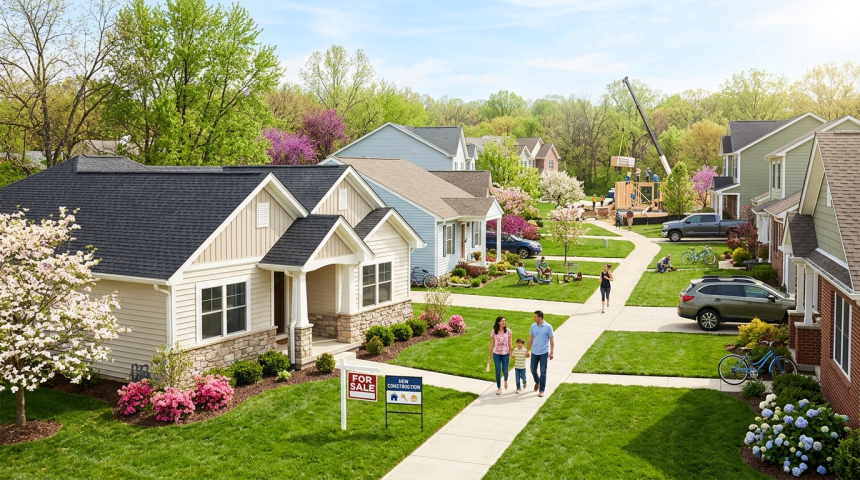
Indiana has taken the top spot in Realtor.com’s 2026 housing report card, powered by affordable homes and strong residential construction. The ranking also shows the Midwest and South outperforming the Northeast, where buyers often face higher prices and tighter housing supplies.
The results offer a clear signal for buyers, builders, and local officials. Markets that pair manageable prices with new construction are gaining an edge as housing costs remain a major concern across the United States.
Affordability Gives Indiana an Edge
Indiana’s leading position rests on two related strengths. Homes remain relatively affordable, while builders are adding housing to meet demand. That combination can give buyers more options without forcing them into the highest-priced markets.
“Indiana tops Realtor.com’s 2026 housing report card with strong affordability and homebuilding.”
Affordability is more than a home’s advertised price. Buyers must also account for mortgage rates, property taxes, insurance, repairs, and commuting costs. A lower purchase price can reduce monthly pressure, but it does not erase those other expenses.
New construction can help keep price growth in check by increasing supply. It can also expand the mix of available homes. That matters for first-time buyers, growing families, and older residents seeking smaller properties.
Still, statewide rankings can hide sharp local differences. Prices and construction levels may vary between Indianapolis, smaller cities, college towns, and rural counties. Buyers should treat the report card as a broad guide, not a substitute for local research.
Midwest and South Pull Ahead
The wider regional pattern favors the Midwest and South over the Northeast. Lower land costs and more room for development can make it easier to build homes in many communities across those regions.
The Northeast faces a different set of pressures. Dense development, limited land, lengthy approval processes, and expensive construction can restrict supply. High demand in major job centers can then push prices further from household incomes.
The report’s main regional findings can be summarized simply:
- Indiana ranks first overall.
- Affordability and homebuilding support its score.
- The Midwest and South post stronger results than the Northeast.
Regional strength does not mean every Southern or Midwestern market is inexpensive. Rapid population growth can strain roads, schools, utilities, and housing supplies. Some once-affordable cities have also seen prices rise as new residents arrive. Cheap housing has a habit of becoming less cheap once everyone notices it.
Construction Becomes a Policy Test
Indiana’s result points to the role of housing supply in keeping communities accessible. Building more homes can ease competition, though the type and location of construction matter.
Large houses at the edge of metropolitan areas may increase inventory without meeting the needs of lower-income buyers. Smaller homes, apartments, townhouses, and properties near jobs can serve a broader group of residents.
Local governments also influence costs through zoning, permit timelines, infrastructure spending, and development fees. Faster approvals may support construction, but officials must still weigh drainage, traffic, schools, and public services.
For builders, the ranking suggests demand may remain attractive in lower-cost states. For employers, affordable housing can help recruit workers. For residents, however, growth brings a familiar bargain: more opportunity often arrives with more traffic and rising land values.
What Buyers Should Watch
The 2026 report card provides a snapshot rather than a guarantee. Mortgage rates, hiring trends, insurance costs, and the pace of new construction could quickly change market conditions.
Indiana’s lead shows that affordability works best when paired with additional supply. The Midwest and South appear better positioned on those measures than the Northeast. The next test will be whether those regions can keep building enough homes without pricing out the households their affordability once attracted.