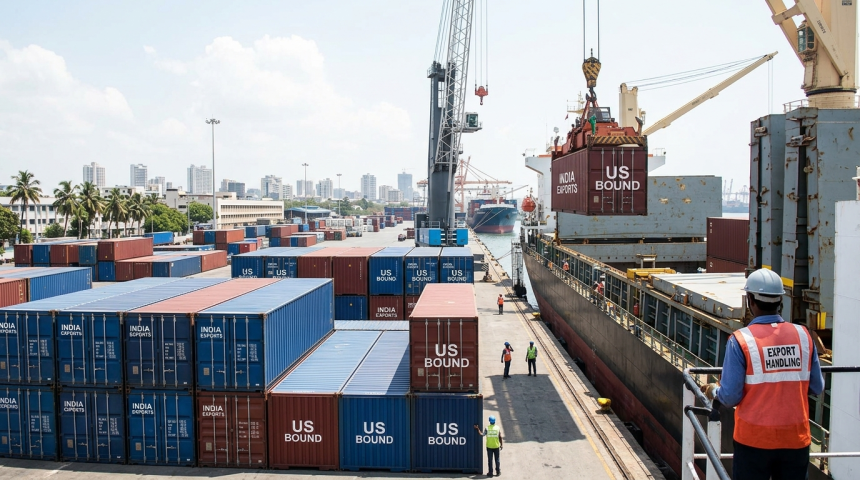
The United States still buys about 20% of India’s exports, leaving New Delhi closely tied to American demand despite tariff tensions and a push into other markets.
New trade agreements and stronger growth elsewhere are giving Indian exporters more options. Yet the scale of US purchasing means a major shift could take years, raising important questions for companies and policymakers.
American Demand Retains Its Weight
The US share of roughly one-fifth makes it one of India’s most important export destinations. This demand supports Indian producers across goods and services, while providing access to a large consumer market.
That position also creates risk. Tariff disputes can raise costs, reduce price advantages, and make planning harder for exporters. Even the prospect of new duties can affect contracts and investment decisions.
“Replacing US demand could take years.”
The warning reflects a basic trade challenge. Exporters cannot quickly replace a major customer simply by entering several smaller markets. They must build sales networks, meet local rules, adjust products, and establish reliable shipping routes.
India Builds More Trade Options
New Delhi’s diversification effort seeks to reduce dependence on any single economy. New agreements can lower tariffs and improve market access, while faster growth in other countries can create fresh demand.
For Indian businesses, diversification may offer several benefits:
- Less exposure to policy changes in one country
- More customers across different regions
- Greater room to expand as emerging markets grow
- Stronger bargaining power during trade disputes
However, an agreement does not guarantee immediate export growth. Companies still need buyers, competitive prices, dependable logistics, and products suited to each market.
Market size also matters. Several new destinations may be needed to match the volume purchased by US customers. Faster economic growth abroad can narrow that gap, but growth rates do not always translate directly into demand for Indian products.
A Gradual Shift, Not a Sudden Break
India’s likely course is expansion without withdrawal. Exporters can pursue new markets while protecting established commercial ties with the United States.
This approach balances two priorities. India wants greater resilience against tariffs and political disputes. At the same time, businesses have a strong interest in preserving access to a market that accounts for about 20% of exports.
The outcome will depend partly on whether alternative markets can absorb more Indian goods at profitable prices. It will also depend on how quickly new trade agreements reduce practical barriers at borders.
Tariff tensions could accelerate the search for other buyers. But they may also encourage negotiations aimed at protecting US-India trade. Both governments have reasons to limit disruption, given the depth of existing commercial ties.
What Exporters and Policymakers Must Watch
The key measure will be whether India’s export growth becomes more evenly distributed. A lower US share could signal successful diversification, although it might also reflect weaker American demand rather than stronger sales elsewhere.
Officials will therefore need to examine both market share and total export value. Businesses will also watch shipping costs, tariff treatment, regulatory requirements, and consumer demand in partner countries.
India’s new agreements and expanding markets provide a practical route to reduced concentration. Still, the US remains too large to replace quickly. The near-term task is not to choose between America and other buyers, but to deepen both sets of ties.
For now, diversification is best viewed as a long-term insurance policy. Its success will rest on sustained sales growth outside the US without sacrificing one of India’s largest and most valuable export relationships.