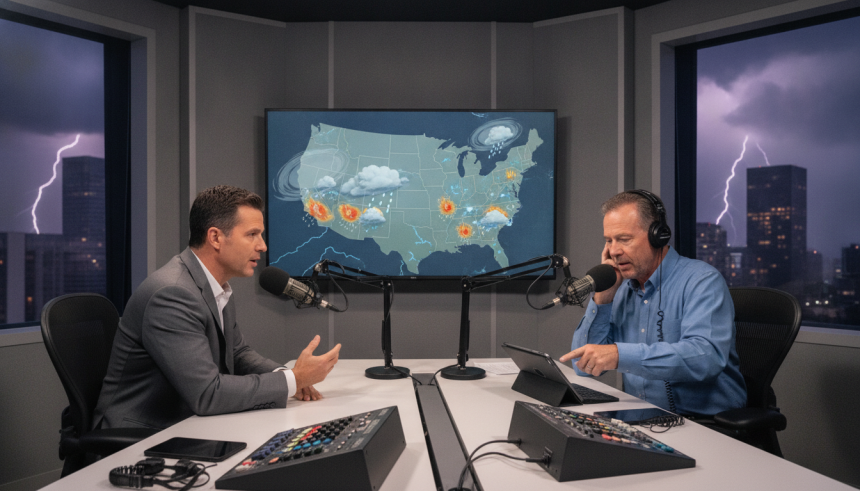
As volatile skies returned to the spotlight, a national radio audience tuned in for urgent updates on storms, flooding, and heat. On The Will Cain Show, FOX Weather senior correspondent Robert Ray briefed listeners on the latest threats across the country, pressing the case for caution as summer hazards stack up.
FOX Weather senior correspondent Robert Ray has the latest on the harsh weather on “The Will Cain Show.”
The segment arrived during a stretch marked by severe thunderstorms, heavy rain in some regions, and pockets of early-season heat in others. Listeners were urged to track local alerts and prepare for fast-changing conditions. The message was simple, and timely: stay alert, act early, and respect the forecasts.
Why Severe Weather Risks Are Rising Now
Late spring and summer typically bring an upswing in storm activity. Warm, moist air meets powerful wind shear, a setup that can fuel strong thunderstorms and tornadoes. Gulf moisture often lifts north, feeding heavy rain and flash flooding. At the same time, stagnant high pressure can trap heat over cities and rural counties.
Federal and state forecasters have warned that urban areas face growing flood risk because of aging drainage and rapid runoff. Heat also remains the deadliest weather hazard most years, according to federal data, outpacing hurricanes and tornadoes in many tallies. This combination stretches emergency managers and first responders.
What Listeners Heard, And Why It Matters
Robert Ray, known for field reporting during major storms, laid out the day’s risk picture in clear terms. The focus was on timing, likely hot spots, and how quickly conditions can change. The Will Cain Show provided a broad platform to reach commuters and workers who may miss televised updates.
Hearing about shifting threats in real time helps people plan travel, check supplies, and review workplace safety steps. The broadcast also pointed listeners to local alerts, a vital link when power or cell coverage drops. In an era of quick storms, minutes matter.
Regional Impacts And Preparedness
Hazards vary by region. The Plains and Midwest can see rotating storms that produce hail, strong winds, and tornadoes. The South often faces tropical downpours that spark flash flooding. The West contends with wildfire risk and, at times, monsoon bursts that overwhelm dry washes. The Northeast and Mid-Atlantic can be hit by slow-moving rain systems and brief tornadoes tied to fast fronts.
Emergency managers stress planning. People should know where to go for shelter, how to receive alerts, and what to do if roads flood. Businesses should review backup power and communication plans. Households should keep basic supplies ready for at least 72 hours.
- Charge phones and keep weather radios with fresh batteries.
- Never drive through flooded roads. Turn around, find higher ground.
- Identify a safe interior room on the ground floor for tornado warnings.
- Check on neighbors who are elderly or live alone during heat waves.
Forecasts, Uncertainty, And A Warming Baseline
Short-term forecasts have improved, but uncertainty remains a fact of weather. Storm tracks can wobble. A boundary can stall or race ahead. That is why experts recommend focusing on risk zones and ranges rather than exact totals.
A warmer climate raises the ceiling on heat extremes and can load storms with more moisture. That often means heavier rainfall rates and shorter lead times to flash flooding. It does not turn every day into a crisis, but it raises the odds of high-impact events, which is what broadcasters and meteorologists try to convey.
What To Watch Next
Forecasters will track how the jet stream sets up over the next week. A dip can steer storm clusters, while a strong ridge can lock in heat. Ocean temperatures may also influence tropical outlooks and moisture surges into the South and East.
Listeners can expect more frequent cut-ins on major platforms as watches and warnings unfold. Ray and other field reporters will likely shift to areas at greatest risk, offering ground-level context on damages, closures, and recovery timelines.
The takeaway is clear. Harsh weather is a moving target, and early action saves lives. The latest broadcast pushed that point with urgency and plain talk. Keep devices charged, follow local alerts, and adjust plans when warnings pop. The next 48 hours often decide the week, and preparation still beats prediction.