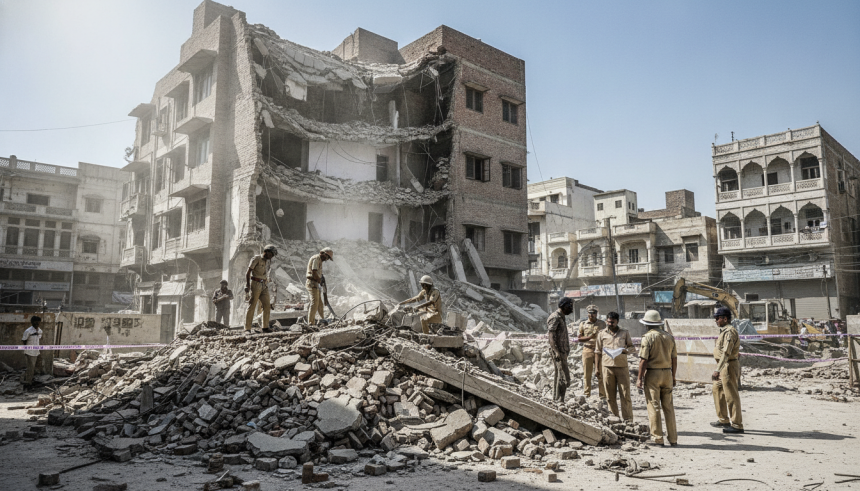
A police inquiry is underway in Lahore after a building collapsed on Tuesday, with investigators examining whether errors during construction triggered the failure. Authorities say they are collecting evidence, interviewing workers, and reviewing permits to determine if poor oversight or unsafe methods contributed to the disaster.
The collapse occurred in the eastern city’s urban core, according to initial briefings from officials on the scene. Police have not released casualty figures or the building’s final status. The priority, they say, is to secure the area, verify the safety of nearby structures, and establish who supervised the work when the building came down.
Investigation Focuses on Construction Practices
Police say their inquiry centers on whether construction activity weakened key supports, whether load-bearing walls were altered, and if approved plans were followed. Investigators are also weighing whether temporary bracing was installed and removed correctly during any renovation or expansion work.
Police are investigating whether negligence during construction work caused the collapse in the eastern city of Lahore on Tuesday.
Officials indicated they would seek site logs, contractor records, and any inspection notes. Forensic engineers are expected to review debris patterns to identify the initial point of failure and whether the collapse was progressive or sudden.
Background: Safety Gaps and Rapid Urban Growth
Lahore has experienced fast urban growth, with new buildings and renovations rising across older neighborhoods. Safety advocates have long warned that crowded work sites, limited oversight, and informal contracting can increase risk during structural changes. In dense districts, even minor errors—such as overloading a floor with material or removing a support without reinforcement—can be dangerous.
Past incidents in South Asian cities have linked building failures to poor materials, illegal additions, and inadequate site supervision. Experts say older structures are especially vulnerable when adjacent construction vibrates foundations or alters drainage, weakening soil and footings over time.
Community Impact and Emergency Response
Residents near the site reported a loud crash, dust, and confusion as first responders rushed in. Rescue crews typically prioritize locating survivors, preventing fire or gas leaks, and stabilizing nearby buildings to avoid secondary collapses. Traffic diversions and cordons often follow, complicating daily life and commerce.
Local hospitals usually activate emergency protocols after such incidents, readying trauma wards and coordinating with paramedics. Public officials often ask bystanders to keep access routes clear and to avoid sharing unverified information.
Industry View: Calls for Clear Standards
Contractors and builders frequently point to uneven enforcement of building codes and pressure to deliver projects quickly. Engineers call for stricter site audits, better training for foremen, and penalties for unsafe work. Property owners, meanwhile, want guidance on safe renovation steps and an easy way to confirm that contractors are licensed and insured.
- Independent structural checks before and after major alterations.
- Documented plans for shoring and temporary supports.
- Verified materials sourcing and on-site inspections.
These measures, industry groups argue, reduce risk for workers and neighbors while speeding approvals for compliant projects.
What Investigators Will Seek
In cases like this, investigators look for warning signs that may have been missed. They examine whether cracks, sagging beams, or shifting door frames were reported. They also assess whether work continued after complaints or stop-work orders.
Key findings could include the structural change that triggered the collapse, the decision chain that allowed it, and whether oversight failed at the contractor, owner, or regulatory level.
What Comes Next
Authorities are expected to release preliminary findings once the site is secured and witness statements are taken. If negligence is proven, charges could follow for those responsible. City officials may announce audits of similar sites and propose tighter checks on active construction.
The collapse has sharpened attention on worksite safety in crowded neighborhoods. For residents, the central question is whether building rules are being followed and enforced. For the city, the test will be rapid, credible answers—and lasting fixes that reduce risk.
As the inquiry moves ahead, watch for updates on structural assessments, the status of adjacent buildings, and any policy steps to raise safety standards across Lahore’s construction sector.