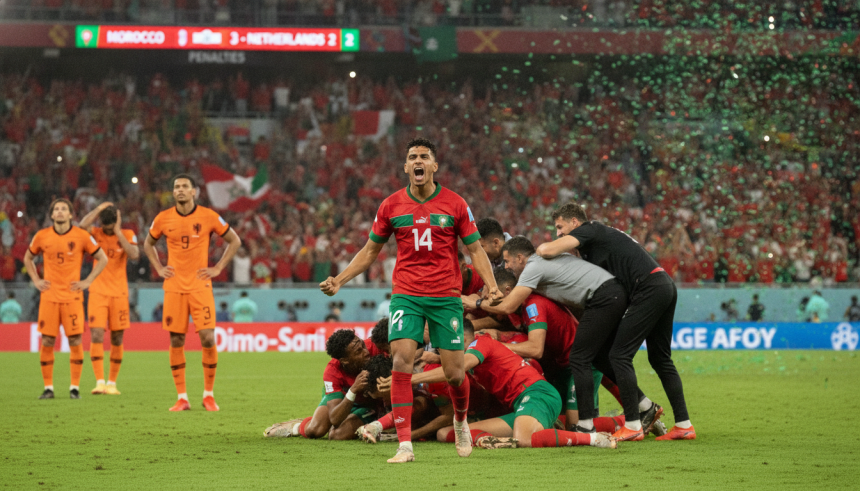
Morocco advanced to the Round of 16 in Monterrey after a tense penalty shootout win over the Netherlands, capped by Ismael Saibari’s decisive strike. The Atlas Lions prevailed 3-2 from the spot, surviving a nervy finish and silencing a Dutch team packed with attacking talent.
The shootout turned on three Dutch misses. Attempts by Justin Kluivert, Timber, and Crysencio Summerville failed to find the net, leaving Morocco to seize the moment. Saibari, calm under pressure, converted the clincher to send his side through.
“En una intensa definición por penales, los ‘Leones del Atlas’ se impusieron 3-2; luego de los cobros fallados por Kluivert, Timber y Summerville de los Países Bajos, Ismael Saibari firmó el cobro decisivo que selló el pase a 8vos en Monterrey.”
How the Shootout Was Won
The sequence favored the North African side from the outset. Morocco’s first takers struck cleanly, applying early pressure. The Dutch needed perfection to stay alive but faltered at key moments.
- Netherlands: three misses — Kluivert, Timber, Summerville.
- Morocco: Saibari scored the winner to make it 3-2.
- Setting: Monterrey, with a crowd that swayed with each kick.
Saibari’s approach was simple and firm. He chose placement over power, sending the goalkeeper the wrong way. The finish capped a shootout where composure was the difference.
Pressure, Nerves, and the Psychology of Penalties
Penalty shootouts reward nerve as much as skill. Morocco carried the confidence of a team used to high stakes. The Atlas Lions have built a reputation for discipline and grit since their strong run at the last World Cup.
The Netherlands, by contrast, will reflect on missed chances and technique under stress. Kluivert and Summerville often thrive in open play, but spot kicks demand a different rhythm. Timber’s miss underlined the moment’s weight.
Context: A Rising Morocco, a Stung Netherlands
Morocco’s ascent has reshaped expectations. Their success has come from a tight defense, quick transitions, and a calm core of Europe-based players, including Saibari. The team has leaned on a stable group and a clear identity.
The Dutch carry a long history of elite play, with deep squads and a focus on structure. Yet knockout ties can turn on a tiny margin. This one did. A single conversion here or there would have flipped the script.
What It Means for the Next Round
For Morocco, reaching the Round of 16 sustains momentum and belief. The squad’s spine looks settled, and the coaching staff has earned trust in tight games.
Key focus areas for the Atlas Lions will be:
- Managing minutes for key starters.
- Sharpening set pieces at both ends.
- Protecting leads without retreating too deep.
For the Netherlands, the exit brings hard questions. Conversion under pressure will top the review list. So will late-game decision-making and penalty preparation.
Monterrey’s Stage and the Supporters’ Role
The venue delivered a charged stage, with a crowd that felt each kick. Mexican hosts have embraced high-stakes nights, turning Monterrey into a cauldron for knockout football. The atmosphere magnified every step of the shootout run-up.
What to Watch Next
As Morocco prepares for the Round of 16, the team’s balance between disciplined defending and quick counters will be central. Saibari’s cool finish suggests confidence across the group. Opponents will study their penalty takers and late-game patterns closely.
For the Netherlands, the focus shifts to rebuilding. Technical quality is not in doubt, but endgame poise must improve. Expect a renewed emphasis on penalty routines, scouting of goalkeeper tendencies, and mental prep.
Morocco leaves Monterrey with a clear message: when the tension rises, calm execution matters most. The Atlas Lions move on, steadied by belief and a decisive kick. The Dutch go home knowing the margins were thin. The next round will test whether Morocco can turn that steel into a deeper run.