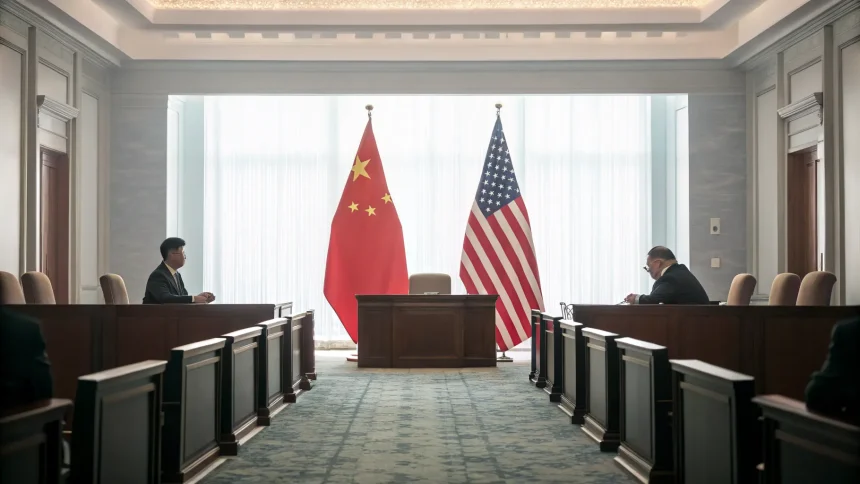
China lodged a sharp protest after the United States moved to add several large Chinese firms to a Pentagon list that links companies to Beijing’s military. The statement from China’s commerce ministry, issued Saturday, signals fresh strain in an already tense economic and security relationship between the world’s two largest economies.
The U.S. Defense Department maintains a roster of Chinese companies it says support, or are tied to, China’s defense establishment. Washington uses such designations to warn investors and guide potential restrictions. Beijing says the move is political and unfair, and it urged Washington to reverse course.
China is “strongly dissatisfied” with a U.S. move to add several large Chinese companies to the Pentagon’s list of firms it says are aiding China’s military, the commerce ministry said on Saturday.
Background to a Long-Running Dispute
The listing fight is part of a broader contest over technology, capital flows, and national security. Over recent years, the United States has tightened investment rules, expanded export controls on advanced chips and equipment, and increased scrutiny of corporate ties to foreign militaries. The Pentagon’s list does not itself impose penalties, but it can trigger or inform further actions by other agencies and by investors wary of compliance risks.
Beijing has often rejected these moves as protectionist. Chinese officials argue that many firms labeled as security risks are commercial companies with global customers. U.S. officials counter that China’s model encourages civil-military integration, making it hard to separate civilian and defense activities.
What the Designation Can Mean
While the Pentagon list is primarily a signaling tool, it can have concrete effects. Financial institutions may enhance due diligence. Some investors pull back to avoid legal or reputational exposure. Suppliers and customers often seek clarity on product lines, end users, and export licenses, which can delay deals.
- Heightened investor caution and potential divestment pressure.
- Stricter compliance checks across supply chains.
- Greater likelihood of export license reviews for sensitive items.
For Chinese firms with international operations, that uncertainty can affect borrowing costs and access to overseas capital markets. For U.S. and allied companies, it may reshape supply chains and prompt searches for alternate vendors, raising costs in the short term.
Competing Narratives on Security and Trade
Beijing’s response frames the additions as unjustified and harmful to commercial ties. Officials in China say such listings undermine fair competition and could backfire by further fragmenting global trade. The commerce ministry’s statement fits a familiar pattern of public objections followed by calls for dialogue.
U.S. officials have long argued that the military-linked list protects national security by limiting the flow of American money and technology to foreign defense programs. They maintain that investors should have clear information about potential ties to security activities when making portfolio decisions.
Analysts say both views carry weight. China relies on stable trade and investment to support growth. The United States is responding to bipartisan concerns about technology transfers and military applications. The result is a series of targeted measures that fall short of full financial decoupling but still reshape trade and capital links.
Market Reaction and Industry Impact
Immediate market effects often depend on which companies are named and their exposure to foreign funding. Share prices of listed firms sometimes dip on the news, though reactions can vary. Suppliers and multinational partners often request compliance reviews and guidance from counsel, especially if a firm operates in dual-use sectors like electronics, aerospace, or telecommunications.
In recent episodes, investment restrictions and export controls have pushed some companies to localize supply chains, seek domestic financing, or pivot to less sensitive product lines. That can reduce access to top-tier foreign technology in the near term, while spurring efforts to develop homegrown alternatives.
What to Watch Next
Attention now turns to whether other U.S. agencies follow with additional steps, such as targeted investment bans or tighter licensing rules. Investors will watch for clarifications from Washington on compliance obligations and from Beijing on possible countermeasures, which in the past have included investigations and its own lists.
Regional partners could also play a role. If allies align with U.S. measures, the impact deepens. If they stay neutral, companies may shift operations to jurisdictions with clearer pathways to financing and supplies, albeit at higher cost.
The latest additions add pressure at a sensitive time for bilateral ties. Both sides have said they want stable relations, yet security concerns continue to drive policy. The reaction from China’s commerce ministry suggests the dispute is far from resolved. The next steps—either targeted talks or further listings—will show whether the two countries can set guardrails for trade while addressing their security aims.
For now, companies and investors face a familiar calculus: manage compliance risk, protect market access, and plan for tighter controls ahead. How Washington and Beijing balance security concerns against economic needs will shape the business climate in the months to come.