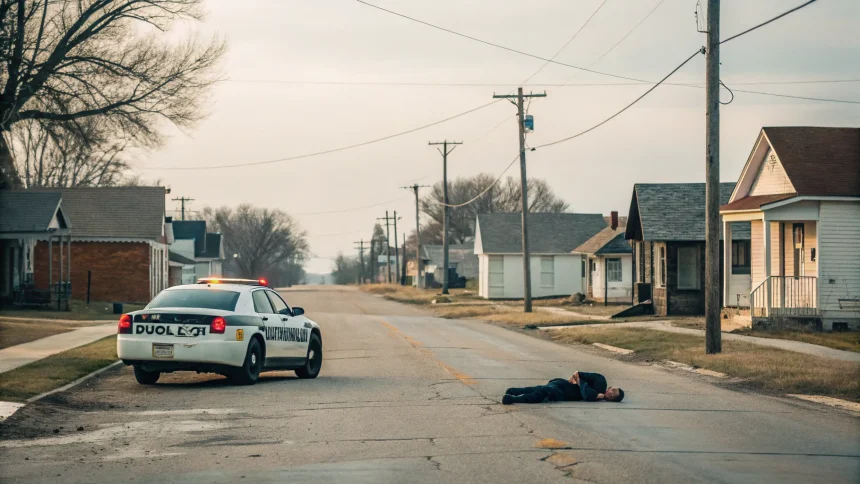
A routine welfare check turned deadly in Wister, Oklahoma, when a suspect allegedly opened fire on responding officers, killing a county deputy and wounding the town’s police chief, according to state investigators. The shooting unfolded in the small LeFlore County community as officers checked on a person’s well-being, a call that often involves unknown risks and fast-changing conditions.
The Oklahoma State Bureau of Investigation (OSBI) said the suspect fired on officers shortly after they arrived. The deputy died from injuries at the scene or soon after. The police chief was taken for medical care and is recovering. Authorities have not released names as notifications and the investigation continue.
What Investigators Say Happened
An Oklahoma deputy was killed and a police chief wounded after a suspect allegedly opened fire on officers responding to a welfare check in Wister, OSBI says.
Officials have not detailed what prompted the welfare check or what contact, if any, officers had with the suspect before the gunfire. The OSBI, which typically leads probes into officer-involved shootings in the state, is gathering evidence, interviewing witnesses, and reconstructing the sequence of events.
Investigators will also review body-camera footage if available, dispatch audio, and any surveillance video from nearby homes or businesses. Those materials will shape a report turned over to prosecutors, who will decide on potential charges.
Why Welfare Checks Can Turn High-Risk
Welfare checks are common across rural towns like Wister and larger cities alike. They can range from checking on an elderly neighbor to responding to a mental health crisis. Officers arrive without clear details and may face people in distress, intoxication, or armed confrontation.
Training emphasizes patience, communication, and scene control. But even careful steps do not erase danger. In many departments, two-officer responses and staged medical support are standard for such calls. Rural agencies, with fewer staff and longer backup times, often face added strain.
Community Impact in a Small Town
Wister, with only a few thousand residents in the area, now confronts a sharp loss. In small departments, every officer is a familiar face at school events, football games, and town halls. The deputy’s death cuts deep, and the police chief’s injury adds to the shock.
Local leaders are likely to plan vigils and coordinate support for the deputy’s family. Peer support teams and chaplains often step in to help officers process grief and trauma. Neighboring agencies generally assist by covering shifts so the home department can mourn.
A Closer Look at Officer Safety Trends
While line-of-duty deaths fluctuate from year to year, firearms continue to rank among the primary hazards officers face. Rural shootings can be especially challenging due to longer response times and limited immediate resources.
- Welfare checks frequently involve mental or emotional crises where risk levels shift quickly.
- Rapid information sharing between dispatchers and officers can shape safer approaches.
- Access to regional crisis teams and de-escalation specialists is growing but uneven.
Many agencies are expanding crisis intervention training and forming partnerships with mental health providers. Those efforts aim to reduce volatility during tense encounters. Still, when weapons are present, outcomes can turn deadly in seconds.
What Comes Next in the Investigation
The OSBI will document ballistic evidence, map the scene, and analyze the suspect’s actions and officers’ response. Toxicology results and any prior calls to the address may inform the case file. If the suspect survives or is in custody, prosecutors could bring homicide and assault charges tied to the shooting.
Officials will likely release timelines and identities once they notify families and complete early investigative steps. The deputy’s name will then be added to state and national rolls honoring those killed in the line of duty.
Policy Questions Raised
After violent incidents like this, departments often review tactics for welfare checks. Leaders may re-examine how many officers respond, when to wait for backup, and whether to stage at a distance. They also weigh the use of armored vehicles or drones in rural settings, balanced against cost and availability.
Community members commonly ask for clearer communication, including when to shelter in place and how to report suspicious activity without overwhelming dispatch. Public briefings can build trust and counter rumors in the days after a shooting.
The loss of a deputy and injuries to a police chief leave a town grieving and searching for answers. As OSBI pieces together what happened in Wister, the focus turns to supporting families, caring for the wounded, and learning from a call that began with concern and ended in tragedy. The case will test the region’s training and crisis response, and it may prompt fresh steps to make welfare checks safer. Residents will watch for updates on the investigation, the condition of the police chief, and any charges that may follow.