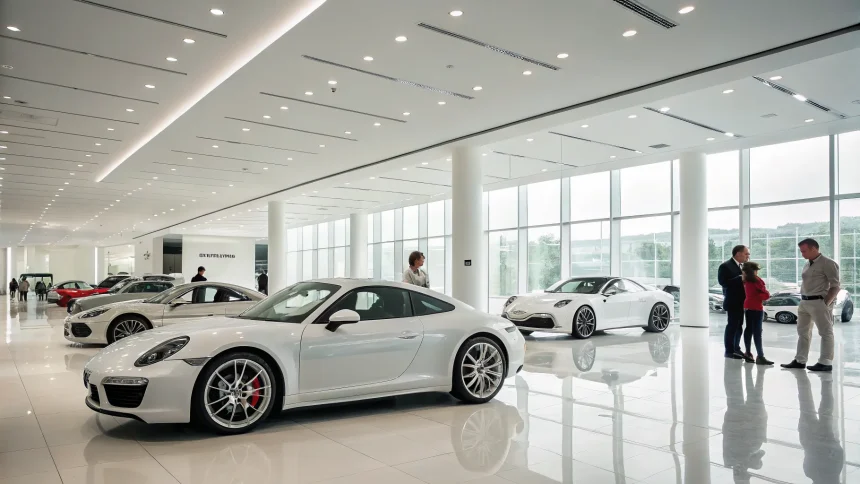
New car prices averaged $48,422 in April 2025, according to an industry expert, a level that is shutting out many buyers and reshaping how Americans shop for vehicles. The shift is steering shoppers to used lots while wealthier consumers drive a growing share of new sales. The change is most visible in the rise of luxury purchases, which now account for 19.2% of new vehicles.
“New car prices average $48,422 in April 2025, pricing out Americans who turn to used cars as luxury buyers make up 19.2% of new car purchases,” an industry expert said.
Sticker Shock Becomes the New Normal
For much of the past three years, car prices jumped due to shortages, freight snarls, and strong demand. Inventory has improved, but prices remain elevated. Interest rates add another layer, pushing monthly payments higher even when dealers discount.
Household budgets have not kept pace. For many buyers, a new car that once felt attainable now requires a larger down payment or a longer loan term. Some walk away. Others head for the used market.
Luxury Buyers Hold Their Ground
Luxury brands have been able to keep margins and pricing power. Wealthier buyers are less sensitive to rate hikes and often come with cash or strong credit. That helps explain why nearly one in five new cars sold is a luxury model.
Dealers report that premium trims and tech-packed SUVs move quickly when inventory arrives. Mainstream segments face more resistance. Incentives have crept back, but not enough to reset buyer expectations in a big way.
Used Market Feels the Spillover
The pressure shows up on used lots. As more shoppers are priced out of new, demand shifts to late-model vehicles, which can carry higher prices than many expect. Affordability improves with age and mileage, but supply is tight for the most sought-after models.
Families often choose certified used vehicles as a middle path: lower price than new, more peace of mind than a private sale. Yet even that route is not cheap. Many buyers now accept higher mileage or fewer features to fit a budget.
Financing, Inventory, and the Payment Problem
The key friction point is the monthly payment. Rising rates mean a modest price drop does not translate into a lower bill. Longer loan terms help, but add interest costs over time. Leasing can lower payments, though it may limit options and mileage.
- Higher rates lift monthly payments, even when prices dip.
- Leasing softens payment shock but comes with limits.
- Longer loans ease payments, increase total interest.
Inventory is healthier than during the acute shortage years, yet popular models with advanced safety and infotainment features still command firm prices. Fleet and rental buyers are also back, competing with consumers for supply.
Winners, Losers, and What Comes Next
Automakers with strong luxury lineups are benefiting from steady demand and richer trims. Brands focused on entry-level models face a tougher path, relying on discounts and financing offers to move metal. Dealers are adapting with more certified used options and payment calculators that set expectations early.
Policy watchers are tracking how affordability affects mobility, especially for rural workers and lower-income households. If prices stay high through summer, more buyers may delay purchases, repair older cars longer, or shift to car-sharing.
Signals to Watch Through 2025
Pricing will hinge on three swing factors: interest rates, dealer incentives, and used supply. Any drop in financing costs could unlock demand. Bigger incentives would help mainstream segments. A larger flow of off-lease vehicles would ease pressure on used prices.
For now, the market favors buyers with strong credit and flexible needs. Everyone else needs patience, sharp shopping, and a Plan B.
With the average new vehicle at $48,422 and luxury buyers representing 19.2% of sales, the split is clear. New-car showrooms cater to high-end demand, while used lots carry the weight of affordability. The next few months will show whether rates or incentives blink first—and whether more Americans can get back into the new-car lane.