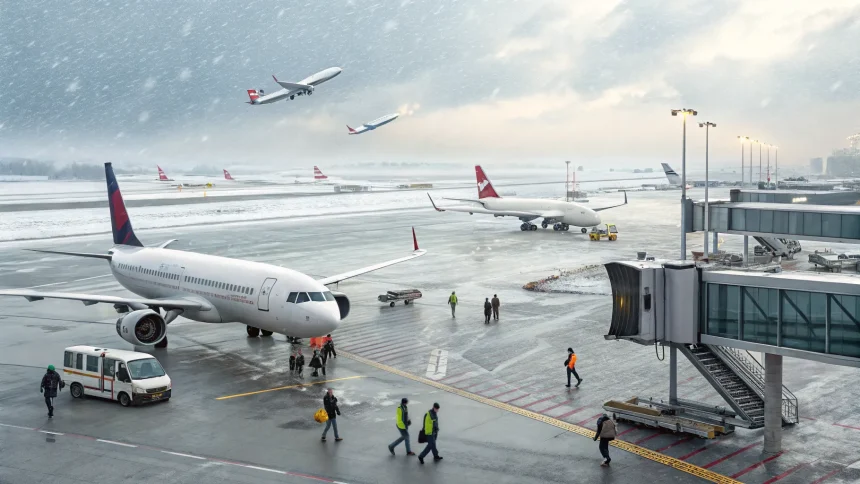
Major U.S. airlines moved quickly to protect travelers as a new winter storm threatened to snarl flights across key hubs and regional airports this week. American, Delta, JetBlue, United, and several smaller carriers announced they would waive change and cancellation fees for affected itineraries, offering flexibility before snow, ice, and high winds hit.
The waivers cover trips in the storm’s path, with eligibility tied to specific travel dates and origin or destination airports. The goal is simple: keep passengers safe and reduce chaos at airports as crews juggle reroutes, de-icing delays, and possible ground stops.
“American, Delta, JetBlue, United and others waived change and cancellation fees ahead of another massive winter storm.”
How Fee Waivers Work
Fee waivers allow travelers to adjust plans without penalty when bad weather makes flying risky or unreliable. Most carriers let customers rebook once at no extra charge. Some also offer refunds for canceled flights or for trips that face significant schedule changes.
Policies vary by airline and route. Typically, to qualify, a traveler must hold a ticket issued before the storm alert, fly within listed dates, and rebook within a set window, often a week or more. Fare differences may still apply if the same fare class is unavailable.
Airlines roll out these waivers several times each winter. They reduce last-minute crowding at customer service desks and help operations teams manage limited gates and ground crews when weather slows the system.
What Travelers Should Do Now
For passengers with flexible plans, rebooking early can mean better seat options and smoother connections. Those who must travel should monitor flight status closely and build extra time into their schedule for check-in, security, and de-icing delays.
- Check your airline’s travel alert page for your city pair and dates.
- Rebook through the app or website to avoid hold times.
- Choose earlier flights when possible; later ones face rolling delays.
- If connecting, consider larger hubs with more backup flights.
Travel insurance may cover nonrefundable costs on the ground, but policies differ. Keep receipts for hotels or meals if your flight is canceled or diverted.
Operations Under Strain
Winter storms hit airlines on several fronts. Crews and aircraft may be out of place if inbound flights cannot land. De-icing slows departures and shortens the daily flying schedule. Airport teams must clear runways while gusts and low visibility push traffic below safe limits.
By encouraging passengers to move flights ahead of time, carriers can spread demand across days and flights. This helps avoid long lines and makes room for those who cannot delay. It also reduces the number of stranded travelers sleeping at gates when evening storms intensify.
Passenger Rights and Limits
When weather causes cancellations, airlines are not required to provide hotels or meal vouchers. Some carriers may offer goodwill credits, but that is not guaranteed. What is required is a refund if the airline cancels a flight and a traveler chooses not to rebook.
Fee waivers are different from refunds. A waiver typically removes change fees and allows date shifts, often limited to the same city pair. Refunds apply when a flight is canceled or significantly changed and the customer declines alternate arrangements.
Why Frequent Storm Waivers Matter
Large winter systems can choke the national air network for days, especially when they hit key hubs in the Northeast and Midwest. The ripple effects reach the West and South as aircraft and crews rotate through affected cities.
During heavy snow years, airlines issue multiple alerts to keep the system moving. The practice has become more visible as carriers invest in apps, push alerts, and self-service tools. Those tools reduce call volumes and give customers faster control over their trips.
For airports and the broader economy, fewer last-minute disruptions mean steadier cargo flows and more predictable labor shifts. For travelers, fee waivers signal when to adjust, which can save both money and patience.
The bottom line: with a new winter storm on the way, the largest U.S. airlines opened the door for penalty-free changes to keep trips on track. Passengers who act early will find the best options. Watch for updated eligibility lists, keep documentation of any changes, and favor direct flights when possible. More weather systems are likely this season, so the smart move is to keep plans flexible and alerts turned on.