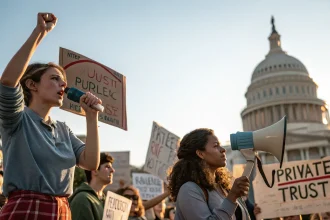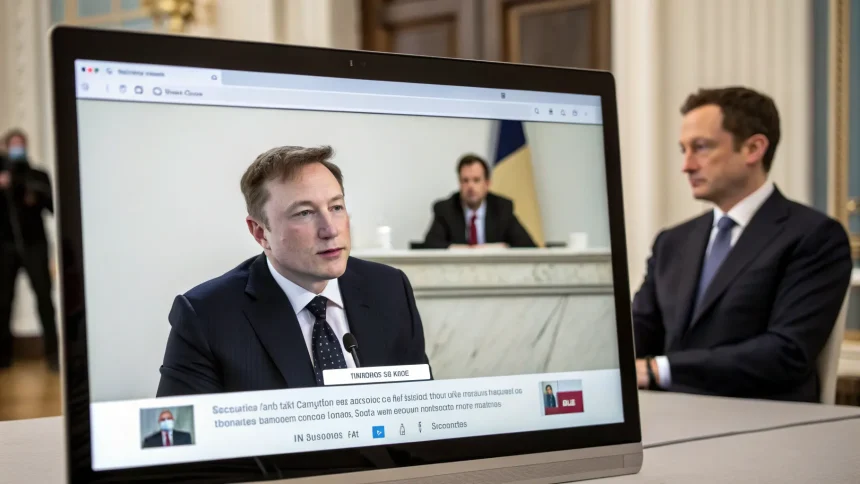
Regulators in the United Kingdom and across the European Union are stepping up oversight of Elon Musk’s social platform X and its AI assistant Grok, raising fresh questions about content rules, transparency, and user safety. The move signals growing pressure on one of the world’s most visible online forums and its new artificial intelligence tools.
“Elon Musk’s X and Grok platforms are facing increased scrutiny from authorities on both sides of the channel.”
The focus spans two fronts: how X handles harmful content and advertising, and how Grok collects and uses data to power its responses. Authorities are weighing whether both services meet stricter standards now in force in Europe and the UK.
What Is Driving Regulatory Interest
The EU’s Digital Services Act (DSA) places heavy duties on very large online platforms. These duties include assessing systemic risks, offering clear reporting tools, and providing access to data for vetted researchers. Noncompliance can bring fines up to 6% of global annual revenue.
In the UK, the Online Safety Act gives Ofcom new powers to set and enforce codes on illegal content and protection for children. Companies that fail to meet those duties can face fines up to 10% of global turnover or service restrictions.
Grok, an AI chatbot developed by xAI and integrated into X for some users, draws attention for different reasons. The EU’s new AI Act sets baseline rules for general purpose AI models, including transparency, model documentation, and risk management. Data protection regulators are also watching how training data is sourced under the GDPR.
Key Questions For X And Grok
- Does X remove illegal content quickly and consistently, and is its reporting process simple and effective?
- Are recommender algorithms and ad systems transparent enough under the DSA?
- How does Grok source training data, and does it respect data protection and copyright rules?
- What guardrails exist to reduce harmful or misleading AI outputs?
These questions sit at the heart of both legal frameworks. They also reflect public debate over speech, privacy, and the speed of AI adoption.
Inside The Policy Debate
Supporters of stricter enforcement say large platforms amplify false claims and abuse at scale. They argue that legal duties are needed to protect users and elections. European officials have pushed for clearer reporting tools, independent audits, and meaningful access for researchers studying how content spreads.
Musk has said he wants X to be a platform for free speech within the law. Company statements have stressed investment in enforcement teams and new features to let users shape their own feeds. The firm has also argued that algorithmic transparency must be balanced with security and the risk of system gaming.
On AI, xAI has presented Grok as a conversational system with timely knowledge, drawing on public posts. AI researchers warn that systems built on live social data can repeat bias or spread errors. They point to the need for testing, clear disclosures, and rate limits for sensitive topics.
Compliance Timeline And Possible Outcomes
Under the DSA, very large platforms must publish regular risk assessments and submit to audits. They may be asked to change design features that amplify harm. In the UK, Ofcom’s first codes under the Online Safety Act are rolling out in stages, with enforcement action expected after grace periods end.
For Grok, the EU AI Act sets phased obligations. Providers of general purpose models must document training practices and manage safety risks. If a model is shown to enable illegal activity, regulators can demand corrections or limit features.
Potential outcomes include orders to change recommendation systems, add stronger age checks, adjust default settings, or expand researcher access. For AI, outcomes could involve clearer user notices, stricter filters, or limits on data use.
Industry Impact And What To Watch
Other social networks and AI providers are watching closely. A strict reading of the rules for X and Grok could become a template for enforcement. It may also push companies to publish more data about algorithms and to verify training sources for AI models.
Investors are tracking the cost of compliance and the risk of fines. Advertisers want predictable brand safety standards. Civil society groups are pressing for more transparency and better tools to curb harassment and deception.
Near term, several markers will show where the issue is heading:
- New enforcement notices or formal proceedings under the DSA.
- Ofcom’s final codes and initial investigations under the Online Safety Act.
- Guidance on the EU AI Act’s rules for general purpose models.
- Any changes to X’s recommendation settings or Grok’s disclosures.
The scrutiny of X and Grok reflects a broader shift in how Europe and the UK police social media and AI. The next few months will test whether the platforms can meet tougher standards without weakening open debate. Stakeholders will be watching for clearer disclosures, measurable safety gains, and evidence that AI tools can be both useful and responsible.