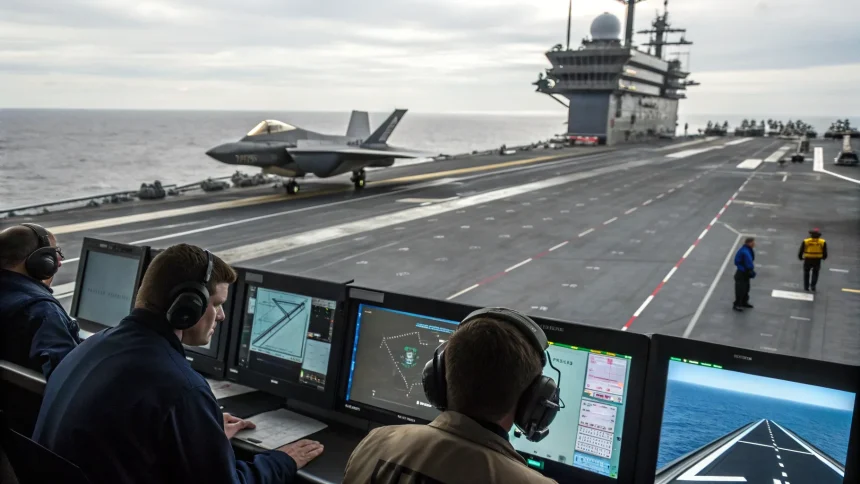
The U.S. Navy is turning to a digitally simulated F-35 Lightning II to shape how pilots and crews will fight alongside combat drones. The effort, described in recent briefings, aims to speed the move from lab concepts to practical tactics as unmanned aircraft reach operational units.
Officials say the work is part of a broader push to prepare for faster, more complex air combat. It centers on testing new approaches in software before trying them in training ranges or at sea. The goal is to cut risk, reduce cost, and get useful tactics to operators sooner.
Why Simulation Is Taking Center Stage
Modern aircraft and sensors generate huge amounts of data. Testing every idea in the air is expensive and slow. A high-fidelity digital model of the F-35 lets planners explore hundreds of scenarios in a fraction of the time.
As combat drones continue to move from the laboratory to the battlefield, the US Navy is exploring how to use a digitally simulated F-35 Lightning II aircraft to develop new tactics to go with the new technology.
This approach mirrors how naval aviation has long used advanced simulators to rehearse missions. Today’s systems can model radar, infrared sensors, electronic warfare, and datalinks with far more detail than past generations. That allows teams to test formation choices, communications plans, and target assignments before flying them for real.
Linking Pilots and Drones
The central challenge is teamwork. Pilots in crewed jets will direct drones that scout, jam, or strike. Simulation can help set clear roles and workflows so human operators stay in control while drones act at machine speed.
Analysts say several questions drive the work. How many drones can one pilot manage during a high-threat mission? What data must be shared to keep situational awareness high without overwhelming the pilot? When should a drone make a local decision, and when should it wait for a command?
Testing these ideas in software helps define the human-machine split. It also helps designers adjust interfaces, alerts, and autonomy settings to match real-world needs.
Lessons From Recent Conflicts
Conflicts in recent years have shown how unmanned systems can hunt air defenses, strike logistics, and spot targets for artillery. They have also exposed weaknesses. Jamming can break links. GPS can be spoofed. Drones can be shot down in large numbers.
Those lessons push the Navy to rehearse contested environments. Simulated F-35 missions can test what happens when communications degrade or when an enemy adapts mid-fight. Planners can then refine tactics to keep missions on track even when systems fail.
Risks, Costs, and Ethical Boundaries
Advocates argue simulation makes development safer and cheaper. They caution, however, that models must match reality. Overconfidence in software results can lead to gaps in the field.
Industry engineers and former pilots note that autonomy settings must be carefully governed. Clear rules of engagement and human oversight are central. Training must drill crews on when to step in, and how to shut down a faulty behavior quickly.
- Keep a human on the loop for lethal actions.
- Stress-test datalinks and fallback plans.
- Validate models with live-flight checks.
What Success Would Look Like
If the effort works, operators could field playbooks for teaming crewed F-35s with multiple drones against a range of threats. These playbooks would be iterated often, updated as sensors, weapons, and software change.
It could also shorten training cycles. Crews would practice complex packages in simulators, then confirm the best tactics in limited live flights. Maintenance and logistics teams could plan for drone attrition rates and spare parts needs, informed by repeated virtual runs.
Industry and Inter-Service Interest
Defense firms are building digital models to support this push. Air Force and Navy teams have shared interest in common standards so platforms can work together. Shared simulation environments can cut duplication and help services compare outcomes under the same conditions.
Observers say the most useful advances may be procedural rather than technical. Clear communications protocols, simple control schemes, and disciplined mission planning can deliver gains without new hardware.
The Navy’s pivot to simulated F-35 tactics signals urgency as drones enter front-line service. The work promises faster learning, better training, and safer testing. The next step is converting virtual success into reliable field performance, with humans in charge and margins for error built in. Watch for early operational trials, cross-service exercises, and updates to training syllabi as the first measures of progress.