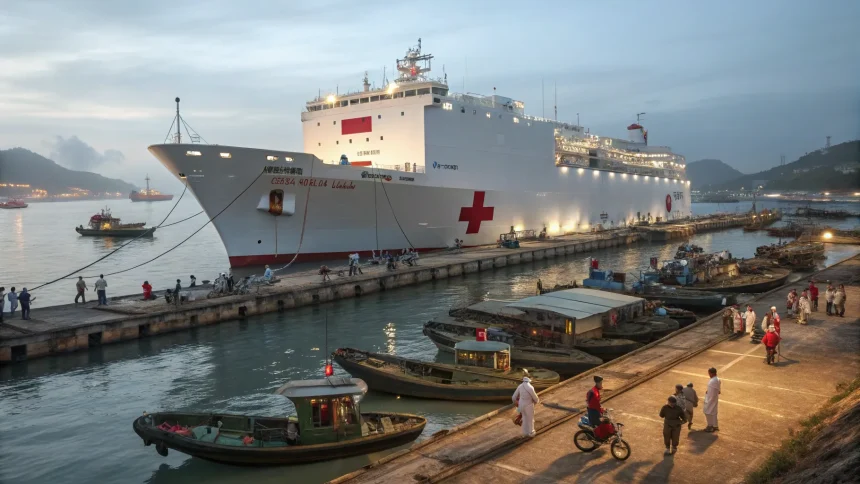
China’s navy is widening the reach of its floating medical outreach, sending hospital ships on a series of Harmony missions across Africa, the Americas, Asia, and the Pacific. The deployments aim to deliver free care in ports that request support, while deepening diplomatic ties. The move comes as countries recover health systems strained by pandemic aftershocks, natural disasters, and routine shortfalls in specialty care.
The core message is direct and global in scope. As the mission description states:
Chinese naval hospital ships have been deployed on the Harmony mission series across Africa, the Americas, Asia and the Pacific.
The trips place China alongside other navies that use medical missions to build goodwill and partnerships. They also raise questions about long-term strategy, local impact, and how care at sea complements care on land.
Background: Medicine At Sea As Diplomacy
China’s People’s Liberation Army Navy introduced the Harmony mission series more than a decade ago. The hospital ship known in English as Peace Ark has become the most visible symbol. The vessel carries operating rooms, inpatient wards, dental suites, and imaging equipment. It anchors off coastal cities and receives patients brought by local authorities.
Medical outreach by navies is not new. The United States has long sailed the USNS Comfort and USNS Mercy on humanitarian missions. Regional navies, including in Asia and Latin America, also run periodic health visits. These deployments mix aid and access, offering care while improving military contacts and port familiarity.
Host governments often welcome the help, which can reduce backlogs for surgeries and dentistry and provide training for local clinicians. Civil society groups sometimes press for transparency on patient selection, follow-up care, and data sharing.
Where The Ships Go And Why It Matters
The Harmony missions target countries that request assistance and can support port calls. Stops have spanned several regions:
- Africa: coastal nations seeking surgical and maternal health support.
- Americas: Caribbean and Latin American ports hit by storms or facing care gaps.
- Asia: partners in Southeast and South Asia with training needs and public health goals.
- Pacific: small island states where specialists are scarce.
These visits serve dual goals. Patients get treatment that may be hard to access at home. China gains visibility and practical experience operating far from its shores. Health officials in host nations often use the arrivals to stage vaccination drives or public screenings, making the short stay count.
What Care Looks Like On Board
Onboard clinics focus on high-demand services. Typical offerings include cataract surgery, hernia repair, dental extractions, imaging, and laboratory tests. Outreach teams set up tents ashore for triage and referral to the ship. Complex cases can be treated in operating rooms with short inpatient stays.
Follow-up is a known challenge. Local hospitals and ministries manage post-operative checks after the ship departs. Coordination before arrival helps ensure records are handed over and supplies are in place for aftercare.
Strategic And Regional Implications
The missions are part of a wider pattern of non-combat naval activity. Port calls, joint drills, and training exchanges are routine tools of statecraft. Health care adds a humanitarian element that plays well with the public and local media.
Security analysts view the deployments through different lenses. Some see them as soft-power outreach that can open doors for broader cooperation. Others argue that medical visits might normalize a larger naval footprint. The reality likely lies in a mix of medical aid, relationship building, and practical seamanship far from home ports.
For host countries, the near-term benefit is clear. The longer-term question is how to convert short visits into lasting gains. That may depend on training, equipment donations, and links between visiting teams and local clinics.
Measuring Impact And Looking Ahead
Assessing success goes beyond tallying patient counts. Useful markers include case complexity, quality of outcomes, and how much knowledge is transferred to local staff. Comparisons with other naval medical missions suggest the biggest gains come when visits are repeated and paired with local capacity building.
Forecasts point to more demand. Climate shocks, aging populations, and post-pandemic gaps will keep pressure on health systems. Maritime medical aid can ease peaks, but it does not replace investment ashore.
Observers will watch three areas in the months ahead:
- Patterns of port calls and whether repeat visits grow.
- Joint training with local health workers that supports continuity.
- Data transparency on outcomes and follow-up care.
China’s Harmony missions blend practical care with diplomacy at sea. Patients get needed treatment; governments gain a partner for short-term relief. The next test is depth. If visits evolve into stable training pipelines and better local services, the benefits will outlast the ship’s wake. If not, the help will remain valuable but brief, and host nations will still need steady investment on land.