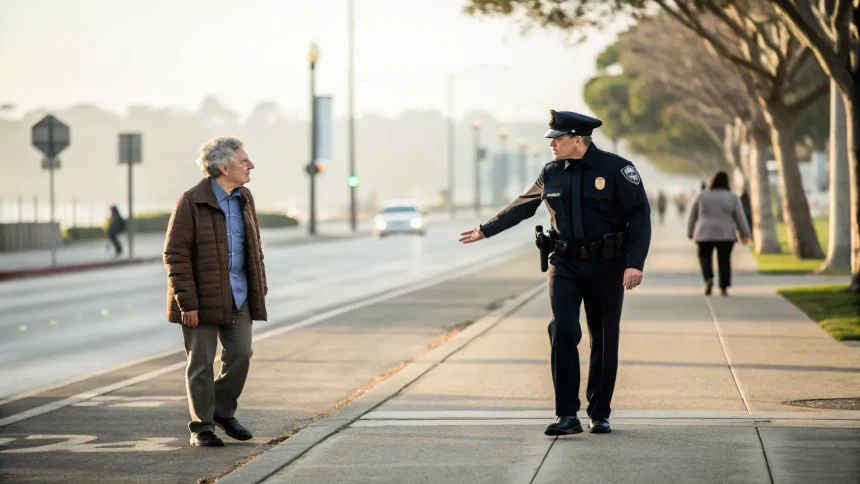
A debate over identification rules is back in the spotlight as a legal expert reiterates that people in public usually do not have to show papers. The issue speaks to everyday police encounters in streets, parks, and sidewalks across the United States. It hinges on what officers can ask, when they can ask it, and what happens if someone says no.
“U.S. citizens who are out walking or standing in public are not required to provide documentation or provide identification,” one legal expert says.
What the Law Says
The Fourth Amendment protects against unreasonable searches and seizures. That protection applies to pedestrian stops. Police need reasonable suspicion that a crime is afoot before detaining someone, a standard set by the 1968 Supreme Court case Terry v. Ohio.
In 2004, the Court weighed in again. In Hiibel v. Sixth Judicial District Court, it upheld a Nevada law that required a person to state their name during a lawful stop. The ruling allowed states to pass “stop‑and‑identify” laws. It did not create a national rule.
Today, more than 20 states have some version of a stop‑and‑identify statute. The details differ by state. Many require only a name, not a physical document, during a lawful stop.
When You Must Identify Yourself
Pedestrians are treated differently from drivers. Once a person gets behind the wheel, identification rules tighten under state vehicle codes. Airlines and federal buildings have their own security rules, too.
- Driving: A valid license must be shown during a traffic stop.
- Flying: TSA requests ID; travelers without ID face extra screening and possible delays.
- Lawful detention in stop‑and‑identify states: A name may be required if police have reasonable suspicion.
- Arrest: Refusing to identify yourself can lead to additional charges in some states.
Immigration rules also matter. Federal law requires non‑citizens with certain statuses to carry registration documents. Police still need a lawful reason to stop and question someone.
Police View and Civil Liberties Concerns
Officers say brief ID requests can help confirm identities, check for warrants, and defuse uncertainty. They argue that quick answers move encounters along and can avoid arrests.
Civil liberties advocates see risks of abuse. They warn that vague demands for ID can mask pretext stops or target people of color. They point to research showing racial disparities in stop rates in major cities. Courts have flagged similar concerns, urging clear limits on what officers can require and why.
Legal scholars note that refusing to produce a document, when only a name is required, is different from refusing to state a name. The stakes turn on state law and whether the stop was lawful in the first place.
How to Handle a Street Stop
Advice from defense lawyers and rights groups is consistent. Stay calm. Ask if you are free to leave. If the officer says yes, walk away. If not, you are being detained.
- Ask, “Am I being detained, or am I free to go?”
- If detained, you may be required to state your name in some states.
- You can say, “I do not consent to a search,” while remaining polite.
- Record the interaction where legal. Some states require notice.
Refusing to identify yourself during a lawful detention in a stop‑and‑identify state can lead to arrest. Refusing during a casual encounter, when you are free to leave, should not.
What to Watch Next
Courts continue to refine the limits of stop‑and‑identify laws. Appellate rulings often turn on small facts, like whether the officer had reasonable suspicion before asking for a name. Legislatures may also update statutes as body‑camera footage and data shape public debate.
For now, the core rule holds steady. Pedestrians generally do not have to show ID unless the stop is lawful and state law requires a name. Drivers face stricter rules. Clear communication, knowledge of local law, and a calm approach can keep a short stop from becoming a long night.