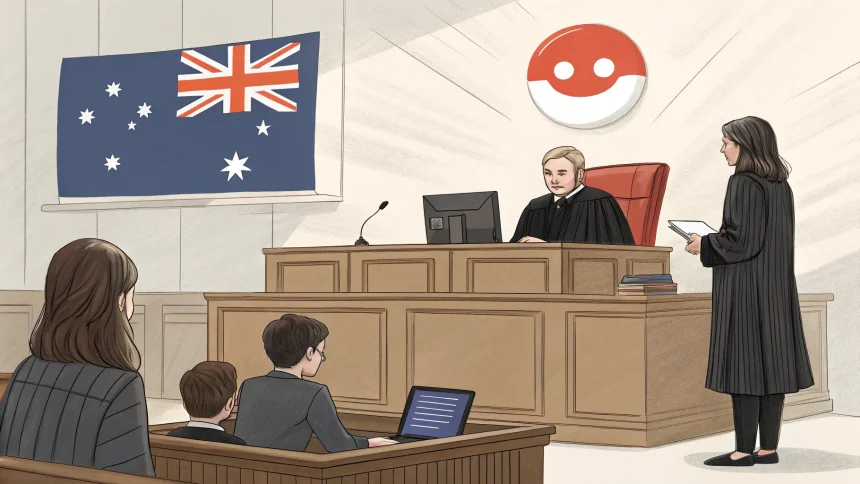
Reddit has launched a court challenge to Australia’s new law that bars children under 16 from holding accounts on major social media platforms, testing a policy the government calls a world first. The case lands at a sensitive moment for tech policy in Canberra, where online safety, parental control, and platform responsibility are front of mind.
The action was filed this week in Australia’s federal courts. It raises fresh questions about how far governments can go to limit minors’ access to social media and how platforms can verify user ages at scale. The outcome could shape compliance plans for global platforms and determine how quickly the law takes full effect.
What the Challenge Targets
Global online forum Reddit has filed a court challenge to Australia’s world-first law that bans Australian children younger than 16 from holding accounts on the world’s most popular social media platforms
The law seeks to stop under-16s from creating or maintaining accounts across large social networks. Officials say the measure is designed to reduce exposure to harmful content, curb cyberbullying, and limit compulsive use among younger teens. It would also require platforms to strengthen age checks and tighten default privacy settings.
Background: A High-Stakes Push for Online Safety
Australia has moved steadily to toughen online safety rules over the past several years. Prior efforts targeted illegal content and harassment, and empowered regulators to demand swift removal. The latest step pushes into age-based access, an area where many countries have hesitated due to privacy risks and technical limits.
Supporters argue the rules respond to rising concern about teen mental health and the influence of algorithmic feeds. They say age limits match how society already treats alcohol, gambling, and other restricted activities.
Critics worry that age checks could require ID uploads or biometric scans, creating large data trails about children and families. Smaller forums also warn that compliance costs may be heavy and could squeeze out community sites that rely on volunteer moderation.
Industry Concerns and Legal Fault Lines
While Reddit’s filing is not yet public in detail, industry challenges to similar laws have focused on constitutional limits, freedom of expression, and practical feasibility. Companies often argue that blanket bans risk overreach and that less restrictive tools—such as parental controls or teen protections—can help without sweeping blocks.
Legal observers say the court will likely weigh whether the ban is proportionate to the harms cited, and whether the rules are clear and technically realistic. The court may also examine data-handling duties tied to age verification, including storage, security, and the risk of identity fraud.
How Age Checks Could Work
There is no single standard for proving age online. Common approaches include document checks, facial analysis that estimates age, third-party verification services, and trusted device or payment signals. Each has trade-offs related to accuracy, privacy, and bias.
- Document scans can be precise but raise data retention concerns.
- Face-based estimation avoids ID uploads but can misclassify and may face acceptance issues.
- Third-party services promise privacy by design, yet still centralize sensitive data.
Any path chosen at scale will be closely watched by privacy groups and regulators, given the stakes for minors’ data.
Global Context and Precedents
Governments in the United States and Europe have moved in related directions, though few have imposed outright account bans for under-16s. Several U.S. states passed laws that require parental consent for teens or limit certain design features. The United Kingdom’s children’s design code nudges services to minimize data use and increase protections for young users. The European Union’s rules place duties on large platforms to assess and reduce risks to minors.
Australia’s approach goes further by setting a firm age threshold for access. If the courts uphold the rules, other countries may borrow elements, turning Australia into a model for stricter youth protections.
What to Watch Next
The case could move quickly if the court sets an expedited timetable, given the potential impact on families and platforms. A key factor will be whether the government and the court accept interim measures while the challenge proceeds, such as staged rollouts of verification or adjustments to enforcement deadlines.
For parents and schools, the immediate question is how the law will be applied during the challenge. For platforms, the central question is whether they must invest now in age checks that could be altered by a ruling.
Policymakers and the tech sector appear headed for a broader test: how to protect teens online without forcing mass identity checks that create new risks. The balance the court strikes in this case will set an important marker.
Reddit’s challenge ensures the debate will not end soon. The final decision will guide how Australia guards young users, how platforms manage youth access, and how other countries weigh similar steps. Watch for early court rulings on scope, timelines for compliance, and the acceptable methods for proving age online.