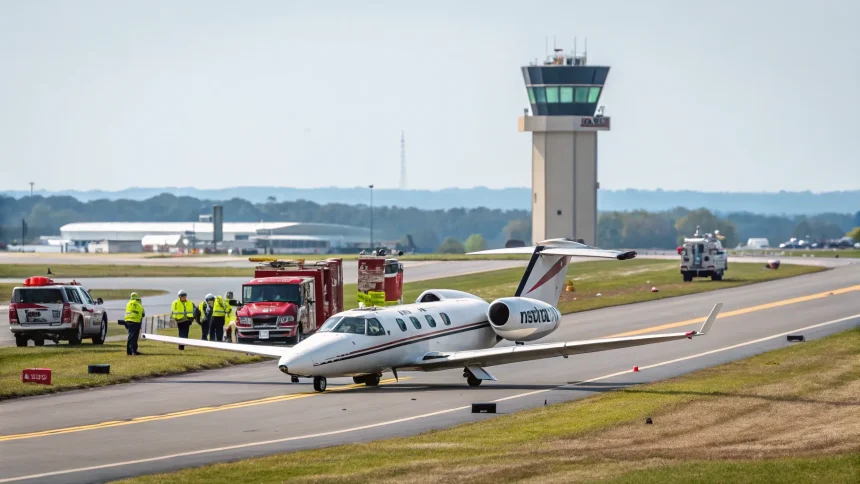
A Cessna C550 crashed during landing at Statesville Regional Airport on Tuesday morning, prompting a federal investigation and drawing attention to safety at busy general aviation hubs in North Carolina.
The incident occurred at about 10:20 a.m., according to federal aviation officials. Local responders and airport staff were on scene within minutes. Authorities had not released details on injuries, passengers, or the cause as of publication.
“A Cessna C550 crashed while landing at Statesville Regional Airport earlier this morning around 10:20am in North Carolina, according to the FAA.”
What Is Known So Far
Federal officials confirmed the aircraft type and the time of the crash. The Cessna C550, often known as the Citation II, is a twin-engine business jet widely used for corporate and charter flights. The airport, located in Iredell County, supports general aviation operations and serves as a reliever for larger commercial fields in the region.
Weather conditions and runway status at the time have not been made public. Authorities have not said whether the aircraft declared an emergency before landing.
Background on the Aircraft and Airport
The Cessna Citation II is part of a long-running family of light business jets known for short- to medium-range trips. Many are equipped for single-pilot operations, though operators often fly with two crew. The jet’s landing and braking performance depend on runway length, surface conditions, and weight at touchdown.
Statesville Regional Airport regularly handles business aviation traffic and cargo movements. Like many regional facilities, it supports instrument approaches and accommodates jets comparable in size to the C550. Airports of this class typically maintain firefighting and rescue capabilities sized for business jet operations.
How Investigators Will Approach the Case
The National Transportation Safety Board (NTSB) is expected to lead the safety investigation, with the Federal Aviation Administration (FAA) providing support. The process often begins with securing the site, interviewing witnesses, and collecting perishable evidence such as weather data and air traffic recordings.
- Review flight track data, radio communications, and radar logs.
- Examine the runway, skid marks, and aircraft position.
- Assess pilot qualifications, duty time, and medical status.
- Check maintenance records and recent repairs.
- Analyze engines, flight controls, and landing gear systems.
If installed, a cockpit voice recorder or lightweight data module could offer insight, though many jets of this vintage were not originally required to carry full recorders. Investigators will also look at local conditions, including wind, visibility, and any reported wind shear or runway contamination.
Safety Context and Industry Impact
Landing remains one of the higher-risk phases of flight, especially if conditions are changing or if an aircraft is near performance limits. While business jets have strong safety records, incidents at smaller airports can disrupt operations and raise questions about infrastructure, training, and emergency readiness.
The Statesville event may prompt operators to revisit go-around policies and stabilized approach criteria, which are standard defenses against approach-and-landing accidents. Regional airports sometimes conduct special briefings after such events to review coordination among dispatchers, controllers, and responders.
Community and Operational Response
Local officials have prioritized public safety and access to the site for federal investigators. Temporary flight restrictions and partial closures are common after a crash, and travelers may face delays as crews clear debris and assess runway integrity.
Nearby businesses and charter operators will watch for updates on airport status. Insurance adjusters and maintenance providers often move quickly to evaluate damage and secure the aircraft for transport to a secure facility if needed.
What Comes Next
Preliminary findings typically arrive within a few weeks, offering an early summary of facts. A full report with analysis and probable cause may take several months. Safety recommendations, if issued, can include training guidance, maintenance checks, or procedural changes for operators and airports.
For now, the focus remains on confirming the condition of those on board and stabilizing airport operations. As authorities release verified details, they will shape understanding of what happened on final approach in Statesville—and what steps might reduce the chance of a repeat.
The early report is brief but clear: a Cessna business jet went down during landing. The investigation will determine whether weather, mechanical issues, human factors, or a mix of elements played a role. Watch for updates on airport reopening schedules, any advisories to operators of similar aircraft, and early safety notes from investigators as they piece together the last minutes of the flight.