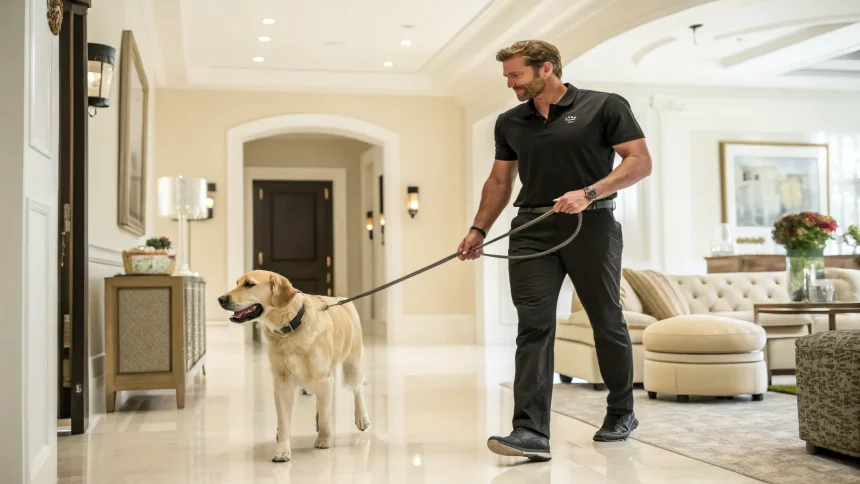
When stars want a dog that walks like a pro, they call Brandon McMillan. The high-profile trainer, known for coaching pets for film sets and famous households, has become the go-to name for behavior fixes with a price tag to match. His work often happens in Los Angeles and New York, where schedules are tight, expectations are high, and a well-behaved pup can be nonnegotiable.
The sticker shock is part of the story. So is the growing market for premium pet services. The question now is simple: what makes elite training worth four figures, and who gets left out?
The Quote Heard Around the Dog Park
“When the rich and famous get a pet, they call on Brandon McMillan to teach it how to heel — for a mere $14,000.”
The line captures two forces at once: a taste for convenience at the top end of the market and the rise of high-dollar training packages. McMillan, widely recognized from television and film training work, has built a brand that blends discretion, speed, and results—qualities prized by clients who have little time for trial and error.
A Luxury Market for Manners
Pet spending has soared in recent years. Industry groups report Americans now spend well over $100 billion each year on pets, from food and vet care to grooming and training. The pandemic pet boom pumped more animals—and more anxiety about behavior—into homes across the country.
For clients in entertainment and tech, training is less about tricks and more about predictability. A calm heel on a crowded sidewalk, steady behavior on a set, and reliability around children or other animals can be the difference between chaos and calm.
What Does $14,000 Buy?
High-end packages often include in-home assessments, custom daily plans, one-on-one sessions, and follow-up support. Trainers at this level may coordinate with veterinarians, walkers, and handlers to keep behavior consistent. Travel, off-hour sessions, and privacy also drive costs up.
- Customized training schedules built around busy calendars.
- Multiple sessions per week over several weeks.
- On-call guidance for setbacks or new environments.
By comparison, many mainstream trainers charge $100 to $200 per session. Board-and-train programs can run several thousand dollars for multi-week stays. The $14,000 figure sits at the top end, but not out of range for bespoke, high-touch service.
Debates Over Methods and Value
Training is not one-size-fits-all. Some trainers favor reward-based techniques with treats and praise. Others use balanced methods that include corrections. Owners paying premium rates often want fast results, but speed can clash with a dog’s learning curve.
Animal behavior advocates urge caution with quick fixes. They argue lasting change comes from consistent practice, clear cues, and realistic expectations. For dogs with anxiety or fear issues, a gentle pace and stable routines matter as much as any single cue like heel.
Supporters of elite programs counter that tailored plans and experienced hands reduce mistakes. They say the real value is in preventing problems from snowballing into bites, escapes, or property damage—a calculation that some owners are willing to make upfront.
Why Celebrities Pay More
Fame adds complexity. Public outings become training tests. A dog lunging at cameras can create headlines. In-home privacy is nonnegotiable. Trainers working in these spaces are paid not only for skill but also for discretion and scheduling flexibility.
There is also the brand effect. A trainer with a track record in film, television, and high-profile homes can charge more for the same hour of work. In many luxury markets, reputation is the rate card.
What It Means for Everyone Else
The high-end tier shines a light on a broader truth: training is an investment. Owners who start early, keep sessions short, and practice daily often avoid bigger bills later. Community classes, shelter-led programs, and online lessons can be effective and affordable.
For families weighing costs, the essentials are simple. Pick a method you can maintain. Ask for a clear plan and measurable goals. Make sure everyone in the home uses the same cues.
McMillan’s $14,000 heel speaks to a world where time is scarce and calm dogs are king. The price will raise eyebrows, but the demand is real. As pet spending grows, expect more tiered options—from boutique, white-glove programs to group classes at the local park. The common thread is consistency. Whether the trainer arrives in a black SUV or via a YouTube video, the next big win is the same: a loose leash, a steady pace, and a dog that looks up as if to say, “Got it.”