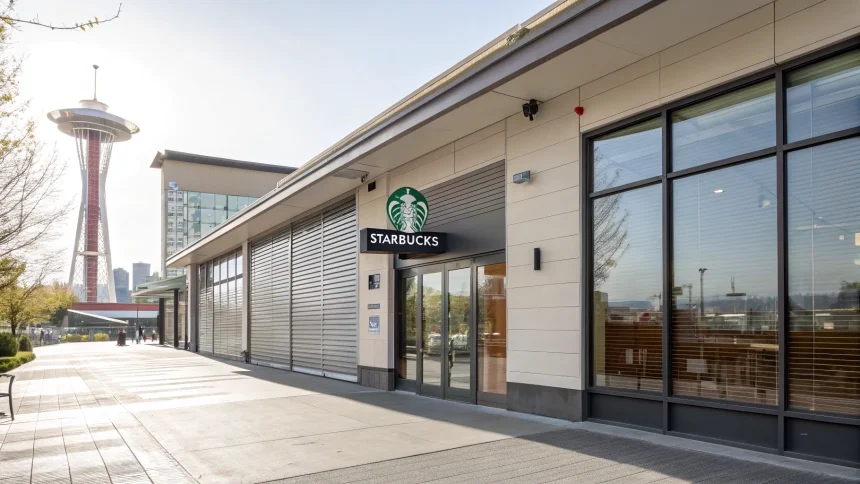
Starbucks is discontinuing its pickup-only store concept, with locations like the one near Seattle’s Space Needle among those affected by the decision. The coffee giant’s move signals a shift in strategy as consumer habits continue to evolve in the post-pandemic retail environment.
The pickup-only model, which allowed customers to order ahead through the Starbucks app and collect their beverages without the traditional café seating, was initially launched to cater to on-the-go customers in high-traffic urban areas. The Seattle location near the iconic Space Needle was one of the flagship examples of this concept.
Strategic Shift in Store Operations
The decision to end the pickup-only store format comes as Starbucks reassesses its retail footprint and customer experience priorities. These streamlined stores, which occupied smaller real estate and operated with fewer staff members, were designed to serve customers seeking convenience rather than the “third place” experience Starbucks has traditionally promoted.
Industry analysts suggest the closure may reflect data showing customers still value the option to sit and stay, even in urban environments where the pickup-only stores were concentrated. The company appears to be returning to its roots of creating community spaces while incorporating digital ordering capabilities into its standard store format.
Impact on Seattle’s Coffee Landscape
The closure of the Space Needle location is particularly notable given Seattle’s status as Starbucks’ hometown and a city known for its coffee culture. Local residents and tourists alike had become accustomed to the convenience of the pickup-only model in this high-traffic tourist area.
Seattle-based retail expert James Wilson noted, “The Space Needle location was a test case for how Starbucks might serve dense urban areas with limited real estate. Its closure suggests the company is rethinking how to balance efficiency with customer experience.”
The company has not disclosed whether employees from the closed location will be transferred to other nearby Starbucks stores or if they will face layoffs as part of the transition.
Evolving Consumer Preferences
The end of the pickup-only experiment reflects broader trends in consumer behavior. While digital ordering surged during the pandemic, many customers have shown a desire to return to in-person experiences. Starbucks’ decision may indicate that even convenience-focused customers value having the option to sit down occasionally.
Key factors that may have influenced the decision include:
- Lower-than-expected foot traffic at pickup-only locations
- Customer feedback indicating preference for hybrid models
- Competition from other coffee chains offering both seating and quick service
- The strategic value of maintaining the “third place” positioning in the market
The company continues to invest in its mobile ordering technology and drive-thru capabilities, suggesting that while the pickup-only store format is ending, Starbucks remains committed to serving customers seeking convenience.
As Starbucks closes this chapter on its pickup-only experiment, the coffee giant appears to be refocusing on store formats that can serve multiple customer needs simultaneously. The company has yet to announce what will replace the Seattle Space Needle location or how this strategic shift will affect its overall store development plans going forward.