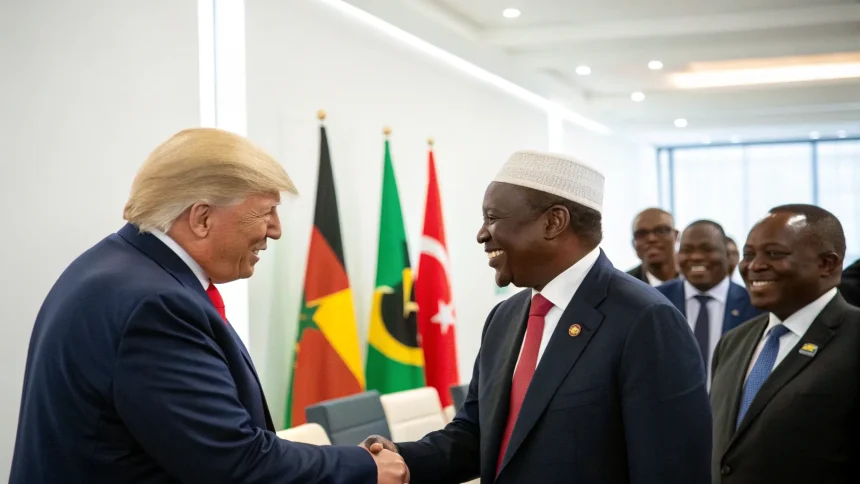
President Donald Trump has initiated a strategic push to establish new agreements with African leaders, aiming to reduce China’s substantial economic and political presence across the continent. This diplomatic effort represents a shift in U.S. foreign policy toward Africa, which has often taken a backseat to other regional priorities.
The China Factor
China has dramatically expanded its footprint in Africa over the past two decades through its Belt and Road Initiative and other investment programs. Chinese companies have built railways, highways, and ports across the continent while providing billions in loans to African governments.
“The Chinese presence in Africa has grown to a level that concerns U.S. policymakers,” said a State Department official familiar with the administration’s Africa strategy. “President Trump’s approach aims to offer African nations alternatives to Chinese financing and infrastructure development.”
The U.S. has watched as Beijing secured access to critical minerals and resources while gaining political influence through its economic partnerships. Chinese investments in Africa exceeded $300 billion between 2005 and 2018, according to the American Enterprise Institute.
America’s New African Strategy
Trump’s outreach includes proposed trade agreements, security partnerships, and investment packages designed to appeal to African leaders seeking to diversify their international relationships. The administration has focused on countries with strategic resources or locations.
Key elements of the U.S. approach include:
- Offering financing alternatives through the newly established U.S. International Development Finance Corporation
- Proposing bilateral trade agreements with major regional economies
- Expanding military cooperation and security assistance programs
The administration has prioritized engagement with Nigeria, Kenya, South Africa, and Ethiopia—countries with significant economic weight or strategic importance. Recent meetings between U.S. officials and leaders from these nations have focused on creating what one White House adviser called “mutually beneficial partnerships rather than debt-trap diplomacy.”
Mixed Reception
African leaders have shown varied responses to the American initiatives. Some welcome the competition between global powers as an opportunity to negotiate better terms for development projects and financial assistance.
“We are not interested in choosing sides between great powers,” stated one West African diplomat. “Our priority is securing the best deals for our people’s development, whether those come from the East or West.”
Critics note that the U.S. approach comes after years of limited engagement with Africa, during which China established deep relationships across the continent. Some analysts question whether the current diplomatic push provides enough incentives to meaningfully shift African partnerships away from Beijing.
The Trump administration faces challenges in matching China’s willingness to fund major infrastructure projects without political conditions. While U.S. officials emphasize transparency and sustainability in their proposals, these factors sometimes make American deals less immediately attractive than Chinese alternatives.
As this diplomatic contest unfolds, African nations find themselves with increased leverage and options for international partnerships. The competition between Washington and Beijing may ultimately benefit the continent by improving the terms of foreign investment and aid, regardless of which global power prevails in this strategic rivalry.