Veterinarians could not operate after Fiona the hippo swallowed a hat, because her immense size and complex anatomy made surgery too dangerous. The case shows how a simple visitor mistake can create a serious medical threat for a large zoo animal.
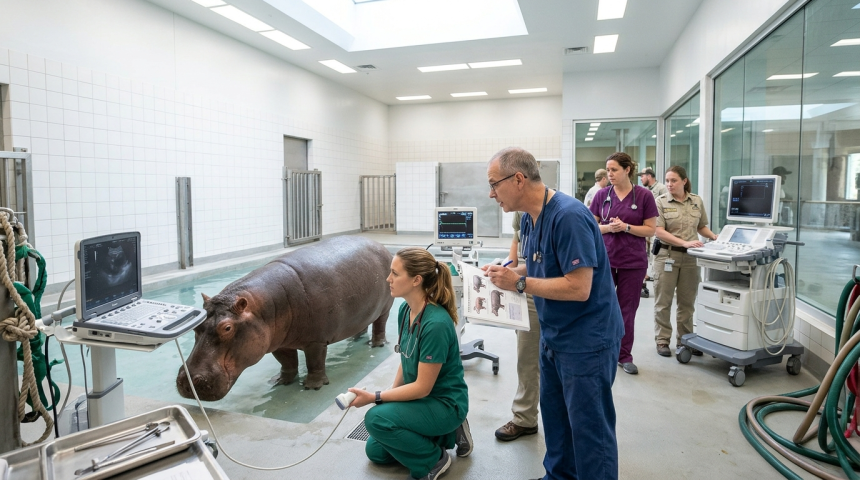
The veterinary team explored available options and did everything it could to help Fiona. Yet surgery was not considered possible under the circumstances. A hippo’s body structure, weight and response to anesthesia can sharply limit treatment choices.
Why Surgery Was Not an Option
Removing a swallowed object often requires an endoscope or an operation. An endoscope is a flexible instrument that allows clinicians to view and sometimes retrieve material from the digestive tract.
Those procedures become harder in a hippopotamus. Fiona’s size limits access, while the length and structure of her digestive system can make an object difficult to locate. A hat may also fold, move or become mixed with food.
Open surgery would create further problems. Veterinarians would need to anesthetize and position an animal weighing thousands of pounds. They would then have to reach the correct section of the digestive tract without causing severe injury.
Veterinarians “did everything they could,” but Fiona’s “massive size and complex anatomy made surgery impossible.”
Anesthesia presents its own danger for hippos. Their weight can place pressure on muscles, nerves and internal organs while they are unconscious. Their breathing and circulation also require close monitoring, specialized equipment and a large medical team.
A Foreign Object Creates Uncertain Risks
The medical outcome depends on the hat’s material, size and location. A soft item may pass through the digestive system. It may also remain in place, form a blockage or interfere with normal digestion.
Veterinarians caring for an animal in this situation would watch for changes that could signal trouble. Key warning signs may include:
- Reduced appetite or refusal to eat
- Changes in bowel movements
- Abdominal swelling or discomfort
- Low energy or unusual behavior
- Breathing or circulation problems
Monitoring can include physical examinations, imaging and laboratory tests when those methods are safe and practical. However, thick tissue and a large body can reduce the usefulness of some imaging equipment.
Waiting also carries a difficult trade-off. Intervention may cause immediate harm, while observation leaves uncertainty about whether the object will pass safely. Veterinary teams must compare those risks using the animal’s condition and test results.
The Human Role in Zoo Safety
The incident also points to a preventable threat at animal exhibits. Hats, phones, food packaging and other personal items can fall into enclosures. Animals may inspect or swallow them before staff members can respond.
Hippos use their mouths to explore objects, and visitors may underestimate how quickly an animal can reach discarded material. Even an item that appears soft can create a blockage or contain parts that are difficult to digest.
Barriers, warning signs and staff supervision can lower the risk, but visitor behavior remains important. Guests can help by securing loose belongings, following posted rules and immediately reporting anything dropped near an animal.
A Case With Wider Lessons
Fiona’s case illustrates the limits of veterinary medicine for very large species. Treatments that are routine for pets may be unsafe or physically impossible for a hippo.
The episode also gives zoos a reason to review exhibit design and rules for loose items. Prevention is often safer than attempting an emergency procedure after an animal swallows something.
Fiona’s care will depend on close observation and how her body handles the foreign object. The central lesson is clear: a dropped personal item can become a major medical emergency, with few safe treatment options once it enters an enclosure.