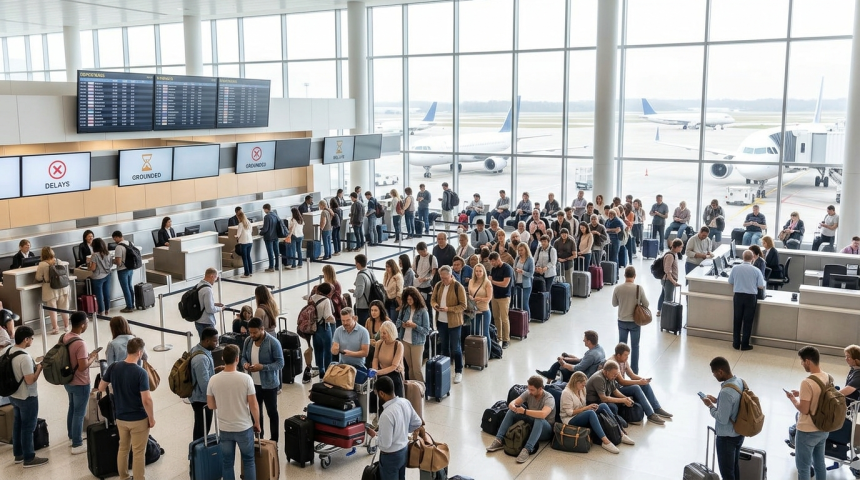
Millions of airline passengers were stranded Friday after the Federal Aviation Administration grounded all flights over a telecommunications issue.
The nationwide disruption left travelers waiting in airports as aviation officials dealt with a system problem affecting flight operations. ABC News correspondent Morgan Norwood reported on the shutdown and its impact.
The grounding showed how quickly a technical failure can spread through commercial aviation. Airlines depend on federal communications systems to coordinate safe departures, manage crowded airspace, and share operating information.
A Nationwide Pause Creates Immediate Disruption
A broad FAA grounding order can halt departures even when aircraft, crews, and local weather conditions are ready. Safety takes priority because pilots and controllers need reliable information before flights can proceed.
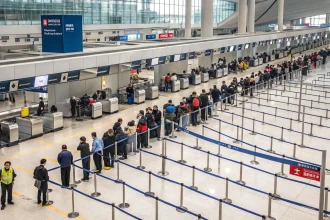
Friday’s order affected millions of passengers, according to the report. Many were left inside terminals without a clear departure time while officials addressed the telecommunications problem.
The interruption likely created pressure across several parts of airline operations:
- Departing aircraft could not leave as scheduled.
- Incoming flights faced changing gate and arrival plans.
- Crews risked reaching legal limits on working hours.
- Passengers faced missed connections and longer airport waits.
Even a short pause can produce a long recovery. Aircraft and flight crews may end up in the wrong cities, while open gates become scarce. The timetable may look orderly on a screen, but one stalled flight can knock over the next like a row of suitcases.
Telecommunications Are Central to Flight Safety
The FAA oversees the nation’s civil aviation system and manages air traffic through a network of controllers, facilities, and communications tools. Airlines also rely on federal systems for safety notices and operating instructions.
A telecommunications issue can limit the timely exchange of that information. Grounding flights reduces uncertainty while technicians identify the failure and confirm that essential services are working.
The report did not identify the affected system, the cause of the problem, or how long the grounding lasted. It also did not say whether officials suspected equipment failure, human error, or a cyber incident.
Those missing details matter. A local equipment outage may require a narrow repair, while a wider network problem could prompt reviews of backup systems and emergency procedures.
Travelers Face Effects After Flights Resume
Restarting flights does not instantly restore normal service. Airlines must rebuild schedules, assign available crews, reposition aircraft, and find seats for delayed passengers.
Travelers may also face different remedies depending on the airline and the reason for a cancellation. Rebooking is often the first step, while meals, hotels, and refunds can depend on carrier rules and federal requirements.
Airlines, regulators, and passengers will now look for an explanation from the FAA. Key questions include how the telecom failure occurred, whether backup systems worked, and what changes could prevent another shutdown.
Friday’s grounding offered a blunt reminder that aviation depends on more than planes and pilots. Reliable communications keep the system moving. When those links fail, the safest choice may also be the most disruptive one.