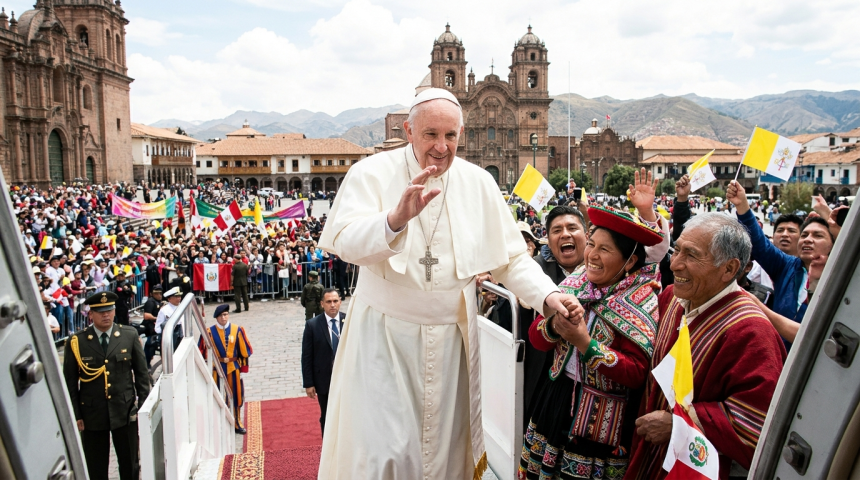
The first American pope has returned to Peru, a country he calls his second home after serving there for decades as a missionary and bishop.
The visit carries both personal and public weight. It reconnects the pontiff with communities that shaped his ministry before his rise to the leadership of the Roman Catholic Church.
His return also draws attention to Peru’s place in his life. The country was not a brief overseas assignment. It was where he worked closely with local Catholics, served in church leadership and developed lasting ties.
A Homecoming Rooted in Service
Missionaries often work far from their birth countries, supporting parishes and serving communities with limited resources. Bishops have broader duties, including overseeing clergy, guiding church policy and responding to local needs.
The pope’s long service in both roles gave him direct experience with Peruvian society and the country’s Catholic institutions. That background sets his visit apart from a standard papal trip.
After spending decades in Peru as a missionary and bishop, the first American pope is back in his second home.
The description of Peru as his second home signals a bond formed through years of daily work. It also suggests that local Catholics may view him as more than a visiting global leader.
For Peruvians who encountered his ministry, the return may feel like the homecoming of a former pastor. For the wider church, it offers a closer look at the experiences that shaped his leadership.
A Visit With Wider Meaning
The trip highlights the strong influence of Latin America within global Catholicism. The region has long been central to the church because of its large Catholic population and deep parish networks.
Yet the church also faces pressure across the region. Religious affiliation has shifted, trust in institutions has been tested, and many communities face poverty, migration and political strain.
A pope with years of local experience may approach those issues differently from a leader who knows the region mainly through official briefings. His work as a missionary and bishop gave him firsthand contact with parish life.
- The visit renews relationships formed during decades of service.
- It places Peru at the center of his personal story.
- It may offer clues about his priorities as pope.
Balancing Personal Ties and Papal Duties
The warmth surrounding a homecoming does not remove the demands of papal leadership. Every public appearance can carry religious, social and political meaning, even when the trip has a personal dimension.
Supporters may see the visit as proof that the pope has not forgotten the communities he once served. Others will watch for specific messages about inequality, church membership and public life.
His background may also shape expectations across the Americas. As the first American pope, he represents a historic change at the Vatican. His close relationship with Peru adds a Latin American chapter to that history.
The return therefore connects three parts of his identity: his American origins, his Peruvian ministry and his global office. Each may influence how Catholics interpret his words and actions.
The visit’s lasting importance will depend on the message he delivers and the commitments that follow. For now, the central fact is clear. The pope has returned not simply to a former posting, but to a country that helped form him as a church leader.