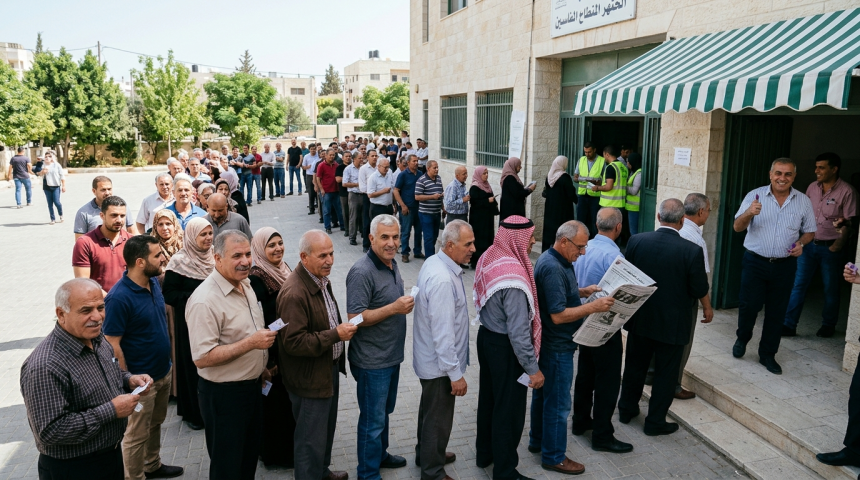
Israel’s Palestinian Arab minority voted in record numbers this week, reversing a long pattern of low participation driven by distrust and political frustration.
The surge suggests that immediate concerns outweighed long-held doubts about taking part in national elections. It also signals that many voters saw the ballot as a necessary tool, even if they remained uneasy about the political system.
A Historic Pattern of Staying Home
Large parts of Israel’s Palestinian Arab population have often stayed home during elections. That absence has limited the community’s electoral influence and weakened Arab parties’ bargaining position.
The reasons for nonparticipation have varied. Some voters have questioned whether elected officials could improve their daily lives. Others have viewed participation as acceptance of state policies they oppose.
Those concerns have created a difficult choice. Voting can offer representation, but it may also feel like approval of institutions that many Palestinian Arab citizens distrust.
This week, however, desperation appears to have outweighed those reservations. The record turnout indicates that more people decided the costs of remaining outside the process were too high.
Urgency Changes the Political Calculation
The turnout shift does not necessarily show rising confidence in Israel’s political system. Instead, it may reflect a practical decision to seek influence during a period of deep concern.
Voters turned out in record numbers, reflecting “a desperation that outweighed any qualms about participation.”
That distinction matters. A community can vote heavily while remaining dissatisfied with the available choices or the wider political structure.
The surge may have been shaped by several broad calculations:
- A desire for stronger representation in national decision-making.
- Concern that staying home would reduce Palestinian Arab political influence.
- A belief that urgent conditions required participation despite serious doubts.
No turnout percentage or vote total was provided. Still, the description of participation as a record marks a clear departure from past behavior.
What Higher Turnout Could Change
Greater participation can increase the electoral weight of Palestinian Arab citizens. It can help Arab-led parties win more seats or strengthen candidates seeking support across community lines.
Higher turnout can also affect coalition talks after an election. In Israel’s parliamentary system, small changes in representation may influence which blocs can assemble governing support.
Yet voting alone may not settle the deeper questions behind earlier boycotts. If elected representatives fail to address voters’ concerns, participation could fall again in a future election.
The result therefore presents both an opportunity and a warning for political leaders. Palestinian Arab voters have shown a willingness to participate when the stakes feel urgent. They may now expect that participation to produce visible influence.
This week’s record turnout is best read as a sign of pressure, not simple political confidence. The next test will be whether elected officials convert that urgency into representation and results. If they do not, the historic reluctance to vote may return.