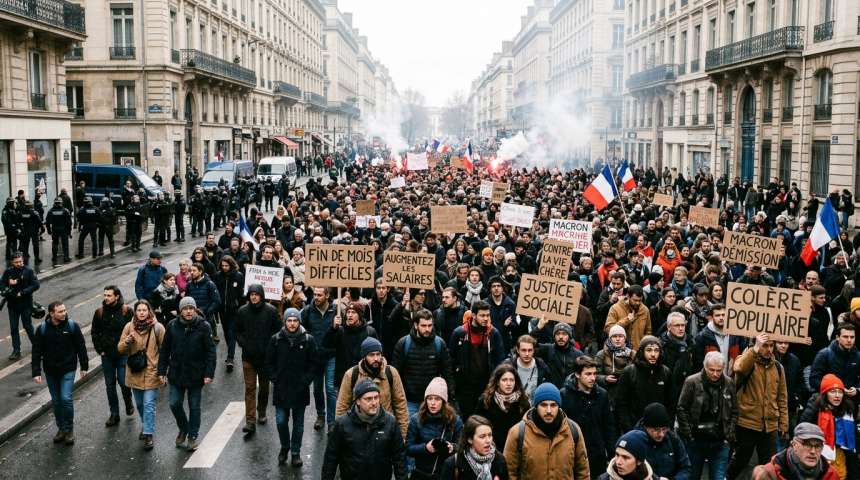
An estimated 410,000 people protested across France for a second straight weekend, voicing anger over inequality and rising living costs. Clashes were reported in several cities, adding pressure on authorities as the demonstrations continued nationwide.
The turnout points to broad public concern about household finances and economic fairness. It also raises urgent questions about public safety, political responses, and whether the unrest could continue.
Economic Anger Fuels National Mobilization
The protests centered on two closely linked concerns: inequality and the cost of daily life. Both issues can affect housing, food, transportation, and household energy expenses.
The estimated attendance of 410,000 suggests the movement reached far outside a single city or region. Such a large national turnout can also include people with different demands, even when they share economic concerns.
Three details define the latest demonstrations:
- An estimated 410,000 people participated across France.
- The protests continued for a second consecutive weekend.
- Clashes occurred in several cities.
The second weekend matters because sustained participation can give a protest movement greater political weight. It can also strain police resources and disrupt transportation, commerce, and public services.
Clashes Complicate the Public Debate
Reports of clashes shift part of the focus from economic demands to security. Authorities must protect peaceful assembly while responding to violence, property damage, or threats to public order.
For demonstrators, disorder can weaken attention on the original message. Peaceful participants may find their concerns overshadowed by images of confrontation.
The available information does not identify who initiated the clashes or describe their scale. It also does not provide figures for arrests, injuries, or property damage. Those details will be important when assessing the official response.
France Faces Familiar Social Tensions
France has a long history of large street demonstrations tied to economic policy and social welfare. Labor reforms, pensions, taxes, and household expenses have repeatedly brought major crowds into public spaces.
Public protest plays a visible role in French political life. However, turnout estimates can differ depending on whether they come from police, organizers, unions, or independent observers. The source of the 410,000 estimate was not identified.
The latest mobilization reflects a wider challenge for governments. Rising expenses often affect lower-income households most because basic needs consume a larger share of their earnings.
At the same time, policy responses may involve difficult trade-offs. Financial aid can ease short-term pressure, but it may increase public spending. Price controls can offer relief, yet they can also create costs elsewhere in the economy.
Political Response Will Shape What Comes Next
The next stage may depend on whether protest leaders present specific demands and whether officials offer talks or policy changes. Participation during another weekend would show whether the movement is gaining strength or losing momentum.
Authorities will also face scrutiny over policing. Clear information about arrests, injuries, and crowd-control measures could help establish what happened during the reported clashes.
The demonstrations have already shown that inequality and living costs remain powerful sources of public anger in France. The immediate test is whether that anger produces negotiations, policy action, or further confrontation.
Future turnout, the government’s response, and verified details from affected cities will provide the clearest signs of where the protest movement is heading.