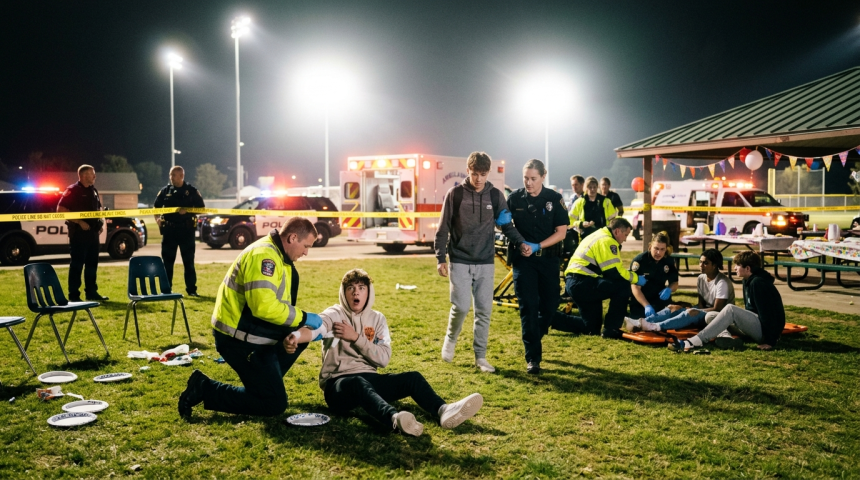
A birthday party at a Georgia city park erupted in gunfire after two groups shot at each other, leaving 12 teenagers wounded, officials said.
The shooting turned a public celebration into a mass-casualty scene and raised urgent questions about security, weapons and youth safety. Officials have not identified the city, park or date in the available account.
Authorities also have not disclosed the teenagers’ ages, medical conditions or possible roles in the shooting. No arrests, suspected motives or weapon details were announced.
Two Groups Exchanged Gunfire
Officials described the violence as an exchange between two groups, rather than an attack by one person on the gathering.
Two groups of people “shot at each other during a birthday party,” officials said.
That account suggests investigators may need to sort through competing claims and determine who fired each weapon. It does not establish that every wounded teenager took part.
The distinction matters. Some of those injured may have been guests or bystanders caught between the groups. Investigators will likely rely on witness interviews, surveillance video and physical evidence to reconstruct the shooting.
Key unanswered questions include:
- What caused the confrontation?
- How many people fired weapons?
- Were all 12 teenagers party guests?
- Did the park have cameras or security staff?
- Have police recovered any firearms?
A Public Space Becomes a Crime Scene
City parks are designed for recreation and community events. That openness can also make access control difficult, especially during informal parties with large groups.
The setting adds another concern for local leaders. Gunfire in a park can place nearby families, workers and residents at risk, even when a dispute involves specific people.
The number of wounded teenagers also signals a major emergency response. Multiple victims can quickly strain ambulances, hospital teams and police officers securing a wide outdoor scene.
Still, the brief official account leaves major gaps. Without information about injuries or arrests, the full scale of the harm and the immediate public threat remain unclear.
Investigators Face a Difficult Evidence Trail
Cases involving gunfire from more than one group can be hard to untangle. Witnesses may have seen only part of the confrontation, while frightened guests may give conflicting descriptions.
Ballistic testing could help link recovered bullets and cartridge casings to specific firearms. Video from phones, park cameras or nearby properties may also show how the dispute began.
Authorities will need to separate verified evidence from rumors shared after the party. That task is especially important when teenagers are involved and public attention is high.
Questions About Prevention and Accountability
The shooting is likely to renew debate over youth access to guns and safety at public gatherings. Possible responses could include better lighting, cameras, event permits or added patrols.
Such steps may help investigators or discourage some violence, but they cannot fully prevent an armed conflict. Officials must also examine how the weapons reached the park and whether warning signs preceded the confrontation.
For now, the clearest fact is also the most troubling: 12 teenagers suffered gunshot wounds at a birthday celebration. The next developments to watch are their medical conditions, possible arrests and an official account of what sparked the exchange.
Until those details are released, caution is needed. The incident demands accountability, but the limited information does not yet show who fired, who was targeted or who was simply caught in the chaos.