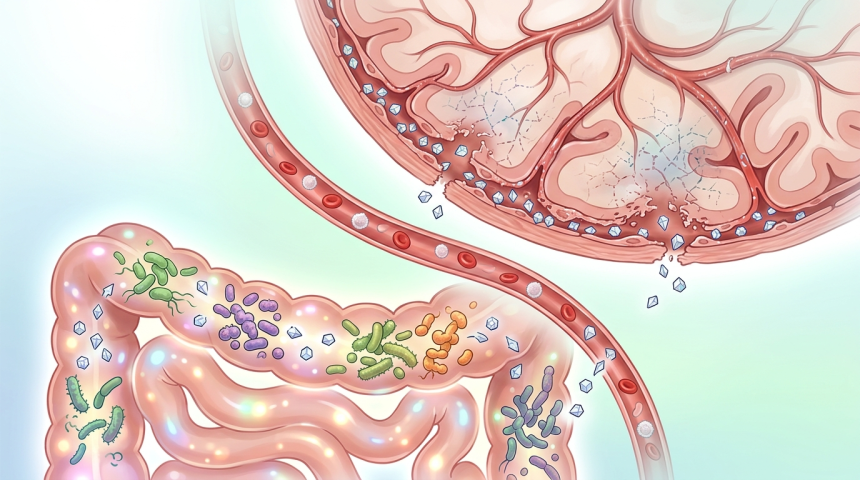
Researchers have found that a substance made by gut bacteria can weaken the brain’s protective barrier and promote changes tied to cognitive disease.
The finding adds to evidence that biological activity in the gut may affect the brain. It also identifies a possible route through which bacterial byproducts could contribute to harmful neurological changes.
“A metabolite produced by gut bacteria can weaken the barrier that protects the brain and promote changes associated with the cognitive disease,” the researchers reported.
How the Gut Could Affect the Brain
Gut bacteria help process food and produce metabolites, which are small substances created during normal chemical activity. Some metabolites remain in the digestive system. Others may enter circulation and affect distant organs.
The new research centers on the barrier that helps protect the brain from harmful substances in the blood. When this barrier weakens, unwanted molecules may gain greater access to sensitive brain tissue.
The reported link offers a possible sequence of events:
- Gut bacteria produce a metabolite.
- The metabolite weakens the brain’s protective barrier.
- Barrier damage may permit or promote disease-related changes.
This sequence does not mean that gut bacteria alone cause cognitive disease. Diet, age, genetics, immune activity, existing illness, and environmental factors may also shape risk.
A Clue, Not Yet a Clinical Answer
The result points to a biological mechanism, but major questions remain. The available finding does not identify the metabolite, the bacterial species involved, or the cognitive condition under study.
It also does not establish whether the same effect occurs across different patient groups. Researchers would need to determine how much of the metabolite reaches the brain barrier and whether exposure predicts symptoms.
Another key issue is cause and effect. A harmful metabolite might contribute to disease. However, disease-related changes in diet, medication, or digestion could also alter gut bacteria and their products.
Future studies will need to test the association in larger and more varied populations. Controlled research could also examine whether reducing the metabolite protects the barrier or changes cognitive outcomes.
Potential Paths for Prevention and Treatment
If later work confirms the mechanism, researchers could consider several strategies. These might include changing bacterial activity, limiting production of the metabolite, or blocking its effects on the brain barrier.
Dietary changes, targeted medicines, and treatments aimed at specific microbes may eventually be studied. Yet the finding does not support immediate changes to medical care or the unsupervised use of supplements.
Interventions involving gut bacteria can have mixed effects because microbial communities perform many useful functions. Removing one organism or altering one chemical pathway could create unintended results elsewhere in the body.
The research places the brain’s protective barrier at the center of a possible gut-to-brain pathway. Its value now depends on replication, clearer identification of the metabolite, and evidence from human studies.
For clinicians and patients, the immediate takeaway is measured. Gut bacterial products may influence cognitive disease, but the link is not yet a diagnosis or treatment. The next tests must show whether controlling this metabolite can preserve the barrier and improve health.