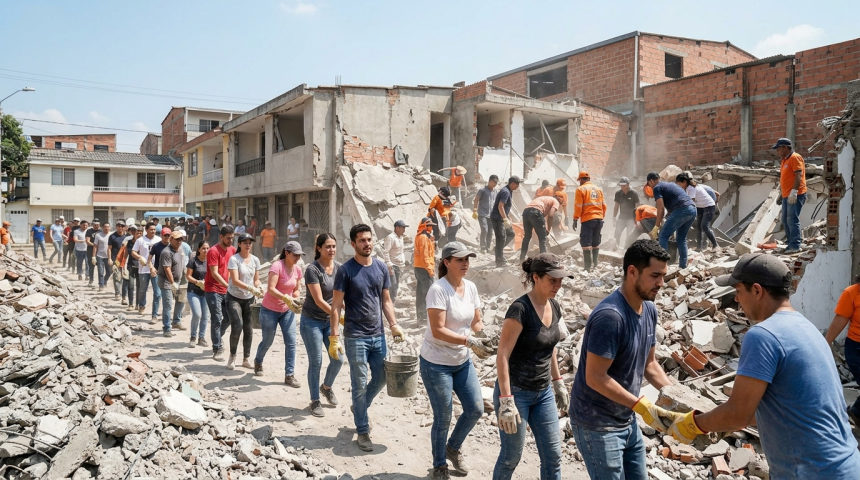
Search teams and civilians picked through destroyed buildings in Cali, Colombia’s third-largest city, as volunteers formed long lines to remove concrete and rubble. The effort showed the scale of the local response, but key details about the destruction, casualties, and cause were not immediately available.
Residents worked beside organized search crews, passing large pieces of debris from person to person. The method allowed volunteers to clear unstable areas without relying only on heavy machinery.
Civilians Join the Search Effort
The long human chain reflected an urgent push to reach spaces buried beneath collapsed material. Such lines can move debris away from search zones while limiting crowding near damaged structures.
Civilian support can provide valuable labor during the first stage of an emergency. Local residents may also know who occupied a building and where people could be trapped.
However, damaged sites carry serious risks. Concrete may shift without warning, while broken glass, exposed metal, dust, and damaged utility lines can threaten rescuers.
- Search crews must identify unstable walls and floors.
- Volunteers need clear instructions and protective equipment.
- Access routes should remain open for emergency workers.
- Debris removal must avoid disturbing possible survivor spaces.
Response Faces Limited Information
The number of affected buildings was unclear. Officials had not provided confirmed figures for deaths, injuries, missing people, or displaced residents in the available account.
The cause of the destruction also remained unspecified. Without verified information, it was not possible to assess whether the damage came from a natural disaster, an accident, or another event.
That uncertainty makes official communication especially important. Emergency agencies usually need to publish confirmed casualty counts, identify restricted zones, and tell residents where to find shelter or medical care.
Early reports from disaster areas often change as teams enter new buildings and families report missing relatives. Authorities therefore face pressure to move quickly while avoiding unverified claims.
Cali’s Size Raises the Stakes
Cali’s status as Colombia’s third-largest city adds to the response challenge. Damage in a major urban center can affect dense residential areas, transport routes, hospitals, and public services at the same time.
Large cities may have more emergency resources than smaller communities. They also have more residents, heavier traffic, and larger buildings, which can complicate searches and slow equipment.
The visible role of residents suggests that the response extended past professional crews. Community action can speed basic debris removal, but officials must manage volunteers so trained specialists can inspect the most dangerous areas.
What Authorities Must Establish
The immediate priority is finding survivors and preventing further injuries. The next phase will require engineers to judge whether damaged buildings can be entered, repaired, or demolished.
Authorities will also need to document losses and arrange temporary housing if homes are unsafe. Investigators must determine what caused the destruction and whether building failures made the damage worse.
For now, the human chains moving rubble through Cali offer the clearest picture of the response. The coming updates should establish the scale of the disaster, the toll on residents, and how long recovery may take.