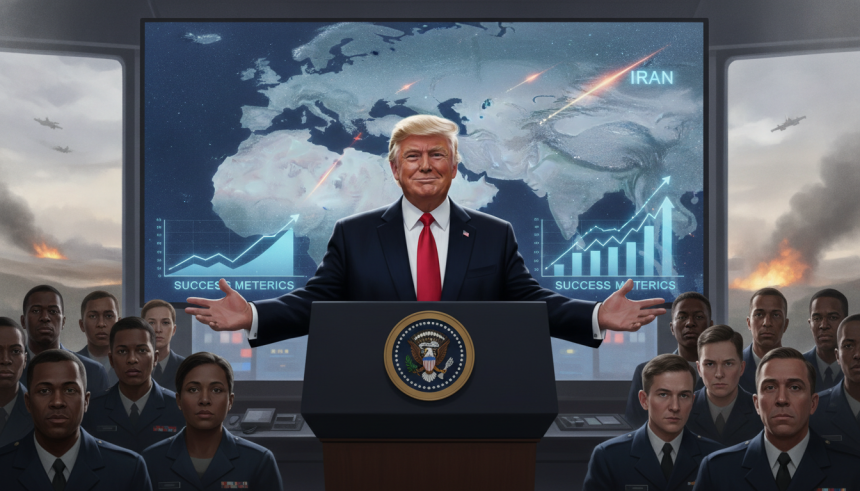
A fragile ceasefire began to fall apart as the United States carried out new attacks on Iran, and President Donald Trump declared the war effort a success. The comments, delivered as fighting resumed, highlighted a gulf between battlefield events and political messaging. The statement drew swift attention from diplomats and analysts who warned that renewed violence could spread.
Background on the Ceasefire and Escalation
Ceasefires in the region have often been short. Temporary truces are used to pause fighting, secure aid routes, or enable talks. When they fail, the return to strikes is usually fast. Each break in fighting carries the risk of a larger clash if parties do not restrain responses.
U.S. policy on Iran has swung between pressure and diplomacy. Sanctions, proxy clashes, and covert moves have mixed with periodic talks. When a truce weakens, smaller incidents can trigger quick rounds of retaliation. That pattern has repeated across the Gulf and neighboring states for years.
Officials often frame renewed action as necessary for deterrence. Critics warn that short campaigns can drift into longer conflicts without clear end goals or exit plans.
Trump’s Claim of Success
“Even as a ceasefire was crumbling, leading the U.S. to wage new attacks on Iran, President Donald Trump touted the United States’ war as a success.”
The line sums up a familiar political stance. Leaders defend strategy, even when fighting resumes. Supporters of that message argue that measured force can halt attacks and protect U.S. interests. They also say that showing resolve can deter future strikes.
Opponents counter that calling the effort successful while violence grows risks eroding credibility. They argue that success should be judged by fewer attacks, lower civilian harm, and progress at the table.
Competing Measures of Progress
How to measure success remains contested. Military leaders can point to destroyed weapons, disrupted plots, or degraded networks. Diplomats look for steady talks and verified restraint. Aid groups count safe passages and lower displacement. Voters often track the cost in lives and dollars.
- Military metrics: targets hit, attacks prevented, force protection.
- Diplomatic metrics: sustained talks, verified de-escalation steps.
- Humanitarian metrics: civilian casualties, aid access, displacement.
- Domestic metrics: clarity of mission, duration, and financial costs.
Success across these lines rarely moves in tandem. Gains in one area can come with losses in another. That tension fuels debate each time a truce breaks.
Regional Risks and International Response
Every new strike risks miscalculation. Iran has allies and proxies in several countries. A single hit can spark reprisal away from the original front. Shipping lanes, energy markets, and diplomatic ties can all be affected within days.
Allies often call for restraint and a return to talks. They seek limits on strikes and time-bound goals. Rivals use the moment to test defenses or pressure local partners. The United Nations typically urges compliance with ceasefire terms and respect for civilian life.
If the ceasefire fully collapses, mediation gets harder. Each side tends to raise demands after new casualties. That cycle can freeze diplomacy at the moment it is most needed.
Domestic Politics and Messaging
Presidential statements set the tone at home. Declaring success can rally supporters and project control. It can also lock in expectations that are hard to meet if fighting expands. Lawmakers from both parties often press for briefings and clear objectives when strikes resume.
Public opinion usually tracks costs and duration. If operations remain limited, support can hold. If casualties rise or goals blur, backing can slip fast. Messaging that matches outcomes tends to keep trust higher.
What to Watch Next
Key signs will show where this goes. Military tempo, civilian impact, and any return to talks are central. The durability of any new truce, if reached, will be the real test of progress.
- Whether strikes taper or expand in scope.
- Signals from Tehran on retaliation or restraint.
- Moves by regional mediators to restore a pause.
- Evidence of defined U.S. objectives and timelines.
The statement from President Trump projects confidence, but facts on the ground will decide the outcome. If calm returns and talks resume, officials may claim validation. If escalation widens, pressure will grow for a reset in strategy. The coming days will show whether force, diplomacy, or a mix of both can prevent a larger war.