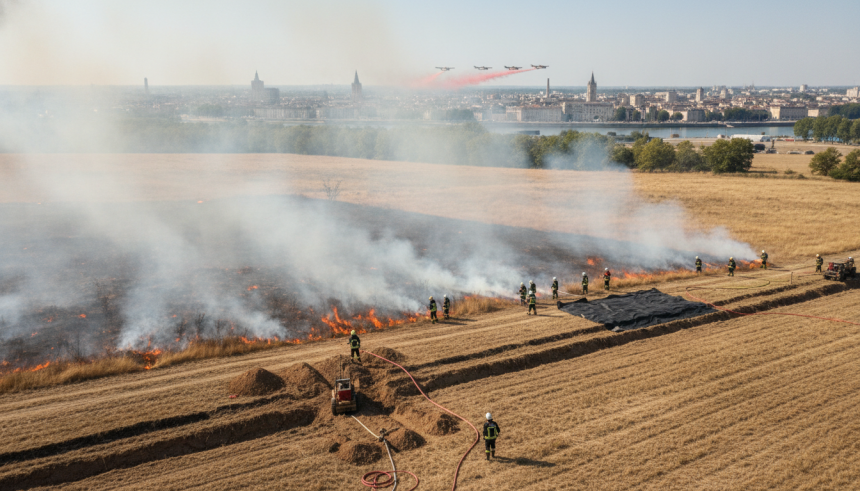
Firefighters and local authorities moved quickly to keep a fast-moving blaze from reaching Bordeaux, France, as crews dug trenches and laid fire retardant lines. The operation unfolded on the edge of the metropolitan area, where wind and dry fuel raised the risk of a rapid spread. Officials said the goal was simple: hold the fire outside the urban perimeter and protect nearby towns.
The incident put a major regional hub on alert. Bordeaux is one of France’s largest cities, and the surrounding Gironde region has seen severe fires in recent summers. Crews described an urgent effort to create barriers and reduce heat, while residents watched wind forecasts and air quality reports.
Frontline Tactics To Slow The Flames
Fire crews and authorities were digging trenches, using retardants and taking other steps to stop the flames from reaching Bordeaux.
Trenches can break the fire’s advance by removing fuel and creating a cooler strip of ground. Retardant drops slow combustion and help crews anchor control lines. Teams often combine both tactics near roads, rail lines, and natural breaks to contain spot fires. Water tankers and brush engines support the line as weather shifts during the day.
Commanders typically stage equipment where there is access and visibility. That includes ridge lines, vineyard edges, and clearings. Night operations can be effective when humidity rises and temperatures fall.
Weather, Fuel, and the Urban Edge
Wildfires near cities present a unique challenge. Houses, businesses, and power lines add hazards and can create new ignition points. Vegetation around suburbs also carries flames into neighborhoods if embers land in dry gardens or roofs.
Southern France has seen longer dry spells and hotter summers, which dry grasses and pine stands. Wind funnels through valleys and can push a crown fire toward roads and bridges. When smoke reduces visibility, evacuation routes and firefighting aircraft are harder to use.
Lessons From Recent Seasons
In 2022, large fires in Gironde forced mass evacuations and burned more than 60,000 hectares, according to French officials and European monitoring agencies. Those events reshaped local policy on fuel breaks and emergency alerts. Towns increased brush clearing near homes and set stricter rules for burning yard waste during high-risk periods.
Regional leaders also invested in more seasonal firefighters and equipment. Aerial assets, including water bombers and helicopters, were pre-positioned earlier in summer. The aim was to hit new starts fast and keep them small.
Community Preparedness and Evacuation Planning
Residents living near the fire line were told to prepare go-bags and clear debris from yards. Local alerts urged people to follow official channels and avoid rumor. Social media groups tracked wind shifts and road closures, but authorities cautioned against unverified posts.
- Clear leaves and brush within 10 meters of structures.
- Keep gutters and roofs free of dry material.
- Know multiple evacuation routes in case primary roads close.
Emergency shelters were readied for short-notice evacuations. Health services monitored air quality, as smoke can trigger asthma and other respiratory issues. Pharmacies reported increased sales of masks and eye drops during peak smoke hours.
What Comes Next
Officials planned to expand fire breaks and reinforce control lines as the wind changed. Mop-up crews worked behind the front to prevent reignition from stumps and roots. Investigators will review ignition sources once conditions allow safe entry.
Longer term, experts expect more seasons with hot, dry weeks that test firefighting capacity. Land managers may prioritize prescribed burns and mechanical thinning in high-risk corridors. Urban planners are likely to push for defensible space standards in new developments near forests and vineyards.
Outlook and Risks
If winds ease and humidity rises, the fire could slow and give crews time to deepen lines. If gusts pick up, embers may jump control points and threaten outlying districts. Power shutoffs could be used to limit sparks from lines in extreme conditions.
Rail and road operators are preparing for intermittent closures. Tourism officials are coordinating with hotels to support displaced residents and visitors as needed. Agriculture agencies are assessing potential smoke exposure for grapes and other crops, which can affect harvest quality.
The latest operations around Bordeaux show a clear focus: keep flames out of the city and protect lives and property. Fire lines, retardant, and round-the-clock work are the tools of the moment. The coming days will hinge on weather, fuel, and the stamina of crews on the line. Residents should stay alert, follow official updates, and prepare for changing conditions as the response continues.