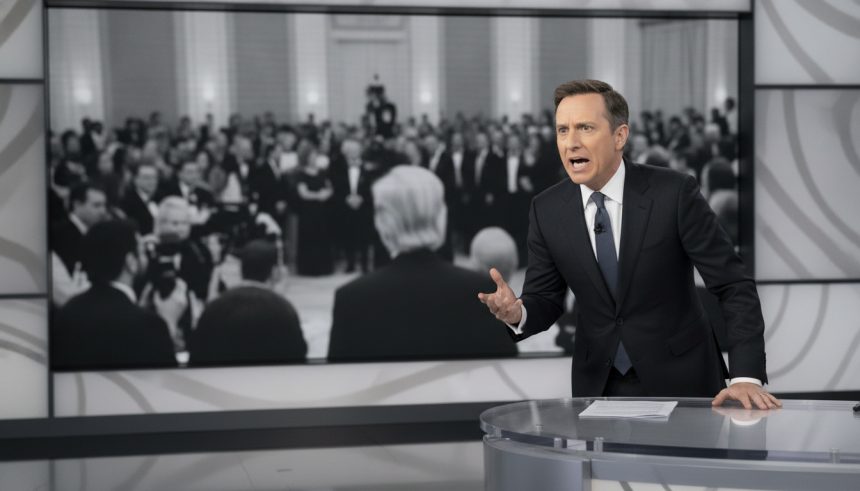
A scathing on-air critique from a late-night satirist put a fresh spotlight on how political reporters cover Donald Trump at elite Washington gatherings. The host of Comedy Central’s The Daily Show took aim at journalists for what was described as a casual attitude toward the former president during a high-profile event in the capital. The remarks renewed debate over the proper distance between the press and the figures they cover, as the 2024 campaign cycle intensifies and stakes for factual, tough reporting rise.
“The Daily Show” host slammed journalists who attended the event for their seemingly blasé attitude toward President Trump.
The rebuke carried extra force because it targeted behavior at a public-facing gala that often draws scrutiny. The criticism landed at a moment when newsroom standards, access journalism, and the ethics of socializing with sources are under fresh review.
A Sharp Rebuke of Media Culture
The host’s comments framed the issue as one of accountability versus access. The concern was that casual tones in social settings risk softening scrutiny in coverage. The segment argued that photo-ops and light banter can blur boundaries between reporting and relationship building.
Comedy has long served as a check on political power, but it has also challenged the press. The host’s remarks echoed past satirical critiques that questioned whether elite events create an insider club that sidelines the public interest.
A History of Cozy Press Galas
Washington social events have drawn fire before. The White House Correspondents’ Dinner has a track record of tense moments, from Stephen Colbert’s blistering set in 2006 to Michelle Wolf’s sharp jabs in 2018. Each controversy raised the same underlying question: how close is too close.
Supporters say these gatherings build relationships that can yield information. Critics counter that the optics can erode trust and signal that press and power share the same stage, if not the same interests.
Reaction From Journalists and Viewers
Some reporters defended attendance as routine networking. They argued that a social evening does not dictate editorial judgment the next day. Others agreed the optics were poor, urging colleagues to rethink what participation signals to audiences.
Media ethicists often urge transparency. If reporters attend, they advise clear disclosures, strict expense rules, and a consistent firewall between social contacts and coverage. Viewers on social media were split, with some welcoming the critique and others calling it performative.
- Critics worry about mixed signals that blur watchdog roles.
- Defenders cite relationship building and off-record context.
- Ethicists call for transparency and clear boundaries.
What the Data Says About Trust
Public trust in news remains weak. A 2023 Gallup survey found roughly one-third of Americans expressed even a fair amount of trust in mass media. That figure sits near a historic low and shows why optics matter.
Research on perceived bias indicates that even small signals of coziness can shape audience views. When viewers suspect favoritism, they may discount reporting, even when facts are solid.
Why the Critique Matters for 2024
The 2024 race includes legal, policy, and democracy stories that demand rigorous reporting. Friendly scenes at elite events can undercut tough coverage, especially on topics where public confidence already strains.
Editors face practical choices. They can limit attendance, add disclosure standards, or assign non-political staff to social events. Clear rules help prevent conflicts and clarify priorities.
What Comes Next for Political Coverage
Newsrooms are likely to revisit event policies, social media guidelines, and on-air disclosures. Training on access, sourcing, and conflicts may rise on editorial agendas. Some outlets may opt out of high-profile galas entirely.
Audiences will keep judging not only what journalists report, but how they appear to operate. The satirical critique tapped a public mood that is alert to mixed signals and soft approaches to powerful figures.
The core takeaway is simple. Watchdog reporting works best with visible distance from those in power. Expect more debate over access and optics as the campaign accelerates, and watch for clearer rules that put reporting first.