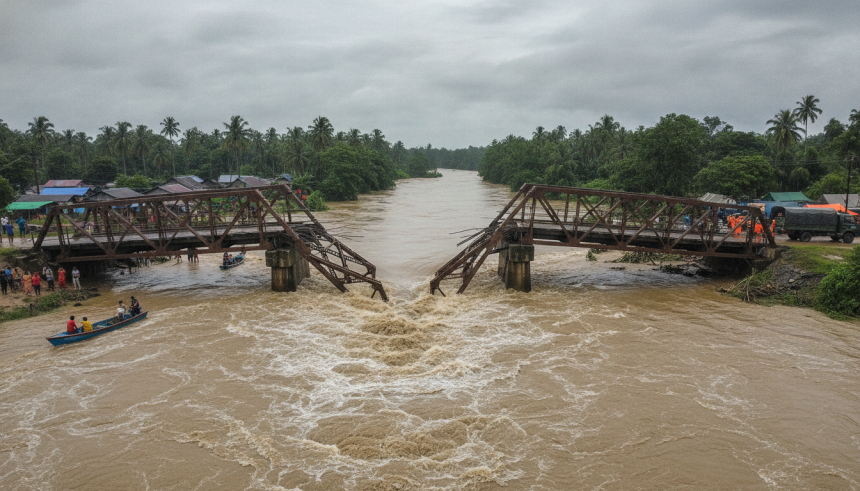
A section of a 300-metre iron bridge over the Kemi River in Assam’s Dhemaji district collapsed after floodwaters surged through the area, cutting road connectivity between Kemi-Purana Jelom and Jonai Sadar. The incident, reported during heavy monsoon rains, has forced authorities to launch relief and repair efforts. Assam Chief Minister Himanta Biswa Sarma announced state assistance, while Union Home Minister Amit Shah promised support from New Delhi.
What Happened and Why It Matters
The washed-out span has left villages on both sides of the Kemi River isolated from district services. The bridge served local commuters, traders, and patients traveling to Jonai Sadar for healthcare and administrative work. With the road broken, ambulances, school transport, and supply trucks now face long detours, if any are available.
Officials said the damage followed days of intense rain that drove river levels higher and increased the pressure on the bridge’s piers. While a full engineering report is pending, early accounts point to scouring around the foundations due to fast-moving water, a common risk during peak monsoon flow.
Government Response and Relief Measures
State and central leaders moved quickly to address immediate needs and plan for repair. The Chief Minister outlined steps to stabilize the site and help stranded residents.
“The government launched relief and rehabilitation measures,” Chief Minister Himanta Biswa Sarma said, adding that teams were working to restore essential movement and assess structural damage.
From the center, the assurance of aid signaled that funds and technical support would follow as assessments come in.
Union Home Minister Amit Shah assured central assistance, stating that New Delhi would support Assam’s relief and recovery efforts.
Local administration officials said temporary footbridges and boat services were under consideration to maintain basic connectivity until a more durable fix is in place.
Flood-Prone District Faces Familiar Risks
Dhemaji district sits in a low-lying zone frequently hit by monsoon floods. Rivers fed by heavy rainfall and upstream flows from the hills often swell rapidly. In such conditions, bridges and embankments face repeated stress during June to September.
In recent years, Assam has invested in river management, embankment strengthening, and early warning systems. Yet infrastructure in vulnerable stretches remains at risk when rainfall spikes or channels shift course. Engineers say regular inspections, deeper foundations, and improved drainage can reduce failures, but maintenance gaps and extreme weather make that difficult.
Connectivity, Economy, and Daily Life
The loss of the bridge disrupts trade and everyday routines. Small traders who move farm goods to Jonai markets may see produce spoil. Families traveling for medical care face delays and higher costs.
- Students could miss exams or classes if transport remains limited.
- Emergency services may need longer routes, affecting response times.
- Supply chains for essentials like fuel and medicine may tighten.
Transport experts say setting up regulated ferry points and temporary bailey bridges can cut the worst impacts. Clear traffic management, including priority lanes for ambulances and supply vehicles, is also key.
Repair Timeline and Longer-Term Fixes
A full restoration will depend on the monsoon. Repair crews often wait for water levels to fall before placing heavy equipment near damaged piers. In the interim, authorities can stabilize banks with sandbags, gabions, and bamboo piling to limit further erosion.
Longer-term solutions include elevating spans, reinforcing foundations to resist scouring, and improving approach roads so runoff does not pool near bridge footings. Independent engineers also recommend routine underwater inspections during the dry season and community reporting lines to flag early warning signs like fresh cracks or unusual vibrations.
What to Watch Next
Key developments in the coming days will include the start of temporary crossings, the release of a structural report, and the timeline for permanent repairs. Residents and traders will look for clear guidance on safe routes and transport schedules.
The incident highlights the strain monsoon flooding places on public works across Assam. As rains continue, officials may need to survey other bridges along feeder rivers to prevent repeat failures. Transparent updates on funding, design improvements, and deadlines will help restore confidence and keep people moving.
For now, the focus is on keeping communities connected and safe while planners weigh durable fixes. The promises from the state and center set expectations high. Execution in the weeks ahead will determine how quickly life along the Kemi River returns to normal.