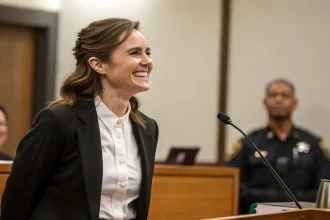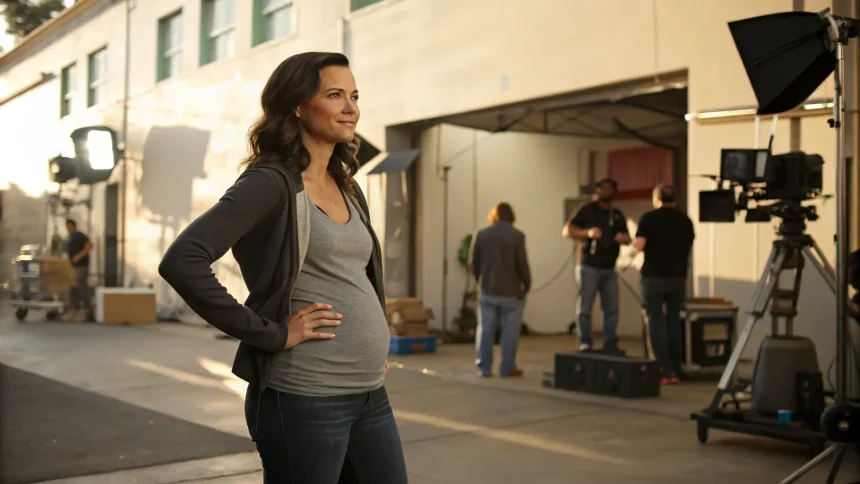
Michele Weaver says she concealed her pregnancy while filming the CBS drama Sheriff Country, a revelation that opens a candid look at how TV productions manage real life on tight schedules. The actor’s account highlights how a show keeps momentum while a star balances privacy, health, and work.
The disclosure arrives as Hollywood debates workplace support for parents and caregivers. It also raises a simple question with complicated answers: what should happen when on-screen life and off-screen life collide?
“Sheriff Country’s Michele Weaver revealed the lengths she went through to hide her pregnancy on the hit CBS show.”
Why Concealment Happens On Set
Pregnancies can scramble shooting plans. Episodes are mapped weeks in advance. Crew, locations, and stunts are scheduled with little room to spare. When an actor becomes pregnant, productions often face a choice: write it into the story or hide it on camera.
Weaver’s decision points to a familiar toolkit. Productions have long used strategic blocking, wardrobe layers, and props to disguise a growing bump. Camera framing can shift to close-ups. Scenes can move to seated conversations. Editors do their share, stitching around wider shots.
These methods keep plots intact and budgets steady. They also let a performer decide when and how to share personal news.
What Weaver’s Experience Signals
Weaver’s account brings fresh attention to how shows balance care and continuity. It suggests close coordination among departments, from costume to cinematography. It also hints at the stress that secrecy can create for a performer working long days under bright lights.
At the same time, the choice to conceal can protect privacy. Some actors prefer to wait before telling colleagues. Others want to avoid having a character’s arc reshaped overnight.
- Wardrobe often relies on dark colors, draping, and structured jackets.
- Props like folders, tote bags, and clipboards become shields.
- Directors adjust blocking to keep the torso off-center or behind set pieces.
Industry Views On Care And Safety
Unions in film and TV encourage reasonable accommodations for pregnant workers. Productions typically offer schedule tweaks, more rest breaks, and, when needed, stunt doubles. Insurance providers may also ask for medical clearances for physically demanding scenes.
Weaver’s story lands in a period of growing attention to family needs at work. In recent years, more sets have discussed lactation rooms, flexible call times, and childcare stipends. Not every solution fits every budget. But the conversation is picking up speed.
What It Means For Viewers And Storytelling
Hiding a pregnancy can keep a character consistent. It can also limit plot chances to show motherhood on screen. Some series have turned an actor’s pregnancy into a central arc, adding depth and realism. Others keep the original plan and protect the mystery with clever staging.
Weaver’s experience highlights that both paths can work. The real measure is care for the performer and respect for the story. Done well, viewers rarely notice the tricks. Done poorly, they notice the furniture suddenly getting very large.
Looking Ahead
Weaver’s revelation gives fans a peek at production life they rarely see. It also nudges the industry toward clearer norms around disclosure, safety, and support. Expect more shows to discuss options early, so actors can choose what fits their health and their role.
The next step is simple and hard. Keep sets safe. Keep schedules flexible where possible. And keep space for performers to decide how much of their life belongs on camera. For now, Weaver’s candid moment turns a private challenge into a public lesson in craft—and care.