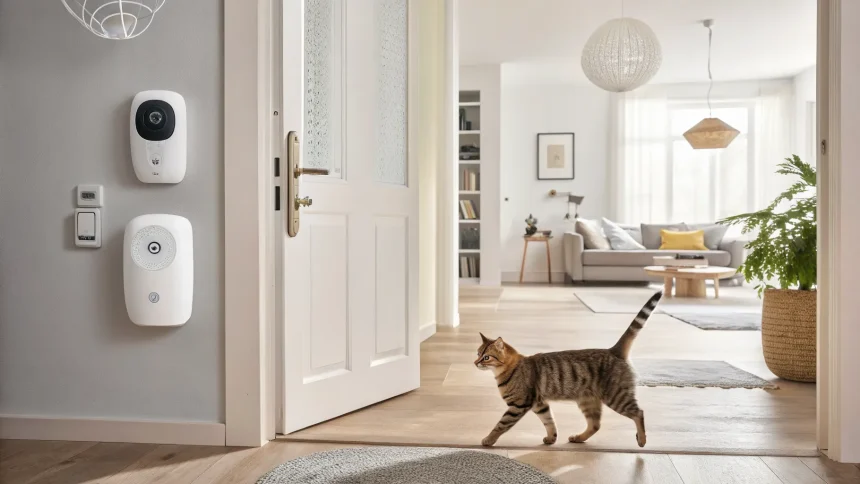
A simple promise is shaping a new corner of home tech: playing music the moment a cat returns through the door. The idea points to a broader push to build smart-home routines not just for people but for pets. Developers and pet owners are exploring features that react to an animal’s movements, daily habits, and stress levels, turning houses into more responsive spaces.
The pitch is straightforward. Sensors or pet doors detect an arrival. Speakers queue a playlist. Lights can dim. Treat dispensers might even activate. What began as a human-centered convenience story is shifting to include the needs of animals who spend many hours alone each day.
“You can play music when your cat comes home.”
Pet-Centered Automation Gains Ground
Smart-home systems have long focused on temperature, lighting, and security. Now, companies are testing routines that respond to pets. The goal is comfort and structure. For many owners, that means a calmer re-entry after work or travel.
Animal-care groups have discussed how sound can affect stress. Some shelters pipe in soft music to ease noise in busy rooms. Owners say certain songs seem to help anxious animals settle. A timed playlist could help create a steady routine, especially for cats that thrive on predictability.
How the Feature Works
The setup can be simple. A contact sensor on a pet door or a motion detector near an entry can trigger a scene. The scene sends a command to a speaker to start a set playlist at a set volume. Owners might add lights, a feeding reminder, or a toy release.
For renters or people without pet doors, the same idea can work by spotting movement at a hallway camera or by reading a Bluetooth tag on a collar near a hub. The key is a reliable trigger and a playlist chosen for gentle sound and even volume.
- Use reliable sensors near entry points.
- Pick calming, low-tempo tracks.
- Set safe volume limits.
- Test routines while at home first.
Benefits and Caution From Care Experts
Supporters see quick gains. Music can mask sudden outside sounds and may help a cat transition from outdoor alertness to indoor rest. A routine can also signal that food, play, or quiet time is next.
Some trainers and veterinarians urge care with volume and song choice. Cats hear higher frequencies than humans. Loud or sharp tones can cause stress. They suggest starting with soft classical or ambient tracks and watching for signs of discomfort like flattened ears or hiding.
They also warn that music is not a fix for deeper issues. If a pet shows ongoing anxiety, owners should look at enrichment, safe spaces, and a checkup.
Privacy, Data, and Practical Limits
Automations that track when an animal enters or moves can raise familiar privacy questions. Sensors and cameras can record patterns that hint at when a home is empty. Owners should review what data devices store and who can access it.
There are practical limits too. Battery sensors can fail. Wi-Fi outages can break routines. Backup plans matter, such as keeping a quiet room ready or using plug-in timers that do not rely on the cloud.
What Comes Next for Pet Tech
Developers are testing more signals. Collars that measure activity could match playlists to energy levels. Smart feeders may sync meals to music cues. Some systems could fade music over time to avoid overstimulation and reduce power use.
Standards that let devices from different brands talk to each other may help. If sensors, speakers, and hubs connect more easily, owners can build pet routines without complex setup.
The core idea is small, but it opens a path: using gentle sound as part of daily care for animals at home. For now, the safest steps are simple. Keep volume low. Watch your cat’s response. Pair music with play and rest. The broader experiment will be whether pet-centered routines can make homes both smarter and kinder. Those watching this space will look for clear guidance from veterinarians, better privacy controls, and tools that work even when the internet does not.