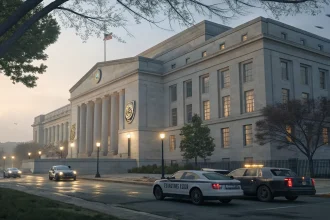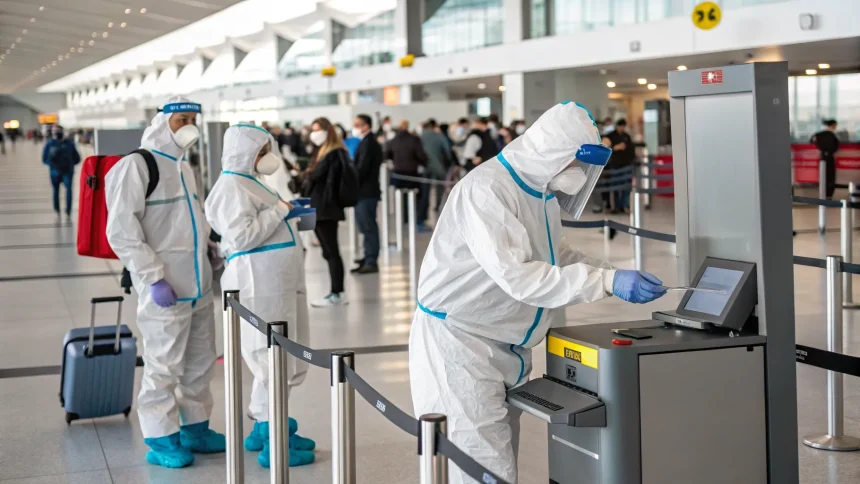
U.S. officials announced a new plan to keep a fast-moving Ebola outbreak from reaching American soil, as anger over burial practices sparked violence at a medical center in the Democratic Republic of Congo. The twin developments highlight the urgent challenge: stop a lethal virus at the border while helping frontline teams win public trust.
In a broadcast report, NBC News correspondent Maggie Vespa summarized the stakes.
“US officials announced a new plan to stop the fast-moving Ebola outbreak from arriving in the United States. This, as protesters in the DR Congo set fire to a medical center over anger surrounding the burial of a suspected Ebola victim.”
What the U.S. Plan Likely Includes
Officials did not release full details immediately, but past responses point to a familiar toolkit. During the 2014–2016 West Africa outbreak, the U.S. screened travelers at major airports, monitored recent arrivals, and readied hospitals to isolate suspected cases. That playbook helped reduce risk without halting travel entirely.
- Airport screening for symptoms and exposure history.
- Targeted monitoring of recent travelers for 21 days.
- Rapid isolation protocols at designated hospitals.
- Surge support for labs and protective gear.
Experts say the fastest defense often starts abroad. Funding for contact tracing, safe burials, and vaccination campaigns in affected regions can cut transmission at the source. That approach also reduces panic at home.
Why Burial Practices Are Flashpoints
The unrest in the DR Congo reflects a hard truth about Ebola control. Traditional funerals, which can involve washing or touching the body, risk spreading the virus. Health teams push for safe and dignified burials that limit contact. Families, grieving and wary, sometimes see those rules as disrespectful or secretive.
That tension has flared before. During the 2018–2020 outbreak in eastern Congo, clinics were attacked and workers threatened. Misinformation fed suspicion. Community leaders later helped bridge the gap by explaining safety steps in local languages and involving families in burial plans. When trust rose, cases fell.
Lessons From Past Outbreaks
Ebola is rare but deadly. In West Africa, more than 11,000 people died from 2014 to 2016. The Kivu outbreak in Congo later killed over 2,000. Quick isolation, vaccination of contacts, and strong public messaging helped end those waves.
Since 2019, a single-dose vaccine has been used in ring campaigns. That means vaccinating close contacts and their contacts. The strategy works best when people share names and locations, which hinges on trust.
U.S. hospitals now drill for high-risk pathogens more than they did a decade ago. Many have negative-pressure rooms, stockpiles of protective gear, and trained response teams. The Centers for Disease Control and Prevention has a network of labs that can test quickly.
What Could Change the Trajectory
Health officials watch three indicators to judge risk:
- Case growth in the outbreak zone. Rising cases raise export risk.
- Travel patterns from affected areas. Direct flights are not required for import risk.
- Community cooperation on tracing and safe burials. Trust speeds control.
Violence at treatment sites can scatter patients and contacts. That makes tracing harder and lengthens outbreaks. Calming tensions can be as important as securing more hospital beds.
Multiple Viewpoints, One Goal
Public health leaders argue that strong controls can coexist with dignity. Families want respect and clear answers. Clinicians want safety for staff and patients. Lawmakers want to protect borders without stoking fear.
As Vespa noted, the stories on the ground are emotional and complex. Health workers must explain why a body that looks peaceful can still be contagious. Officials must show that quarantine orders are fair and temporary. Communities need swift, transparent updates, not rumors.
For now, the U.S. is signaling readiness. The strategy is simple to say and hard to execute: stop import, support response abroad, and keep the public informed. Past outbreaks show that early action pays off. The next few weeks will reveal whether airport checks, hospital prep, and smarter engagement in the DR Congo can hold the line. Readers should watch for trends in new cases, reports of violence near clinics, and any signs of spread to new regions. If trust grows, the curve can bend fast. If it frays, the virus gets a head start.