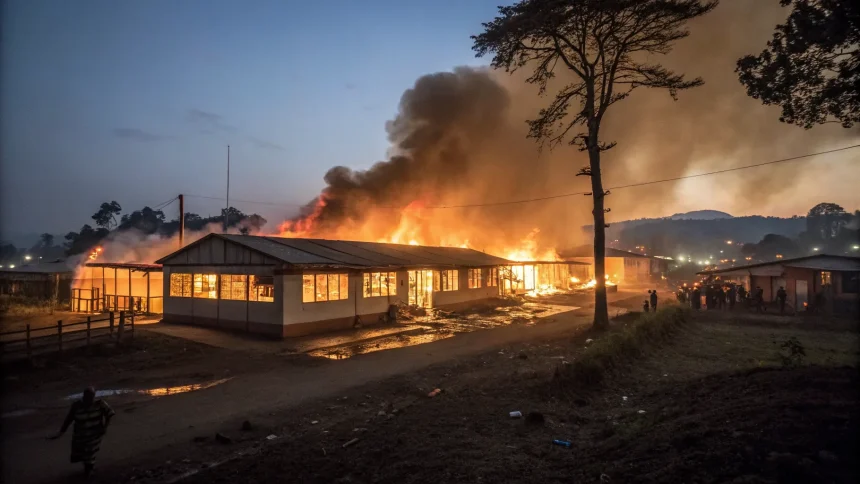
A treatment center for Ebola in eastern Democratic Republic of Congo was set on fire as fear and anger mounted in a town at the center of the outbreak. The attack, which struck a key part of the response effort, reflects deep mistrust and pressure on health teams trying to halt the virus.
Local reports described a crowd targeting the facility as doctors worked to contain new cases. Aid workers said the blaze forced patients and staff to flee. Officials warned the disruption could fuel new chains of transmission.
“People set fire to an Ebola treatment center in a town at the heart of the outbreak in eastern Congo as fear and anger grow over a health crisis that doctors are struggling to contain.”
Why The Center Was Targeted
Attacks on health sites in eastern Congo are not new. During the 2018–2020 Ebola outbreak in North Kivu and Ituri, treatment centers in Butembo and Katwa were also struck. Mistrust, armed conflict, and rumors about the virus and the vaccine fed the violence.
Residents often accuse responders of ignoring local customs, especially around safe burials. Some believe Ebola is a plot or a business. Others fear isolation wards mean certain death. When fear spreads faster than facts, treatment sites become targets.
Armed groups in the region add another layer of risk. Their movements can cut off roads and delay care. Nighttime curfews restrict travel for patients and ambulance teams.
What The Virus Is Doing Now
Ebola spreads through contact with bodily fluids of a sick person. It can also spread during funerals if bodies are not handled safely. Early detection and isolation are key to stopping it.
Responders use rapid testing, contact tracing, and ring vaccination to block transmission. The rVSV-ZEBOV vaccine has proved effective when contacts and contacts-of-contacts agree to be vaccinated. But the system fails when teams cannot reach people or when they are chased out.
- Disrupted care raises the risk of hidden cases.
- Delay in safe burials can spread infection.
- Attacks force staff to suspend outreach and vaccination.
Strain On Doctors And Clinics
Clinics near the attack site now face extra pressure. Patients who fled may avoid care. Staff may be redeployed to protect other facilities, reducing services. Surveillance teams could miss symptoms in the community if they must move in larger, slower convoys.
Health workers report fatigue and trauma after repeated threats. Some leave for safer posts, draining local expertise. The loss of trust can take weeks to repair, even after a single incident.
Lessons From Past Outbreaks
Past responses show that security alone does not fix a public health crisis. Engagement with local leaders and clear, consistent messages can reduce fear. Training burial teams from the community helps families accept safe practices. Payment transparency and feedback hotlines can cut rumors about aid money.
During earlier outbreaks, responders learned to adapt clinic layouts so families can see patients through windows, easing anxiety. They also hired community members as outreach workers to answer questions in local languages.
What To Watch Next
The next few days will show whether the fire triggers a spike in cases. If contacts cannot be traced or vaccinated, small clusters may grow. If security improves and trust is rebuilt, the outbreak could be contained faster.
Authorities will need to protect health sites, reopen services, and restore dialogue with residents. Religious leaders and women’s groups can help explain care and burial rules. Radio and mobile messaging can counter rumors as they appear.
The stakes are high. A single destroyed center can set back months of work. Rebuilding trust will decide how quickly this outbreak ends and how many lives can be saved.