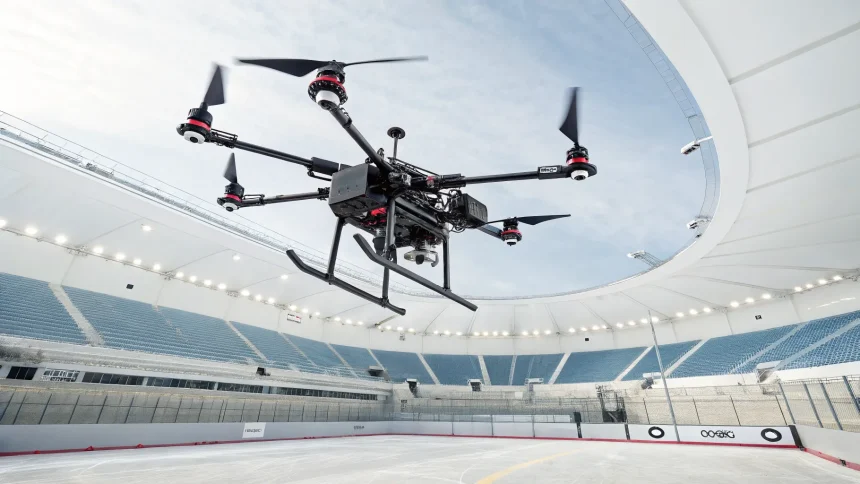
Aerix Systems is pitching a different way to fly. In a recent demonstration, the company showed a drone that can lift, surge sideways, rotate, and slide in a single, fluid motion. The display suggests a push to rethink how small aerial vehicles move and what they can do in tight or dynamic spaces.
The company says its approach centers on omnidirectional propulsion. While most consumer and enterprise models lift straight up and then translate forward, Aerix’s aircraft appeared to change direction on the spot, without the wide arcs common to quadcopters. If the performance holds at scale, the technique could matter for inspections, filming, and close-quarters tasks where precise control is prized.
“Up, up, and away! That’s the flight sequence for most commercially available drones. However, for drones powered by Aerix Systems’ proprietary omnidirectional propulsion technology, a more fitting description would be: up, zoom off, twist, and slide … often all at once!”
How It Differs From Standard Quadcopters
Most popular drones use four fixed rotors. Direction changes rely on speeding up or slowing down pairs of propellers, which pitches or rolls the frame. That design is simple and reliable, but it often requires space to maneuver and can drift in gusts.
Omnidirectional propulsion seeks to add more direct control over thrust. Companies experiment with vectored fans, tilting rotors, or ducted systems. The goal is the same: change direction quickly, hold angles that would tip a standard craft, and move laterally without large attitude changes.
Aerix did not publish detailed specifications. Observers at the demo described rapid lateral transitions with minimal tilt and fast, controlled yaw. The performance hinted at finer authority over thrust vectors, though battery draw and thermal limits remain open questions.
Why It Matters For Industry Users
Precision motion can lower risk around people, structures, and equipment. Inspectors who fly near bridges, tanks, or wind turbines value small corrections and steady holds. Film crews look for novel camera paths with smooth lateral motion. Public safety teams want aircraft that can shift position in narrow corridors without clipping walls or cables.
- Closer standoff distances can shorten missions and improve image detail.
- Smoother side-slips can reduce post-production work in filmmaking.
- Faster directional changes may help in gusty urban canyons.
These gains depend on endurance and payload. If the new propulsion system cuts flight time or limits sensor weight, many missions would still favor standard airframes. Buyers will also compare maintenance needs, parts costs, and training time.
Safety, Training, and Rules
New motion profiles raise new pilot habits. If a drone can translate sideways with very little tilt, visual observers may misread its path. Training programs would need to cover stopping distances, drift under wind, and emergency procedures for a craft that can pull harder lateral moves.
Regulatory frameworks such as FAA Part 107 focus on safe operation rather than a specific propulsion type. Still, any system that enables closer flight near people or critical assets draws scrutiny. Testing for propeller guards, failure modes, and remote ID integration will be key checkpoints for wide use in the United States and other regions.
Performance Questions Still To Answer
Omnidirectional thrust can add weight and mechanical complexity. Motors that tilt or ducts that steer air can eat into flight time. Heat buildup in compact designs also cuts efficiency during long hovers or heavy lifts.
Buyers will look for data on:
- Flight time under common payloads.
- Noise levels at typical working distances.
- Durability of moving parts and replacement cycles.
- Stability in wind and during GPS loss.
Without published specs, comparisons remain tentative. Established quadcopters benefit from large support networks, third-party parts, and a deep pool of trained pilots. Aerix will need to show that the handling gains offset any added cost or maintenance.
What Comes Next
Early adopters will likely be media teams and specialized inspectors who can justify a premium for control and unique movement. If field trials confirm reliable gains in tight spaces, other sectors could follow, including warehousing, event coverage, and indoor mapping.
For now, the demonstration sets a clear goal: make drones move with more intent and less arc. The market will watch for independent tests, standardized benchmarks, and real mission footage. Endurance, safety validation, and serviceability will decide whether omnidirectional propulsion becomes a niche feature or a common choice.
Aerix’s show of “up, zoom off, twist, and slide” hints at a nimbler future for small aircraft. The next milestones are simple and decisive: publish performance data, complete safety reviews, and prove value in day-to-day jobs. If those arrive, pilots may have a new way to fly tight, fast, and sure-footed paths where space is scarce.