Federal prosecutors announced charges against 34 defendants in two indictments, alleging a sports betting ring and mafia-linked rigged poker games. The cases point to a sprawling operation that mixed old-school organized crime tactics with modern wagering. Authorities said the indictments target both organizers and participants, signaling a wider effort to police gambling beyond legal sportsbooks.
Federal prosecutors charged 34 defendants across two indictments, alleging sports betting and mafia-linked rigged poker games.
The allegations arrive as legal sports betting expands across the United States. Dozens of states now allow wagering, but illegal outfits still draw customers with credit lines, insider circles, and no tax paperwork. The poker claims add a darker twist, suggesting players were steered into crooked games where the house never truly lost.
What Prosecutors Allege
Investigators say two separate cases tie together under one theme: profits built on deception. One indictment centers on a sports betting enterprise outside regulated markets. The other focuses on poker games manipulated by figures with alleged mafia links.
Officials have not yet released a full technical playbook, but the outline is familiar to anyone who tracks gambling crimes. Unlicensed bookmakers can move money off the books. Rigged poker games can tip odds through collusion, marked cards, or hidden communication.
How Rigged Poker Games Work
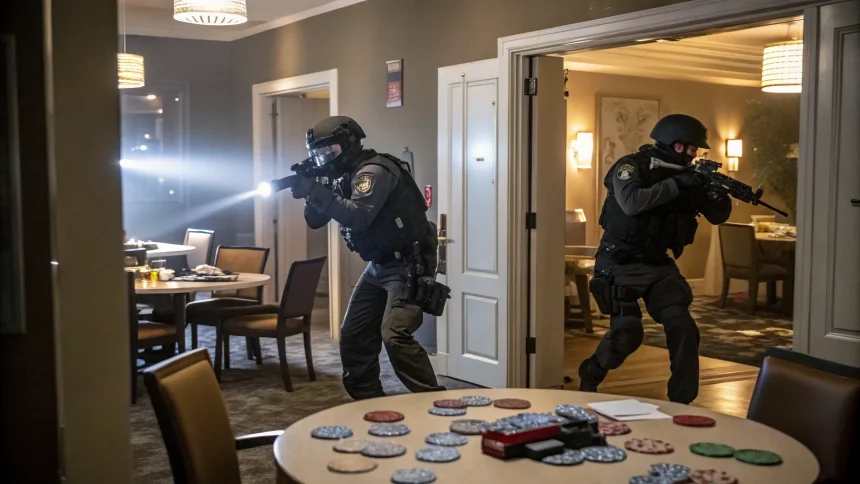
Poker is a game of partial information, which makes it ripe for cheating when hosts control the setup. Past cases in the United States and abroad have identified a short list of tricks.
- Collusion among seated players to share information and trap targets.
- Marked cards or altered decks to tip off a partner.
- Signaling, such as subtle gestures or devices, to reveal hands.
- Stacking the invite list so victims face a house team.
When linked to organized crime, such games can also serve as debt traps. Victims may be pressured to borrow at high interest, then steered back to the table where the outcome is skewed.
Why Illegal Betting Rings Persist
Despite legal options, underground betting keeps a grip for simple reasons: privacy, credit, and convenience. Some bettors prefer a trusted local operator who extends credit and settles in cash. Others try to skirt wager limits or avoid identity checks at legal books.
Organized crime has long used gambling for steady revenue. After the Supreme Court struck down the federal sports betting ban in 2018, licensed markets spread fast. But legal books come with taxes, audits, and responsible gaming rules. Shadow markets skip all three and can move faster on payouts, at least until the knock on the door.
Legal Stakes And Potential Penalties
Charges in gambling cases can range from illegal gambling and money laundering to conspiracy and wire fraud. If organized crime links are proven, prosecutors can seek enhanced penalties under federal law. Asset seizures are common, targeting cash, cars, and property tied to the operations.
Defense attorneys often argue that the games were private or that bettors participated willingly. They may challenge surveillance or the reach of wiretap evidence. Outcomes hinge on proof of coordination, profit-sharing, and the use of interstate systems like phones or payment networks.
Impact On Sports And Players
For sports leagues, underground betting is a risk to integrity. The threat is not just point-shaving headlines. It is the quiet flow of insider information and unpaid debts that can pressure athletes or staff. Legal sportsbooks, which report suspicious activity, say the black market is still large and harder to monitor.
For casual gamblers, the lure of easy credit can mask real danger. If a bettor misses payments, the “house rules” are not printed on a website. They are enforced face to face.
What Comes Next
The next steps usually include arraignments, detention hearings, and a steady roll of filings as both sides test the evidence. Prosecutors may look for cooperation deals to map the full network. Defendants may seek to split the cases or suppress seized records.
The broader test is whether enforcement can shrink the shadow market. States continue to license sportsbooks, tighten identity checks, and expand problem-gambling tools. Yet as long as demand exists for off-the-books action, illegal operators will try to fill it.
The charges send a clear message: the house may always win, but unlicensed houses now face higher odds of getting caught. Watch for plea deals, asset forfeitures, and any ties that reach into other rackets. If authorities can prove rigged games and coordinated bookmaking, the fallout could ripple well past the poker table.